
Last updated November 22, 2026
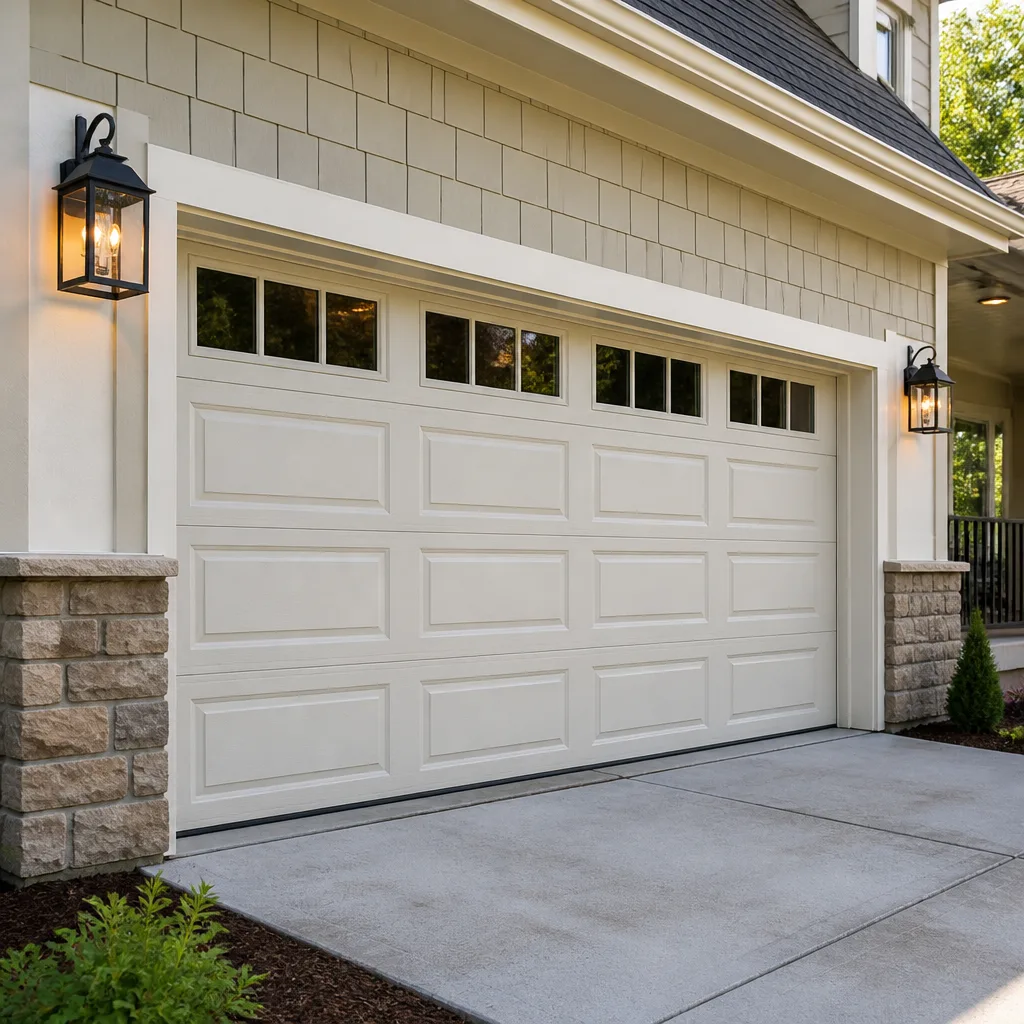 Raised-panel steel
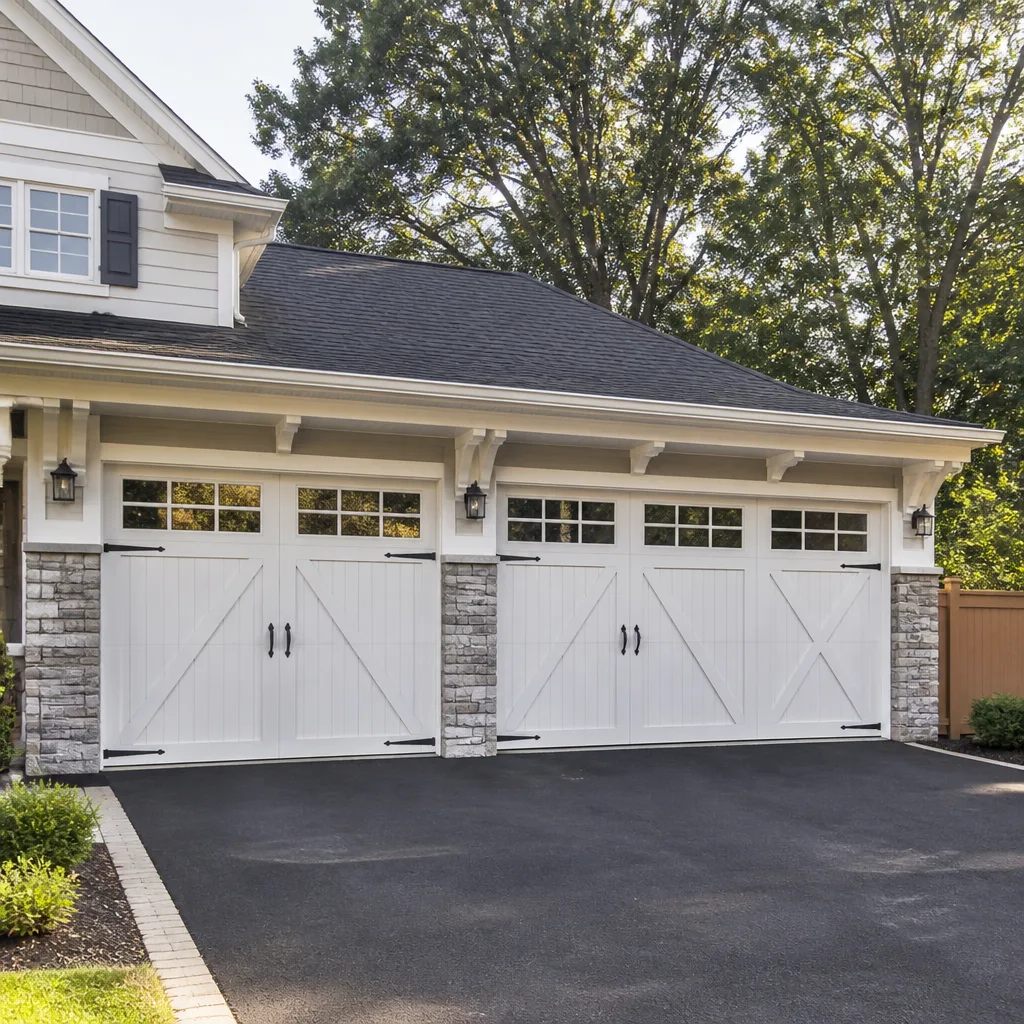 Carriage house
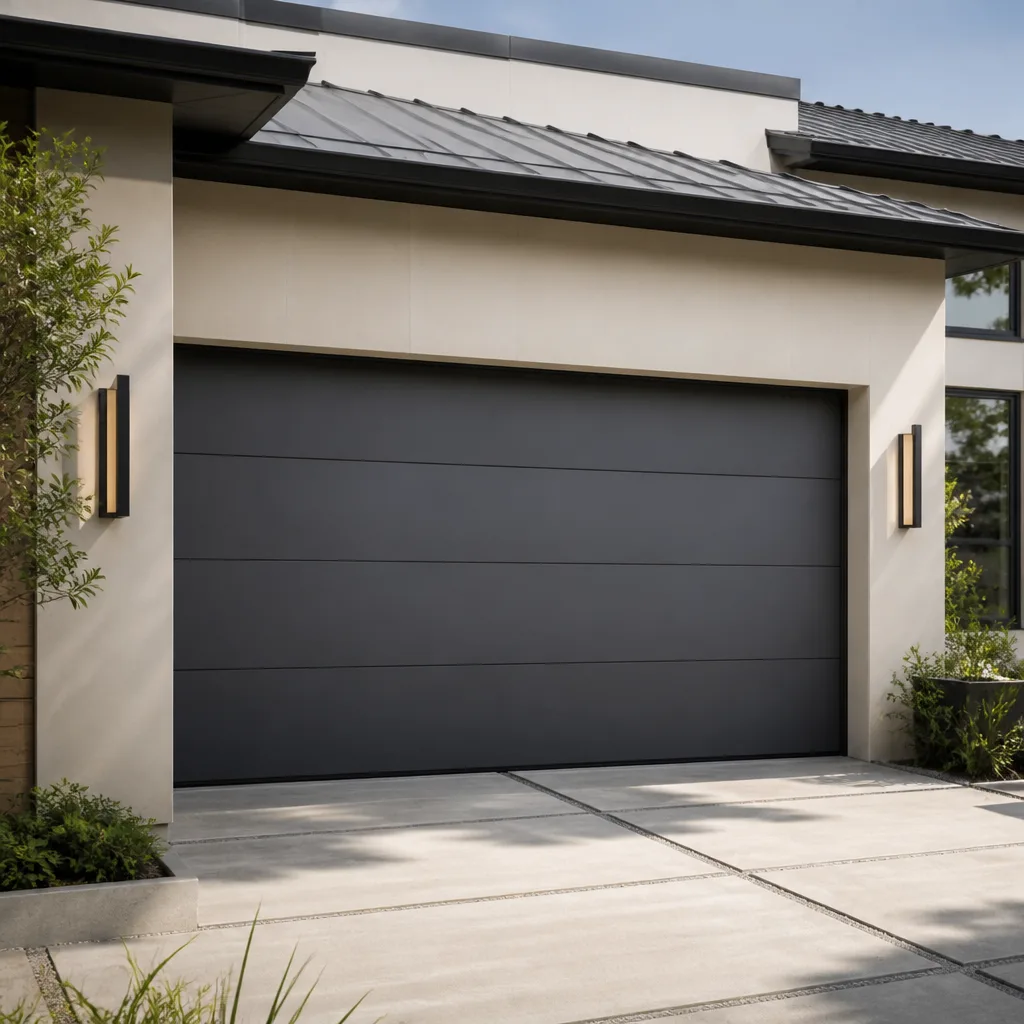 Modern flush
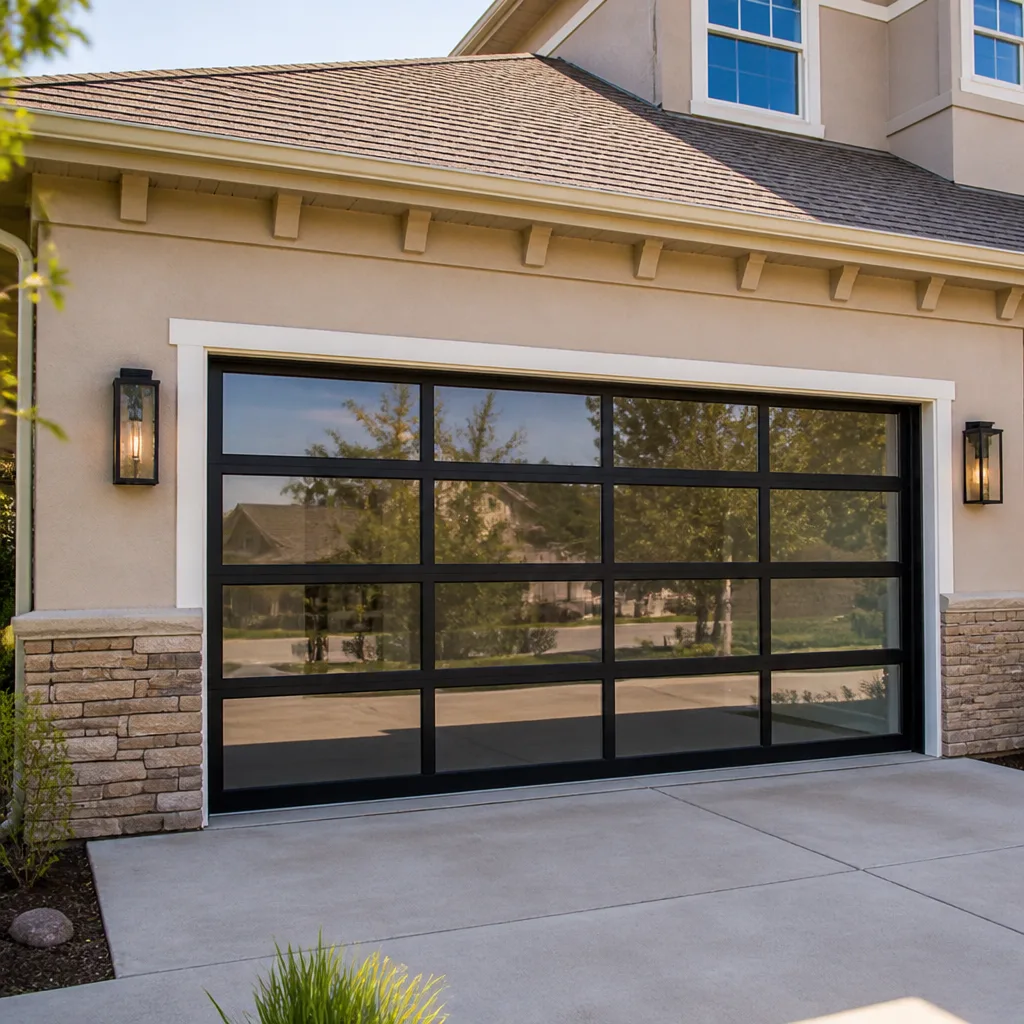 Full-view glass
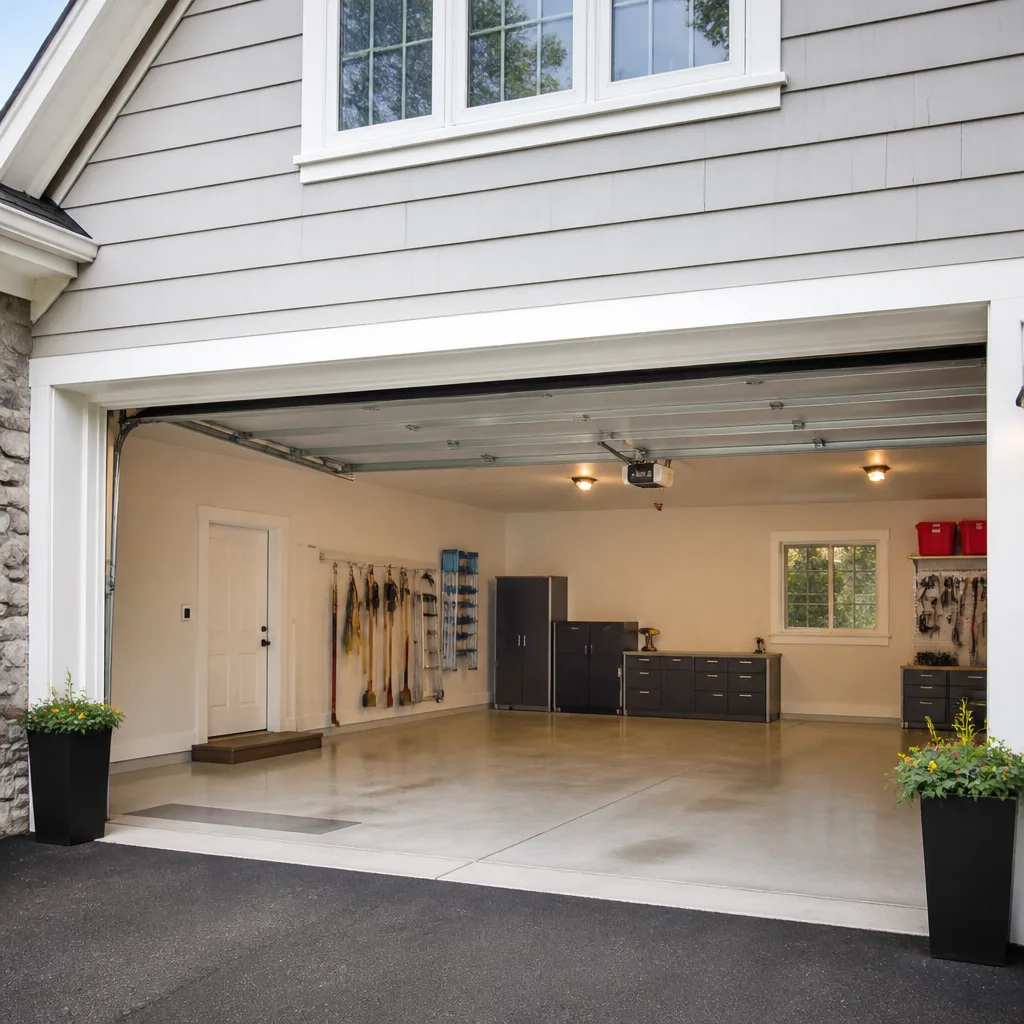 LiftMaster openers
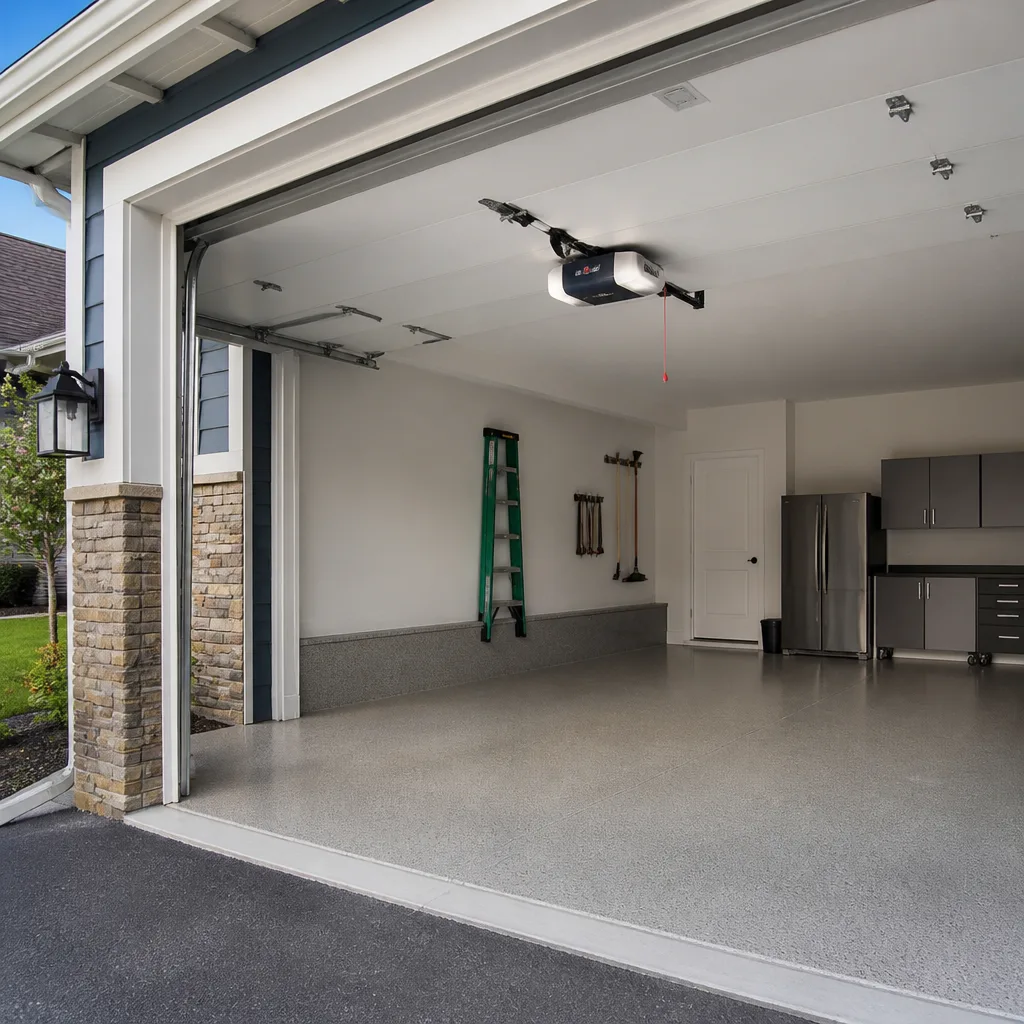 Chamberlain openers
Full 25-point door and opener safety check with every visit - springs, cables, rollers, tracks, and your LiftMaster or Chamberlain opener included
You get a price before we start. It does not change when the pro arrives.
Get your free estimateDIY vs Professional Garage Door: The Deltona Homeowner’s Decision Guide
Most homeowners in Deltona frame this decision around skill and money: can I do it, and how much will I save? That’s the wrong measuring stick. A torsion spring holds enough stored torque to break bones, and nothing in a video tells you where your personal line falls. This guide breaks the garage door into specific jobs, so you can see which ones genuinely reward DIY and which ones just look easy. You’ll learn where a Saturday project saves real money, where it risks a hospital visit, how a wrong adjustment quietly voids an opener warranty, and how to cut your service costs without touching a spring.
Quick Answer
Quick Answer: You can safely tighten hardware, lubricate moving parts, rebalance a door within its tracks, and test your safety sensors yourself. You should not touch torsion springs, extension springs, cables, or the high-voltage wiring inside an opener. Those jobs need professional tools and carry real injury risk, and no video makes them safe. Spring replacement is the most common garage door repair we handle in Deltona, and it’s also the one we see homeowners attempt most often.
Styles & brands we work with
- Raised-panel steel
- Carriage house
- Modern flush
- Full-view glass
- LiftMaster openers
- Chamberlain openers
Table of Contents
- The Real Framework: Risk, Not Skill
- What’s Actually Safe to DIY
- What Requires Professional Tools
- Why Spring Work Is Different
- The Hidden Cost: Opener Warranty Traps
- How to Lower Your Service Bill Without Touching the Mechanics
- How to Describe a Problem Accurately
- What Makes a Deltona Door Different
The Real Framework: Risk, Not Skill
Torsion springs operate under 100+ pounds of torque. That single fact resets the whole DIY vs. professional question. Skill tells you whether you can complete a job. Risk tells you what happens if you’re wrong once. A door spring, an opener install, or a cable fitting is unforgiving in a way that a leaky faucet is not: a single mistake can release stored energy instantly, and there’s no second chance to correct it mid-reaction.
We look at two factors before giving anyone a straight answer. The first is stored energy: does the component hold a load that must be controlled during work? Springs and cables do. Hinges and rollers don’t. The second is reversibility: can a mistake be undone without injury or permanent damage? A misaligned sensor is fixable. A snapped cable under tension is not fixable in the moment.
Put those together and most garage door work sorts into three buckets:
- Safe to DIY: low stored energy, reversible mistakes, no specialty tools
- Risky but possible for some: requires correct tools, some risk if done wrong, moderate cost of failure
- Professional only: high stored energy, irreversible failure modes, injury risk even with correct technique
What a video camera can’t show you is the tension in a spring as it releases, how quickly a cable unseats from its drum, or how a torsion bar behaves when a set screw slips. See what a spring actually does when it fails and the safety conversation gets much clearer than a tutorial can make it. That’s the lens this whole guide is written through.
What’s Actually Safe to DIY
There are exactly two garage door tasks where DIY saves real money without meaningful injury risk: hardware maintenance and sensor troubleshooting. Both are worth doing on a regular basis, and both keep a door out of the shop for months longer than neglect would allow.
Task 1: Lubrication and hardware tightening. Every six months or so, a door wants a light application of white lithium grease or a purpose-made garage door lubricant on the hinges, rollers, and pivot points. Loose bolts on the hinges and the bracket plates should be snugged up with a socket wrench, not overtightened. This one habit prevents most of the squeals and rattles that send Deltona homeowners reaching for a technician.
Task 2: Safety sensor alignment. If the door reverses on its own or won’t close at all, the first thing to check is the two photo-eye sensors at the bottom of the tracks. They should face each other, the LED on each should be steady (not blinking), and nothing should be blocking the beam. A cobweb, a fallen leaf, or a broom handle leaning on the bracket is enough to stop a door in its tracks.
Task 3: A visual inspection. Run the door and watch it. Look for the door pulling to one side, a gap at the bottom on one end, a stretched spring with an obvious gap in the coils, or a cable that’s jumped off its drum. You don’t need to fix what you see; you need to describe it accurately to whoever does.
Task 4: Testing the auto-reverse. Place a roll of paper towels or a piece of scrap wood flat under the door’s path and close the door with the wall button. The door should reverse on contact. If it doesn’t, that’s a real signal to call for service, not a signal to adjust the force limits yourself.
None of these require stored-energy work, and none of them put your hands in a loaded component. They’re the two tasks where DIY is genuinely worth it.
What Requires Professional Tools
A proper torsion spring job needs tools that aren’t in the average garage and aren’t sold at the corner hardware store. If you’re missing any one of these, skill doesn’t matter: the job is dangerous regardless of how careful you are.
- Winding bars – two solid steel bars, sized to the spring’s winding cone, used to load and release the spring under control. Wrong-size bars slip. Slipped bars release 100+ pounds of torque into whatever’s nearby.
- A spring scale or torque gauge – used to bring the spring to the correct loaded tension. “Feel” doesn’t work here; slightly over or under, and the door won’t balance properly.
- Proper C-clamps and locking pliers – to hold the torsion bar safely during work. A door that shifts mid-repair drops or snaps.
- A winding cone set or specific spring sizing tools – springs vary by door weight, height, and brand. A Clopay door and an Amarr door from the same era can use different wire gauges, and matching only by eye is how doors get installed in a permanent imbalance.
- Correct-tension safety glasses and heavy gloves – for the person doing the work, which shouldn’t be a homeowner.
Openers are a second category. A LiftMaster or Chamberlain belt-drive install requires calculating the correct header bracket position, drilling into the correct structural members (not just drywall), setting the travel limits, and wiring the unit to a proper power source. Getting any one of those wrong means the door misbehaves, the opener misreads force limits, or the mount fails later.
Panel replacement and full door replacement sit well past the DIY line too. A Clopay or Amarr panel has to match the door’s exact model, hinge spacing, and manufacturer’s track positions. A panel that “fits” can still leak air, misalign, and take years off the door’s life. Panel replacement, opener replacement, and full door installs deserve a measured, ordered approach rather than a weekend project. If you’re in Deltona and the door needs more than tightening and lubrication, garage door repair is the honest starting call.
Why Spring Work Is Different
Spring replacement is the most common garage door repair in the trade, and it’s also the most dangerous. Every spring on a residential door is a stored-energy device. It’s engineered to hold thousands of pounds of force in a small, quiet coil and release it the moment the wrong bolt comes loose. That’s what makes spring work different from everything else on a garage door.
There are two spring types. Torsion springs run along the header above the door and use torque applied through a winding bar. Extension springs run along the sides of the door on a track. Both are loaded. Both can injure. Torsion is harder to work on. Extension is easier to misjudge.
Here’s what “professional only” means in practice:
- The springs are under full tension. Any movement of the wrong bolt, cable, or winding cone releases that load.
- The workload isn’t instantaneous. Releasing the tension properly takes both winding bars moving in a controlled sequence, not one.
- The system is under load whenever the door is in any position other than fully open, so the danger zone isn’t limited to the moment you touch the spring.
- Replacement springs have to be matched to the door’s exact weight and height, and the wrong size spring either shortens door life or fails early.
- The whole setup assumes the door is balanced and the cables are seated. Touch one of those out of order, and the spring’s stored energy finds a new place to go.
We’ve seen doors where a homeowner had clearly tried to work the spring and stopped halfway. The door was stuck in a bad position, the spring was partially loaded, and the only safe path forward was to finish the job carefully and rebalance the door. That’s the pattern we see repeated in Deltona, and it’s the reason we won’t walk a homeowner through a spring replacement by phone. We’ll walk them through everything else, but not this.
If you have a door that won’t open and a spring that looks off, don’t test what happens if you force it. Call a technician. On the repair side, that’s where garage door opener repair and spring repair often overlap, because a dead door isn’t always a dead opener.
The Hidden Cost: Opener Warranty Traps
Opener warranties are long. Most LiftMaster, Chamberlain, Genie, and Craftsman openers ship with a limited warranty that runs for years, and typically separates the motor, the electronics, and the belt or chain into separate coverage windows. What most homeowners don’t realize is what voiding that coverage actually looks like. It isn’t usually a single dramatic act. It’s usually installation mistakes, wiring shortcuts, or unauthorized repairs that get discovered after a failure.
The common ways DIY work voids a manufacturer warranty:
- Wiring the opener to an improperly rated or improperly grounded circuit
- Mounting the header bracket into drywall rather than structural members, causing damage to the opener’s housing or motor
- Adjusting force limits to compensate for a bad install, then driving the opener against a door that can’t travel correctly, which stresses the motor beyond spec
- Installing the wrong rail length or wrong belt/chain type after a rail failure, which is outside the manufacturer’s fitment spec
- Using third-party parts in a way the manufacturer doesn’t cover
None of these show up on a YouTube comment thread. They show up in a claim denial months after the door first started acting strange, when the homeowner is asking why a part or motor the manufacturer “should” cover isn’t covered. Compare the cost of a proper install with the cost of an out-of-warranty motor replacement, and the DIY savings evaporate.
Wiring matters here in particular. Openers connect to household current, and if you’re not comfortable with electrical work, the opener is not the place to start. That’s not a comment about your intelligence. It’s a comment about what happens if a connection isn’t right.
This is one of the reasons a brand-aware shop matters. A technician who regularly handles LiftMaster and Chamberlain openers knows the manufacturer’s install specs and knows when a fix in the field risks a warranty question. That’s the kind of judgement that’s hard to price and easy to miss. If you’re planning a new opener or a full install, garage door installation is the path that keeps the warranty intact.
How to Lower Your Service Bill Without Touching the Mechanics
The single biggest thing a Deltona homeowner can do to reduce their garage door service cost is to give the technician a clear starting point. The second is to avoid the small damage that turns a simple repair into a bigger job.
Here’s the short list of things we tell homeowners to do regularly. None require stored-energy work:
- Lubricate twice a year. Spring and fall are natural reminders, and the mild weather in Deltona makes either one easy. White lithium grease on the hinges, rollers, and pivot points, and a dry silicone spray on the tracks. Not on the springs themselves, and never on the opener’s belt or chain unless the manual says so.
- Clear the sensor beam. A quick sweep of the beam line and a check that the sensors still face each other. This is the number one false alarm.
- Test the auto-reverse monthly. If the door doesn’t reverse on contact, call for service before it becomes an actual problem.
- Keep the tracks clean. A vacuum or a soft brush is enough. Pushing debris into the rollers is what causes wear.
- Watch for the delivery sign. Doors that were struck by a pulled-in car or a kid’s bike usually need a panel or a hinge, not a whole door. Getting that fixed early keeps the damage local.
The bigger hidden-savings point: a small alignment issue becomes a bigger alignment issue, and bigger alignment issues become spring or opener failures. A door that’s been pulling to one side for months will eventually wear a roller, then a hinge, then a cable, then the spring. Catching the pulling with a visual inspection is cheaper than catching the failure later.
What a homeowner shouldn’t try to do: adjust the force limits, replace a hinge under a loaded door, or re-seat a cable. These are the invisible failures that turn a $200 job into a $600 job. A free estimate is the right move before learning that the wrong way. Call (877) 492-1973 and we’ll talk through it. We answer 24/7, with fast dispatch from 7am to 7pm.
How to Describe a Problem Accurately
Diagnostic time is charged when the technician has to figure out what’s wrong from scratch. If you’ve already described the symptom clearly on the phone, that time shrinks, and the repair starts sooner. This is one of the few places homeowners can genuinely lower their bill without touching a single component.
Before you call, have these details ready:
- What the door does (and doesn’t do): won’t open, won’t close, opens partway and stops, opens fully but reverses, makes a loud snap when it moves
- When it started: a single event, a gradual change, or a specific trigger (lightning, a bump, a loud noise)
- Where the sound is coming from: top of the door (torsion), side of the door (extension spring or cable), overhead unit (opener)
- What the lights on the opener do: steady, blinking pattern, no light at all, error blink count if the manual cites one
- The brand and model of the door and opener if you know them: Clopay, Amarr, LiftMaster, Chamberlain, Genie, Craftsman, Wayne Dalton, Raynor
- Whether you’ve tried the manual release: if you can disengage the door and lift it by hand, that’s diagnostic information
Two or three sentences covering those points is enough for a technician to plan the visit properly. It’s the difference between “the door doesn’t work” and “the door opens about a foot, then a loud snap, then it stops, and the opener light blinks three times.” The second one is a five-minute diagnosis. The first one is thirty.
Sound is one of the most useful things you can describe. A slow creak suggests worn rollers or lubrication. A metallic snap suggests a cable or spring. A rhythmic thud suggests a bad roller or a misaligned door. A single loud pop, followed by a release of tension in the door, suggests a broken torsion spring. Knowing what you heard means the technician shows up with the right parts. That’s Deltona Garage Door Repair Pros being useful before we’ve even pulled into your driveway.
What Makes a Deltona Door Different
Deltona’s housing stock is a mix of mid-century construction, newer builds in neighborhoods like Deltona Lakes and Saxon Ridge, and continued infill around Howland Boulevard and Courtland Boulevard. That mix means a garage door here is often a door as the primary entry point, not a decorative afterthought. Homeowners in Deltona come in and out through the garage every day, and that daily use wears components faster than a decorator door in a colder climate.
Summers here are hot, wet, and long. UV exposure on a garage door’s paint and on the Lubricant film is real, and the daily heat cycling on the tracks is real. Doors here expand, contract, and sit in high humidity most of the year. The practical result:
- Lubrication matters more often. Heat degrades grease faster than cool, dry air. Twice a year is the minimum, not the goal.
- Openers run hot. A motor that runs in a hot attic or garage has less thermal headroom. A door that’s out of balance is much harder on the motor in July than in January.
- Safety sensor lenses fog. The photo-eye sensors pick up condensation after a storm. A quick wipe and a beam check does more than a service call.
- Torrential rain puts pressure on bottom seals. A worn bottom seal lets water into the space under the door. Old thresholds are common in Deltona’s older blocks.
What this means for the DIY decision: the “safe to DIY” tasks matter more here, because the climate wears them faster. The “professional only” tasks matter more too, because the door sees more cycles per year in daily use than a colder-climate install. A spring that would last longer in a cooler place may fail sooner here. That doesn’t make the spring less dangerous. It just makes it more likely to fail.
Common Mistakes to Avoid
- Trying to release a spring without winding bars. Any lever used in place of a proper winding bar – a screwdriver, a wrench, a socket – can slip. When it does, the spring’s stored load has nowhere to go. No technique in a video changes that.
- Adjusting the force limits to get the door closed before a storm. Turning up the force doesn’t fix the actual problem. It pushes the opener harder against a door that can’t travel correctly, and it shortens the opener’s life. The correct fix is finding the cause.
- Replacing a hinge or roller while the door is under tension. Either the spring has to be released by someone who knows what they’re doing, or the hinge has to be replaced with the door fully open with the correct support in place. Neither is a “five-minute job.”
- Cutting into the cable system because the door looks easy to fix. Cables are balanced with the springs. Move a cable without accounting for the spring, and both release at the same time.
- Installing an opener without checking the header bracket mount. A drywall anchor is not the same as a structural mount. Header brackets pull out. Doors fall.
- Wiring an opener directly into a non-grounded circuit. The warranty consequence is real; the electrical consequence is bigger.
- Buying a replacement spring by eye. Springs are matched to door weight and height, and getting that wrong means the door runs unbalanced and the new spring fails early anyway.
There’s a Deltona-specific version of the last bullet too. Local hardware stores stock general springs and treat them as interchangeable. They aren’t. A spring rated for a slightly different door weight will run for a while and then let go, and the second failure is the one that costs more than the first.
See the difference
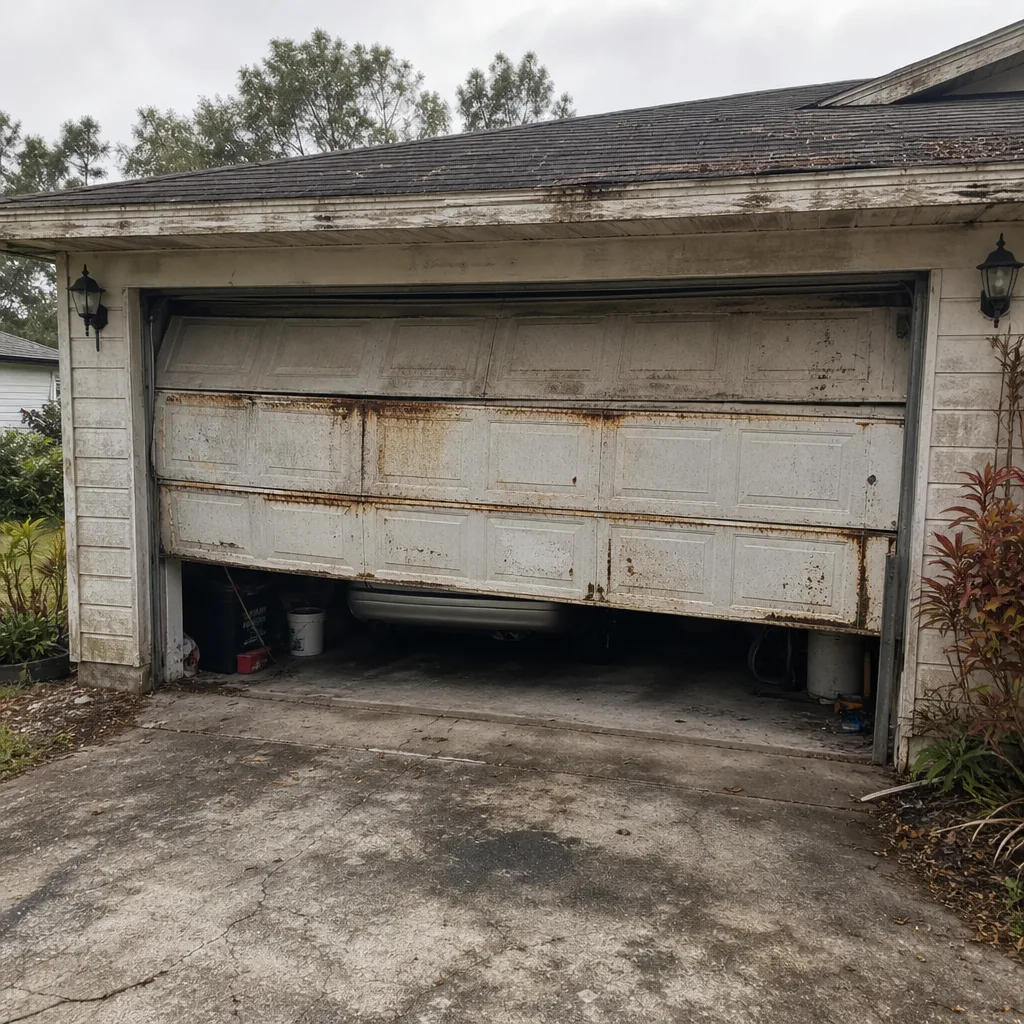 Before
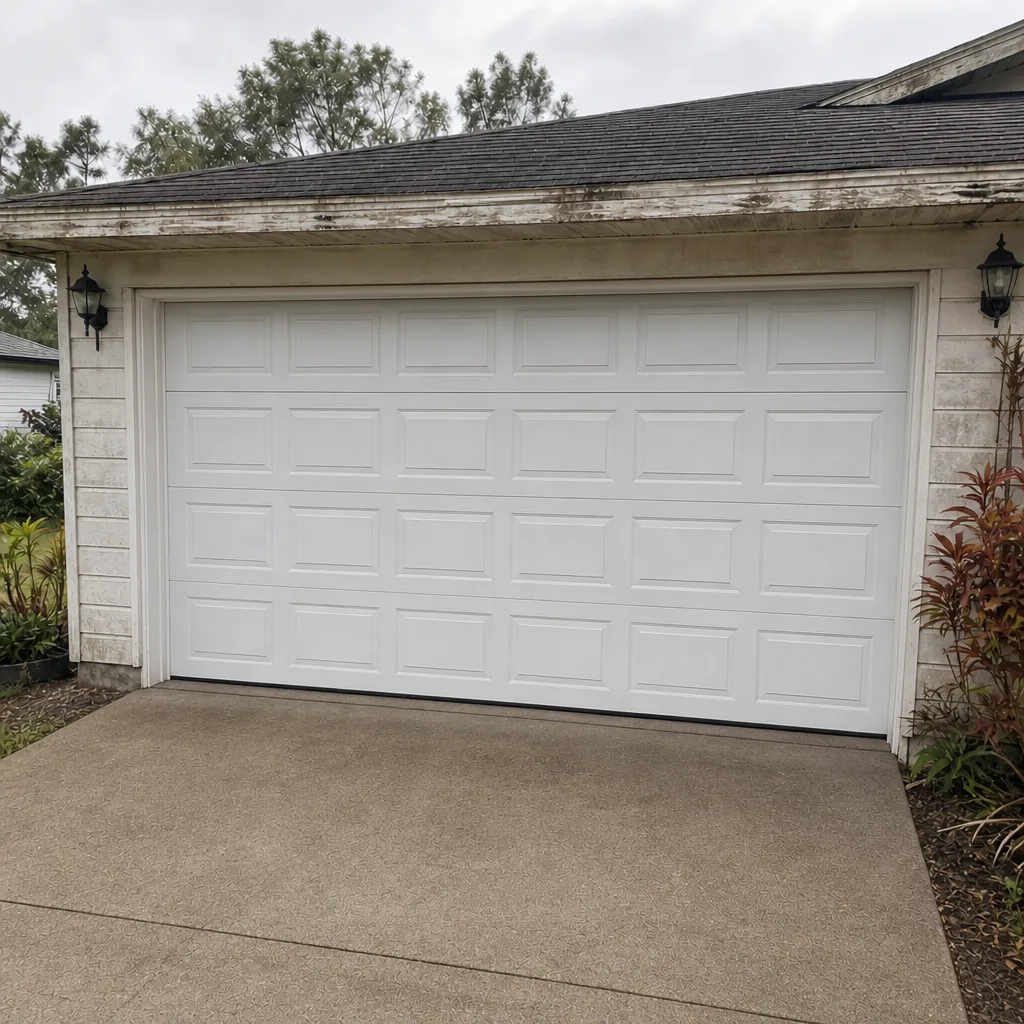 After
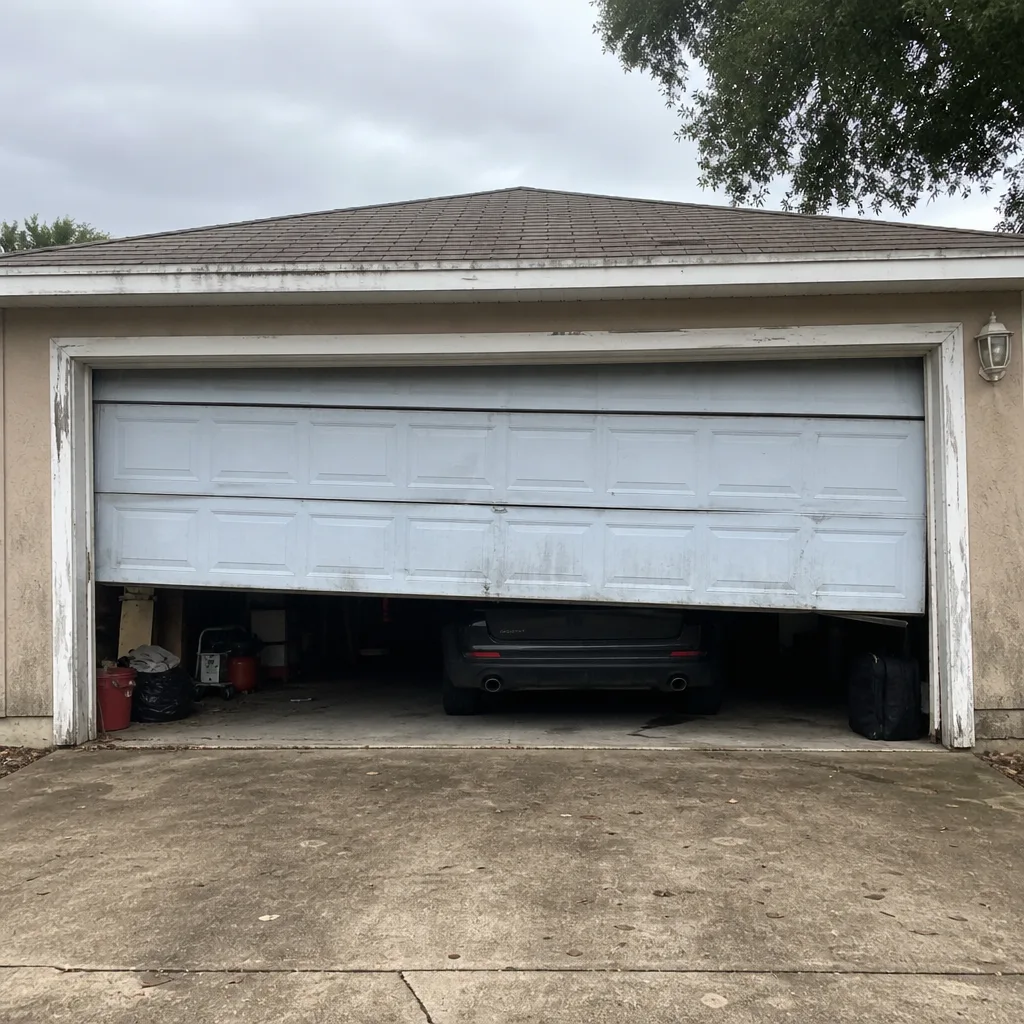 Before
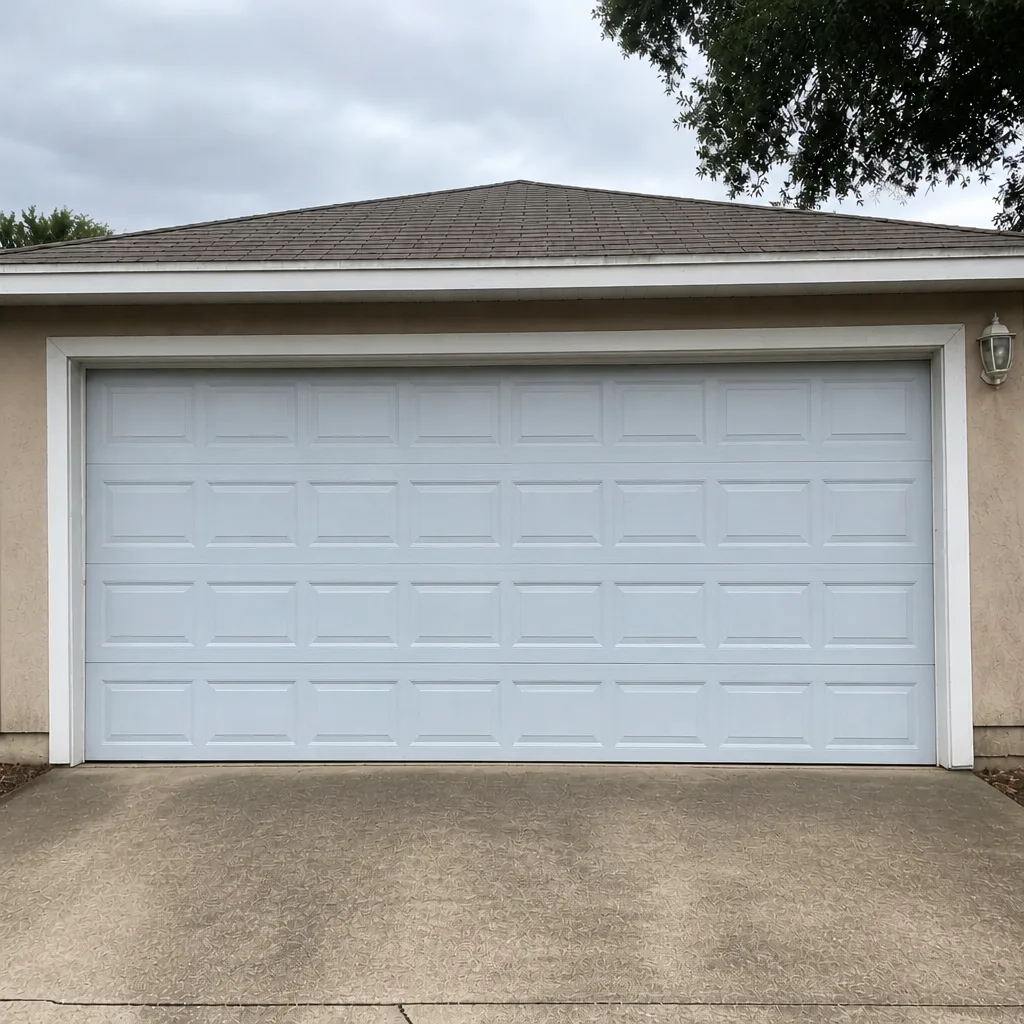 After
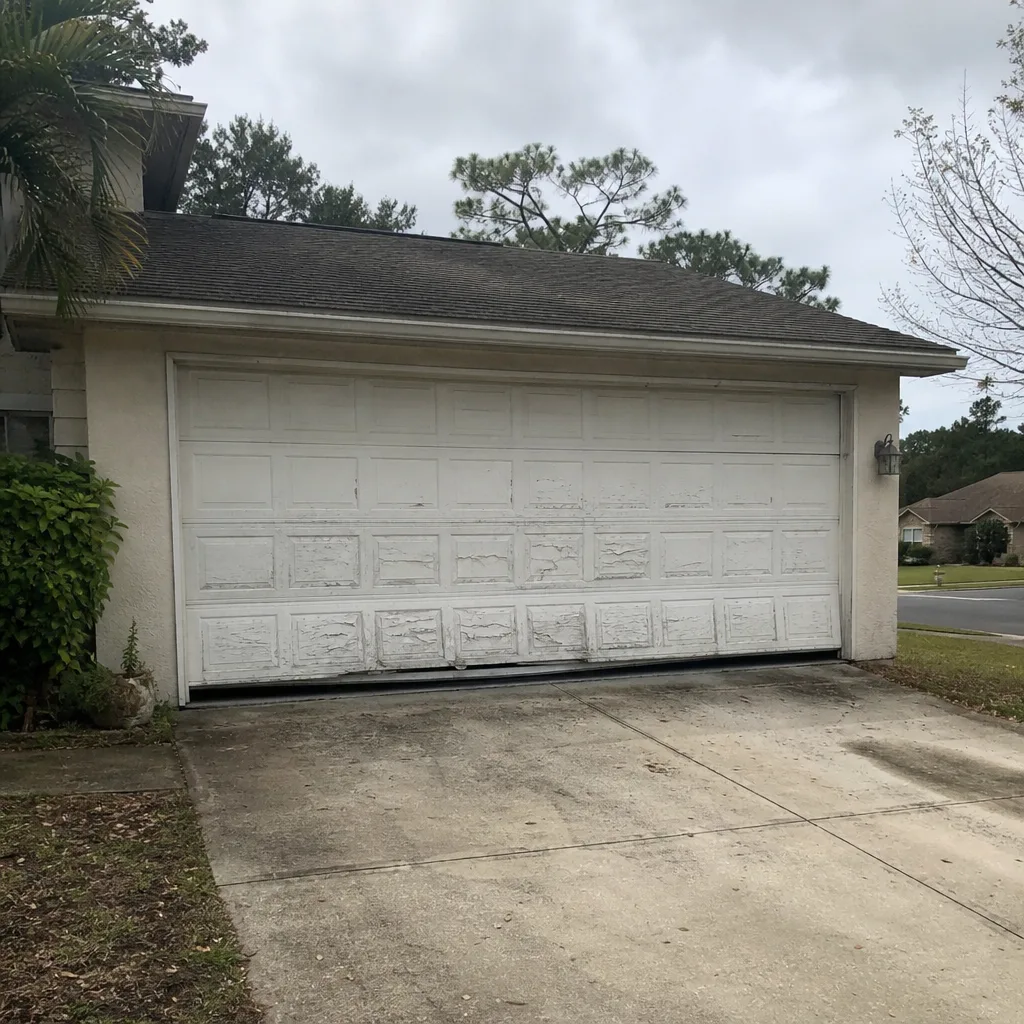 Before
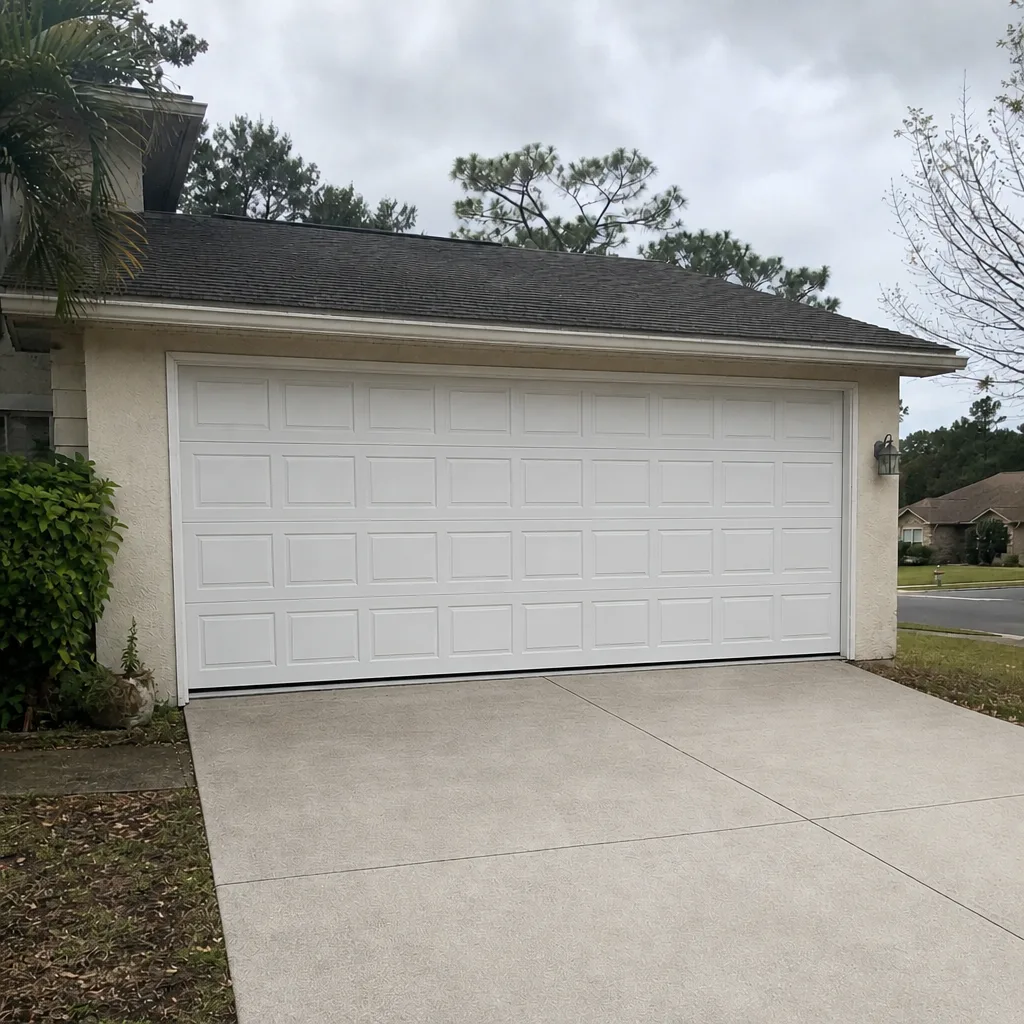 After
When to Call a Professional
Call a professional for any of the following. These are the situations where the risk of injury or the risk of a warranty denial outweighs any savings.
Call immediately if the door won’t open and you can see a gap in a spring coil, if you hear a loud snap and the door sits stuck, if a cable is visibly off its drum or bent, if the door hangs cocked to one side with the tracks kinked, or if the opener runs but the door doesn’t move. Call before touching anything if you’re not sure whether the door is under load, because guessing wrong on that question is the one mistake that can’t be undone.
Call also for the deliberate jobs: a new opener, a new panel, a full door replacement. Measured and scheduled work, not a weekend project. Emergency garage door service is a real offering at Deltona Garage Door Repair Pros, and free estimates are available across Deltona. Call (877) 492-1973. We answer 24/7, with fast dispatch from 7am to 7pm, Sunday through Friday.
Frequently Asked Questions
You should not. Torsion and extension springs are loaded with stored energy, and releasing them safely requires proper winding bars, correct spring sizing, and a sequence that a homeowner can’t learn from a video without real risk. We don’t walk homeowners through spring replacement by phone for that reason. Spring repair is one of the most common jobs we handle in Deltona, and it’s worth paying for the right setup. Call (877) 492-1973 for a free estimate.
For lubrication, sensor alignment, and visual checks, DIY is cheaper and worth doing. For springs, cables, opener installs, and full door work, the professional route is usually cheaper once a single mistake is included. A snapped spring or a voided warranty costs more than the repair. The written estimate sets the final price, and it’s quoted and agreed before any work starts. Call (877) 492-1973 for an exact quote.
A single spring replacement is typically in the low hundreds, and a matched pair is about twice that since they’re almost always replaced together. Exact pricing depends on spring type and door size, and the written estimate you get before work begins is the final number. Call (877) 492-1973 for an exact quote on your door. Free estimates, upfront pricing.
It can. Manufacturer warranties on LiftMaster, Chamberlain, Genie, and Craftsman openers typically exclude damage from improper installation or unauthorized repair, and force-limit changes to compensate for an unbalanced door are one of the more common ways warranty claims get denied. A proper install or repair keeps the coverage intact. Call (877) 492-1973 for opener service and a free estimate.
Yes, same-day service and emergency service are core parts of what we do in Deltona. We answer 24/7, with fast dispatch from 7am to 7pm, Sunday through Friday. A call outside dispatch hours is booked into the next opening. Call (877) 492-1973.
Our technicians handle LiftMaster, Chamberlain, Genie, Clopay, Amarr, Wayne Dalton, Craftsman, and Raynor, and have up to 14 years of experience across those systems. The brand matters because the right fix is different for a LiftMaster smart opener than it is for a Genie legacy drive. We diagnose the specific system, not a generic door. Call (877) 492-1973 to book an estimate.
The Bottom Line
Garage door work breaks cleanly in two. Lubrication, sensor checks, visual inspections, and auto-reverse tests are safe, cheap, and genuinely worth doing on a regular basis. Springs, cables, opener installs, and full doors are not. The line isn’t about skill: it’s about stored energy, irreversible mistakes, and the fact that a garage door has exactly one failure point where a wrong move can’t be undone. Deltona’s climate and daily-driver housing stock make the safe tasks matter more often, and the dangerous tasks matter more too. Handle the simple ones yourself. For the rest, get a free estimate and a written price before anything starts.
If the door needs more than a lubrication pass and a sensor wipe, Deltona Garage Door Repair Pros is ready. Call (877) 492-1973 for a free estimate. We answer 24/7, with fast dispatch from 7am to 7pm, Sunday through Friday. Free estimates, upfront pricing, and the price is quoted and agreed before any work starts.
Written by the team at Deltona Garage Door Repair Pros.