
Last updated November 22, 2026
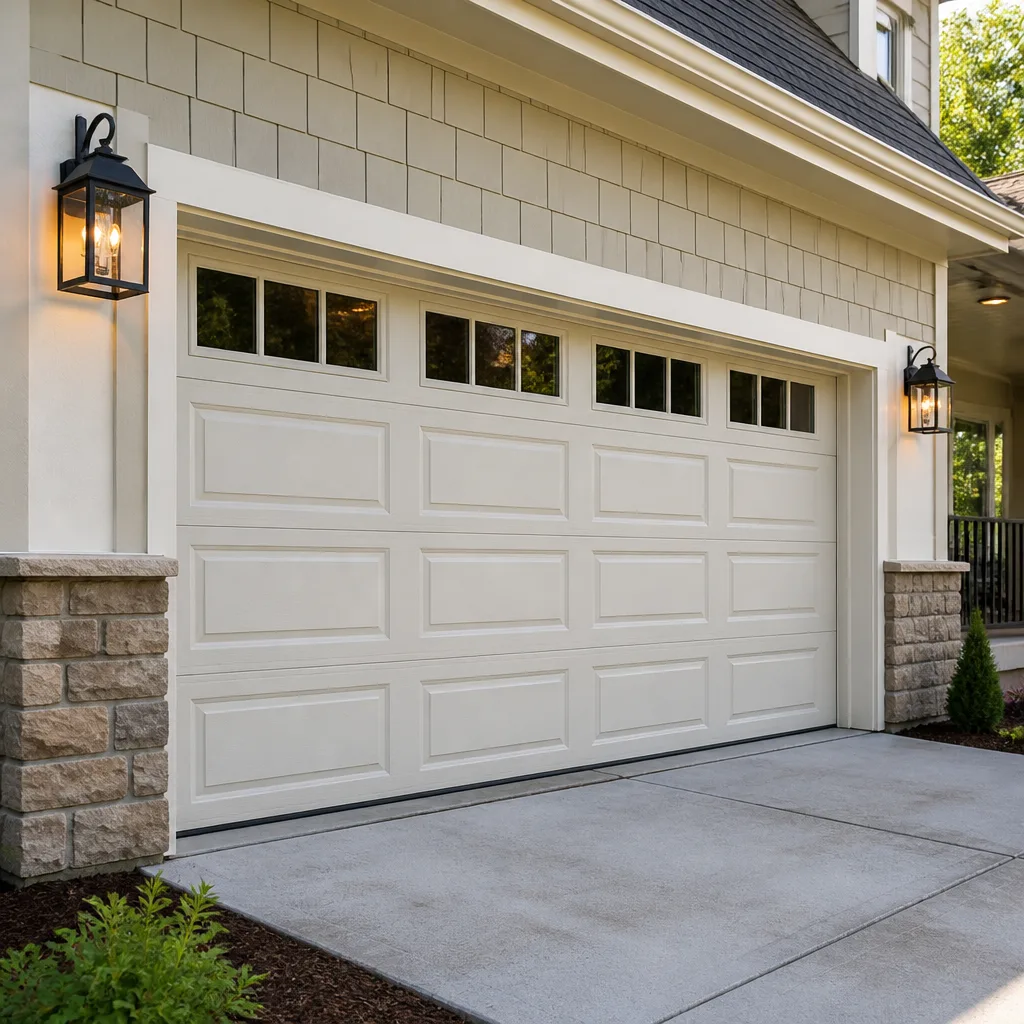 Raised-panel steel
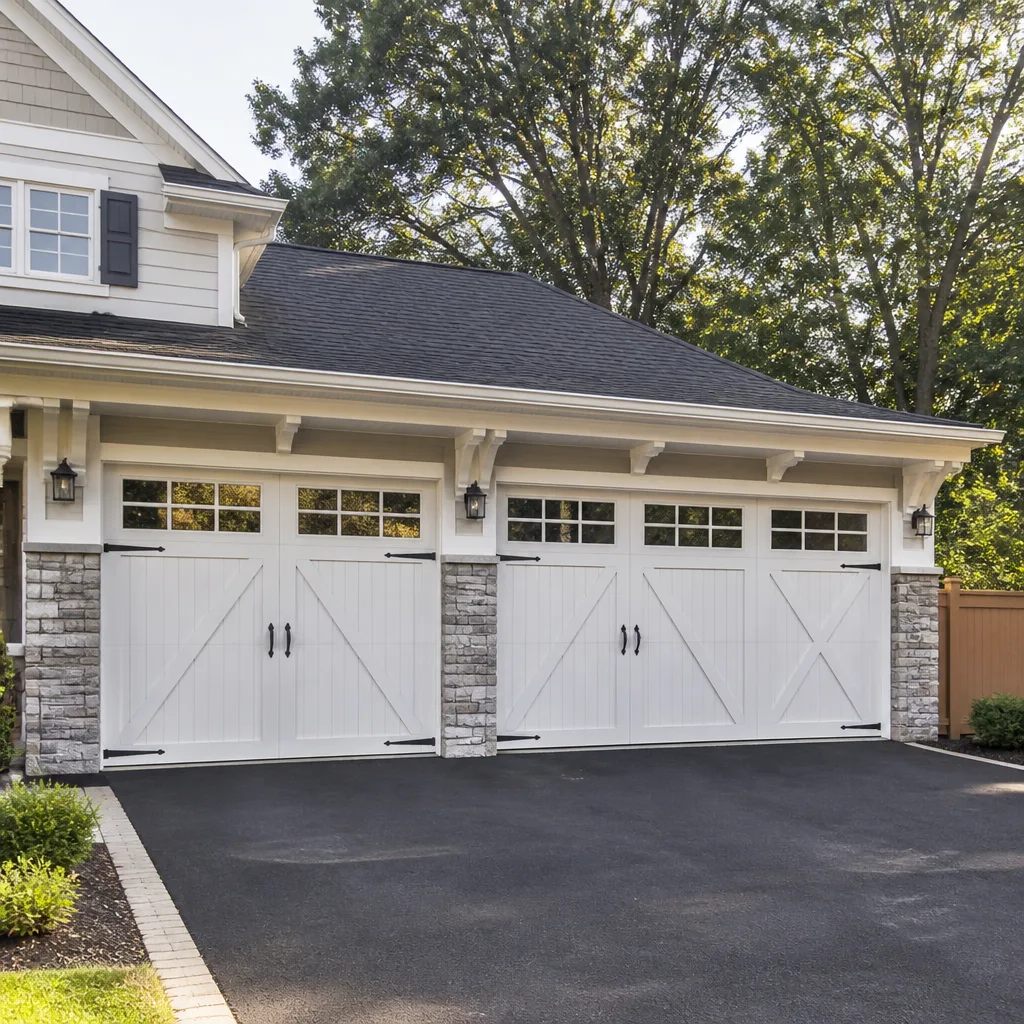 Carriage house
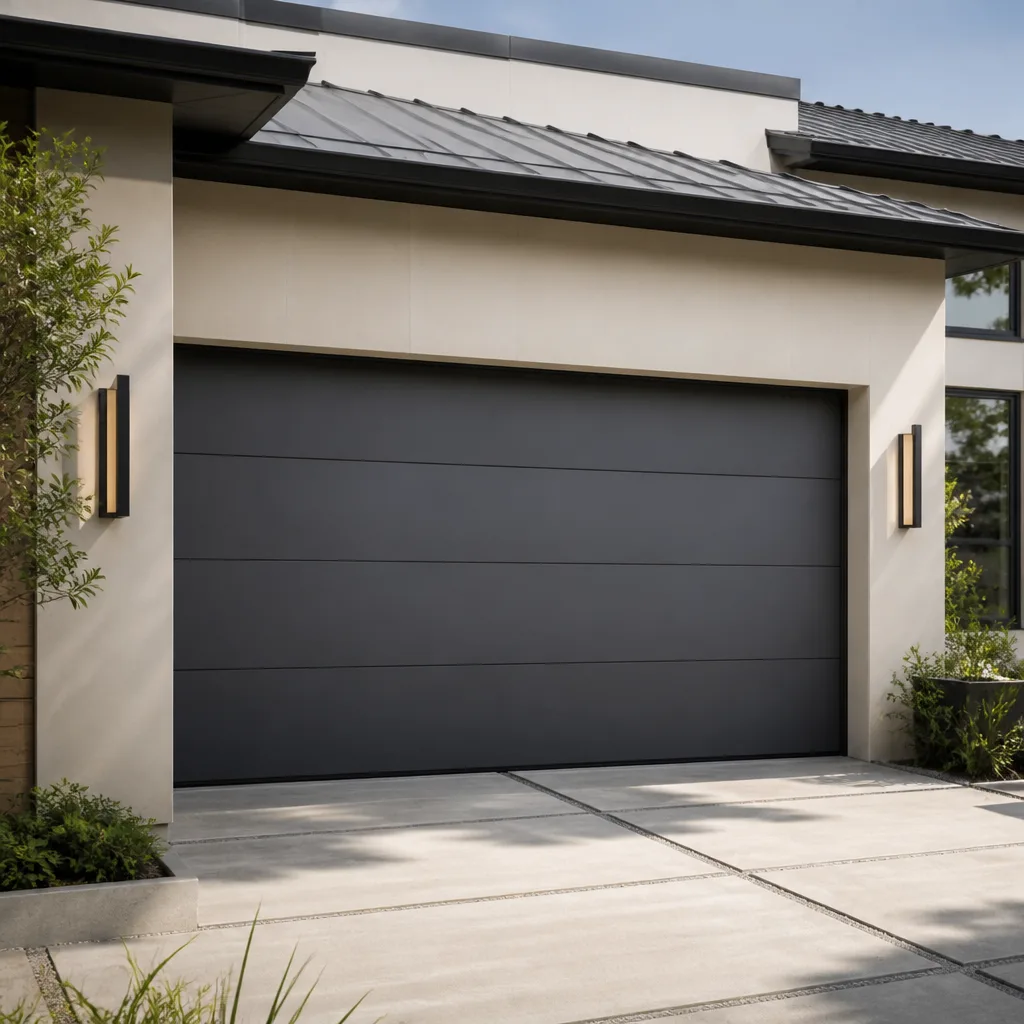 Modern flush
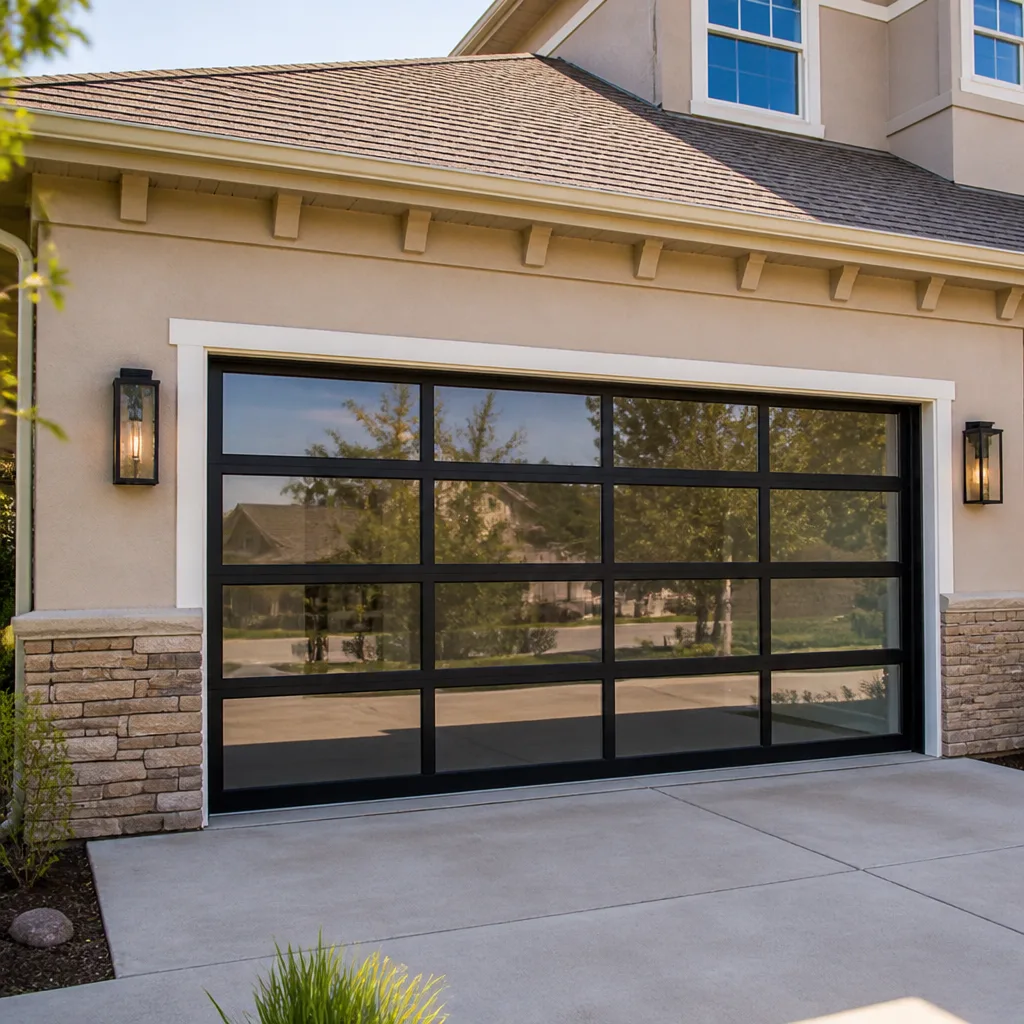 Full-view glass
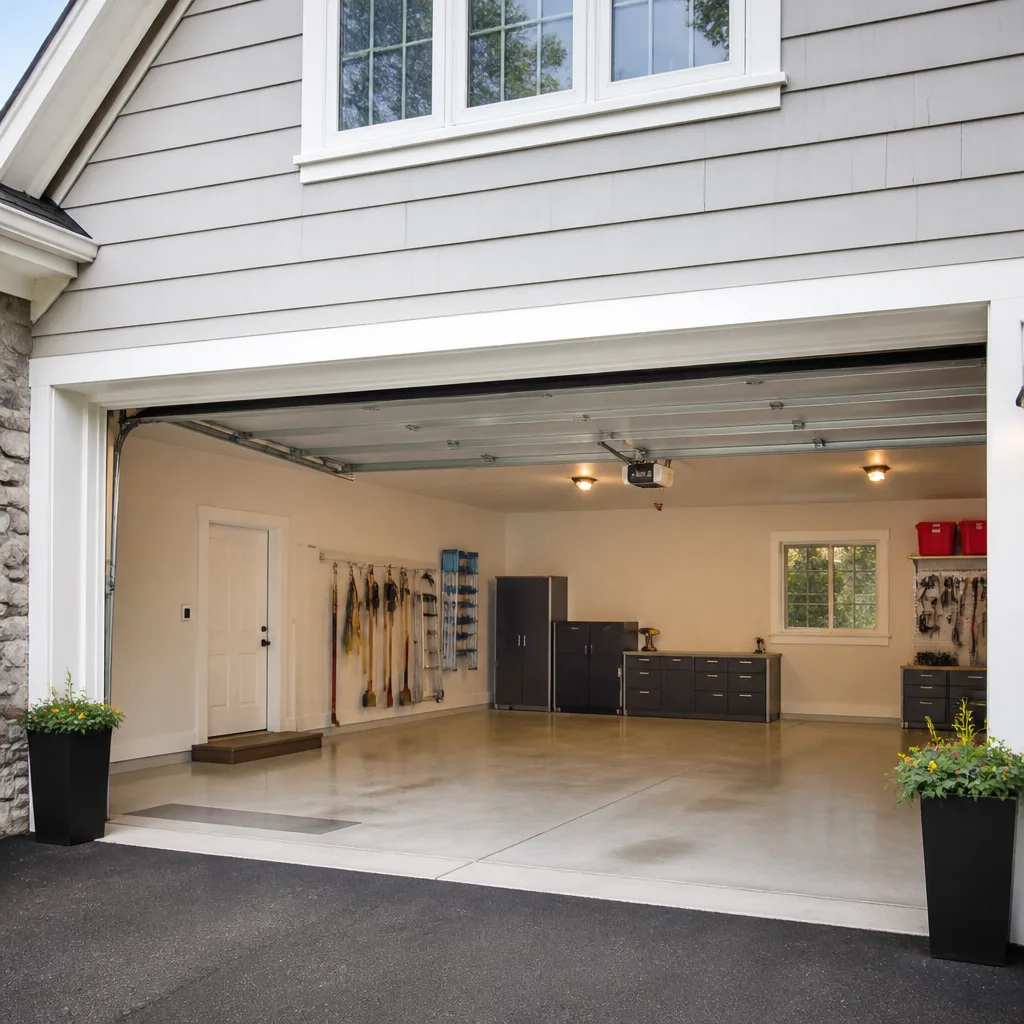 LiftMaster openers
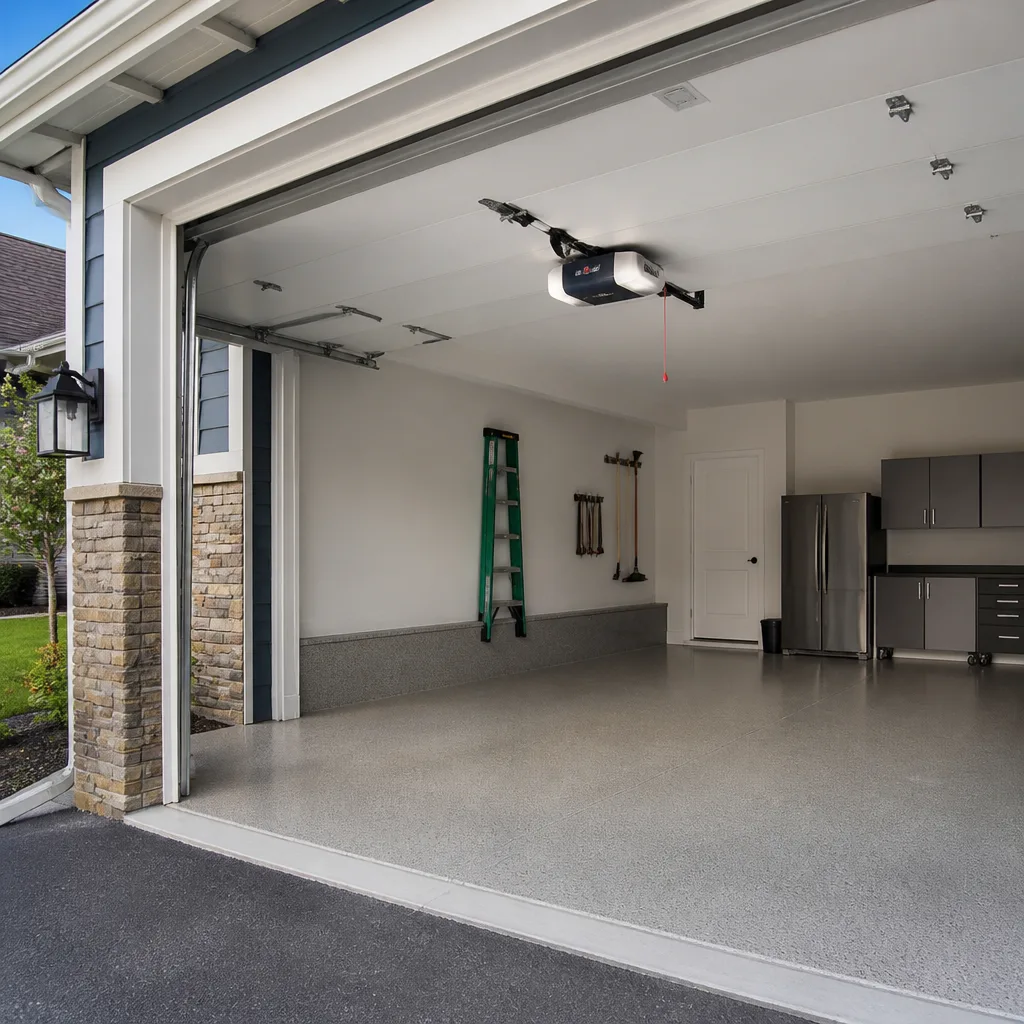 Chamberlain openers
Full 25-point door and opener safety check with every visit - springs, cables, rollers, tracks, and your LiftMaster or Chamberlain opener included
You get a price before we start. It does not change when the pro arrives.
Get your free estimateGarage Door Permits, Codes & Inspections in Deltona, FL: What You Need to Know
Most homeowners assume a garage door swap is like replacing a faucet: buy the part, install it, done. That assumption is where trouble starts. In Florida, a garage door is a rated structural component of the building envelope, and in many cases replacing one is a permitted alteration, not a cosmetic upgrade. The catch is that nothing about the permit shows up on the day of install. It surfaces years later, at the worst possible moment, usually during a home inspection or a title search when a buyer’s lender wants a clean record. This guide explains when a garage door project in Deltona needs a permit, how Florida’s impact-rating rules apply, what inspectors actually look for, and what to do if you inherit unpermitted work.
Quick Answer
In Deltona and the rest of Volusia County, replacing a garage door or changing its size, opening, or structural supports generally requires a building permit and an inspection; a like-for-like repair of an existing door, spring, or opener usually does not. Florida also requires garage doors in the wind-borne debris region to carry a documented impact or pressure rating, and the permit process is how that rating gets verified and recorded. If you’re unsure which category your project falls into, ask the City of Deltona’s building department before any work begins.
Styles & brands we work with
- Raised-panel steel
- Carriage house
- Modern flush
- Full-view glass
- LiftMaster openers
- Chamberlain openers
Table of Contents
- When Does a Garage Door Project Need a Permit in Volusia County?
- Repair vs. Replacement: Where the Line Actually Sits
- Florida’s Impact-Rating Rules and Your Garage Door
- What Happens During a Permitted Replacement Inspection
- How to Verify a Contractor Actually Pulled the Permit
- What to Do If You Inherit Unpermitted Work
- The Paperwork Every Deltona Homeowner Should Keep
When Does a Garage Door Project Need a Permit in Volusia County?
The short version: a permit is generally required when the work changes the door system itself in a way that affects structure, wind resistance, or the opening in the wall. Routine repair of a failing part generally is not. The middle ground is where most confusion lives, so here’s how to sort it out.
Work that typically requires a permit:
- Replacing the entire garage door with a different door, even one of the same size, if the door’s rated performance or the track and anchor system changes
- Enlarging or altering the rough opening in the wall
- Changing the header, framing, or structural supports around the opening
- Converting a garage to living space, or adding a new garage door where none existed
- Installing a door with a different wind-load rating than the one on record
Work that usually does not require a permit:
- Replacing a broken torsion or extension spring
- Replacing or repairing a garage door opener, including belt, chain, and screw drive units
- Replacing rollers, hinges, cables, or weather seals
- Adjusting track alignment or rebalancing a door
- Replacing a single damaged panel with an identical model, where the door’s rating is unchanged
That last bullet is where a lot of Deltona homeowners get tripped up. A panel swap sounds minor, but if the original door’s panels are no longer available and the replacement changes the door’s rated assembly, the building department may treat it as a replacement rather than a repair. The only reliable way to know is to ask. Call the City of Deltona building department with your address and the door’s make and model, and describe exactly what you plan to do. Their answer, not a contractor’s guess, sets the rule for your property.
In our experience, homeowners who call the building department first save themselves weeks of stress later. The call takes minutes. The alternative can follow a house around for years.
Repair vs. Replacement: Where the Line Actually Sits
Defining “repair” is the heart of the permit question. A repair restores an existing, approved system to working order without changing what’s on the building record. A replacement or alteration changes the system, and that’s when the permit process kicks in.
A useful test is to ask: after this work, is the door still the same door that was originally approved and inspected? If yes, it’s a repair. If the answer is “well, it’s different now,” it’s likely an alteration that needs review.
Here’s how the major failure types typically sort out:
- Springs – Almost always a repair. Springs wear out on a predictable schedule in Central Florida’s heat and humidity, and replacing them doesn’t change the door’s rating or structure.
- Openers – A repair or upgrade, not a structural change. Swapping a tired unit for a new smart opener from LiftMaster or Chamberlain doesn’t require a building permit, though it does need to be installed correctly against the door’s weight and travel.
- Panels – Usually a repair when the replacement matches the original. A whole-door panel set from Clopay or Amarr that changes the assembly’s rating is closer to a replacement.
- Tracks and hardware – A repair when replaced with equivalent parts. An alteration if the track is reconfigured or the door’s travel distance changes.
- Full door replacement – The clearest permit case. Even a same-size door in a new model line is a new system that needs to be documented.
In Deltona’s housing stock, which ranges from newer builds to established neighborhoods, we see both patterns clearly. Homeowners in established areas often have a door that’s due for replacement and assume the swap is routine. Homeowners in newer construction sometimes assume the original door will last forever and are surprised when a repair turns into a replacement after a storm. Either way, the rule is the same: check with the city before the work, not after.
If a repair does turn into a full replacement, you want one team handling the whole project rather than two contractors splitting it. Our garage door installation service covers both the assessment and the install, so the permit conversation and the paperwork stay with one contact.
Florida’s Impact-Rating Rules and Your Garage Door
Florida treats the garage door as part of the building envelope that must resist wind-borne debris in designated regions. Practically speaking, that means the door, its tracks, and its anchor system all have to meet a rated standard, and the building department wants documentation proving it. A garage door is often the largest opening on a house and frequently the one with the least structural bracing, which is why regulators treat it seriously.
What documentation looks like in practice:
- Product approval or Florida building code compliance documentation for the specific door model being installed
- Impact or pressure rating label on the door itself, often on the interior face
- Installation instructions and anchor details matching the approved product
- Permit and inspection records showing the door was installed and approved at the property
Here’s what matters to the homeowner: a door that carries a rating is not the same as a door that has been verified on your specific house. The rating is a manufacturer claim about the product. The permit and inspection are the local proof that the product was installed correctly for your opening, in your wind zone, with the right fasteners into the right material. Those are different things, and the second one is what a buyer’s inspector will look for.
Brands like Clopay and Amarr both publish product approval documentation for their impact-rated lines, and door installers should be able to supply the specific approval for the exact model going in. If a contractor can’t produce that documentation before the job starts, that’s a flag. A common upgrade path is a mid-grade impact-rated steel door from one of those manufacturers paired with a smart opener from LiftMaster or Chamberlain. That combination covers both the structural requirement and the everyday convenience most homeowners actually notice.
One more point worth stating plainly: the rating on your door should match the rating on your permit. If a new door goes in with a stronger rating than the one on record, the permit should reflect it. If a weaker door goes in, that’s a problem the building department will catch at inspection.
What Happens During a Permitted Replacement Inspection
An inspector is checking that what’s installed matches what was approved. That’s the whole job, and knowing what they look at takes the mystery out of the process. In our experience, inspections go smoothly when the paperwork is clean and the installation follows the manufacturer’s instructions without shortcuts.
- Verify the door matches the permit. Model, brand, and rating on the installed door should match the application. A different model than the one approved is the most common reason an inspection fails.
- Check the label and documentation. The inspector wants to see the rating label on the door and the product approval documentation for that model.
- Inspect the anchors and fasteners. How the tracks and header brackets are fastened into the wall is a structural point, not a cosmetic one. The wrong fastener into the wrong substrate is a fail.
- Confirm the opening and framing. The rough opening should match the approved plans. Headers and jambs should be intact and properly braced.
- Test the door operation and safety features. The door needs to open, close, and reverse as designed, and the safety sensors on the opener need to be functioning correctly.
- Record the result. A passed inspection produces a record tied to the property, which is exactly what you want in your file for a future sale or refinance.
Two things make inspections fail more often than anything else: the wrong door installed relative to the permit, and anchors that don’t match the approved installation method. Both are avoidable with a contractor who reads the paperwork before ordering the door, not after.
A note about timing. Permitted replacements are scheduled work, not emergency work. The door gets measured, the permit gets pulled, the product gets ordered, and the install happens once everything is in hand. That’s normal, and it’s why a considered replacement project moves at a different pace from a same-day repair.
How to Verify a Contractor Actually Pulled the Permit
Contractors say a lot of things. Permit records are public, and you can check them yourself in a couple of minutes. This is the single easiest step to protect yourself, and almost no homeowner takes it. Here’s how to verify a permit was actually pulled in your name and for your address.
- Ask for the permit number in writing. Not “we’ll pull it next week” and not a verbal confirmation. A permit number is specific and verifiable.
- Look up the permit in Volusia County’s online permitting records. Most jurisdictions publish permit searches online. Search by address or permit number.
- Confirm the scope matches your project. The permit should describe a garage door replacement at your address, not a blanket permit for a different job.
- Check the contractor’s name on the record. The qualifier listed on the permit should match the company doing the work.
- Confirm the inspection gets scheduled. A permit without a final inspection is an open permit, which is its own problem at sale.
- Get a copy of the final inspection result. Keep it with your closing documents on the house. This is the paper a future buyer will want to see.
One thing worth understanding: pulling a permit requires the contractor to be properly licensed and qualified for the scope. That’s part of why the verification step works. A company that can produce a permit in its own name is a company that can be held to a standard. If a contractor asks you to pull the permit as the homeowner, be cautious; that arrangement shifts responsibility for compliance onto you.
We can’t tell you what a specific contractor will do. We can tell you that a homeowner armed with a permit number can check it in minutes, and that the check is worth doing before the truck shows up.
What to Do If You Inherit Unpermitted Work
This is the scenario the opening of this guide warned about, and it’s more common than most Deltona homeowners realize. You buy a house, live in it for years, and learn at sale or refinance that a previous owner replaced the garage door without a permit. Now the open violation is yours to resolve, and the cost and timeline are entirely in your hands whether you knew about it or not.
What to do, in order:
- Pull the property’s permit history. Start with the City of Deltona building department or Volusia County’s records. You need to know whether there was ever a permit for the door and what happened to it.
- Determine what’s actually installed. Get the make and model of the current door, the rating label, and the condition of the tracks and anchors. A qualified garage door technician can document this for you.
- Talk to the building department about a path forward. Sometimes the fix is a retroactive permit and inspection, sometimes it’s a documented correction. Only the building department can tell you which applies to your property.
- Get a written scope and estimate for any corrective work. A door that needs to come out and go back in with approved hardware is a different project than one that just needs an inspection, and the estimate should say which.
- Complete the work and close the permit. An open permit on the property is the actual problem. Getting it closed is the goal.
- Keep the closing documents with the house. Future buyers will want to see them, and the record is now part of the property’s history.
In our experience, most unpermitted door situations resolve with a documented correction, but the path depends entirely on what’s installed and what the city requires. The earlier in a transaction you discover the issue, the more options you have. Discovering it during a buyer’s inspection is the worst version of the same problem.
The Paperwork Every Deltona Homeowner Should Keep
Think of this as the folder a future buyer will thank you for. It’s short and it’s specific.
- The permit application and permit number for any replacement project
- The final inspection result showing the work passed
- The product approval documentation for the installed door model
- The manufacturer’s installation instructions as installed
- The written estimate and any work order for the job
- The contact information for the company that did the work
A folder with those six items goes into a closing packet without argument. A folder missing the inspection result is the one that generates a phone call from a buyer’s agent three days before closing. The cost of assembling the paperwork is small; the cost of reconstructing it later is not.
For repairs that didn’t require a permit, the useful document is the work order. It shows what was done, when, and by whom. That’s enough for most buyers and inspectors. Not every garage door project needs a paper trail, but every garage door project deserves one.
Common Mistakes to Avoid
- Assuming a same-size door is exempt. Replacing the door system is a change to the rated assembly even when the opening is unchanged, and it often triggers a permit in Volusia County. Check with the building department before ordering the door.
- Letting a contractor “pull it later.” A verbal promise is not a permit. Get the permit number before any work starts, and verify it online.
- Skipping the final inspection. An open permit is a violation on the property even after the door is installed. Close it out.
- Ordering the door before confirming the rating. A replacement door needs to match the wind-load requirement for your property. Installing first and confirming later is backwards.
- Ignoring an inherited permit problem. An unpermitted door from a previous owner becomes your problem at sale. Address it when you discover it, not during a buyer’s inspection.
- Treating a panel swap as a repair without checking. If the replacement panel changes the door’s rating or the panels no longer match the original assembly, the building department may see it as a replacement.
- Hiring a contractor who asks you to pull the permit as the homeowner. That shifts responsibility for compliance onto you, and it’s a sign that the company isn’t qualified to pull the permit itself.
See the difference
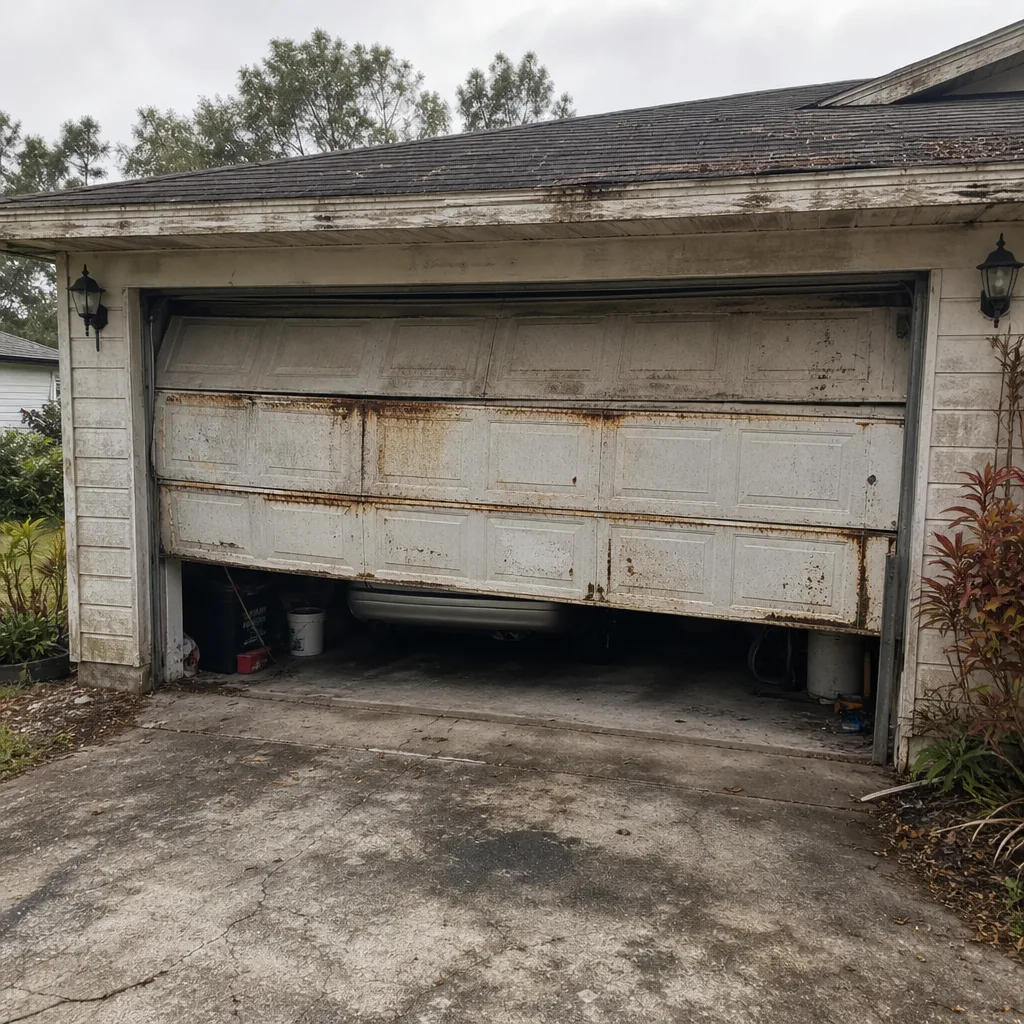 Before
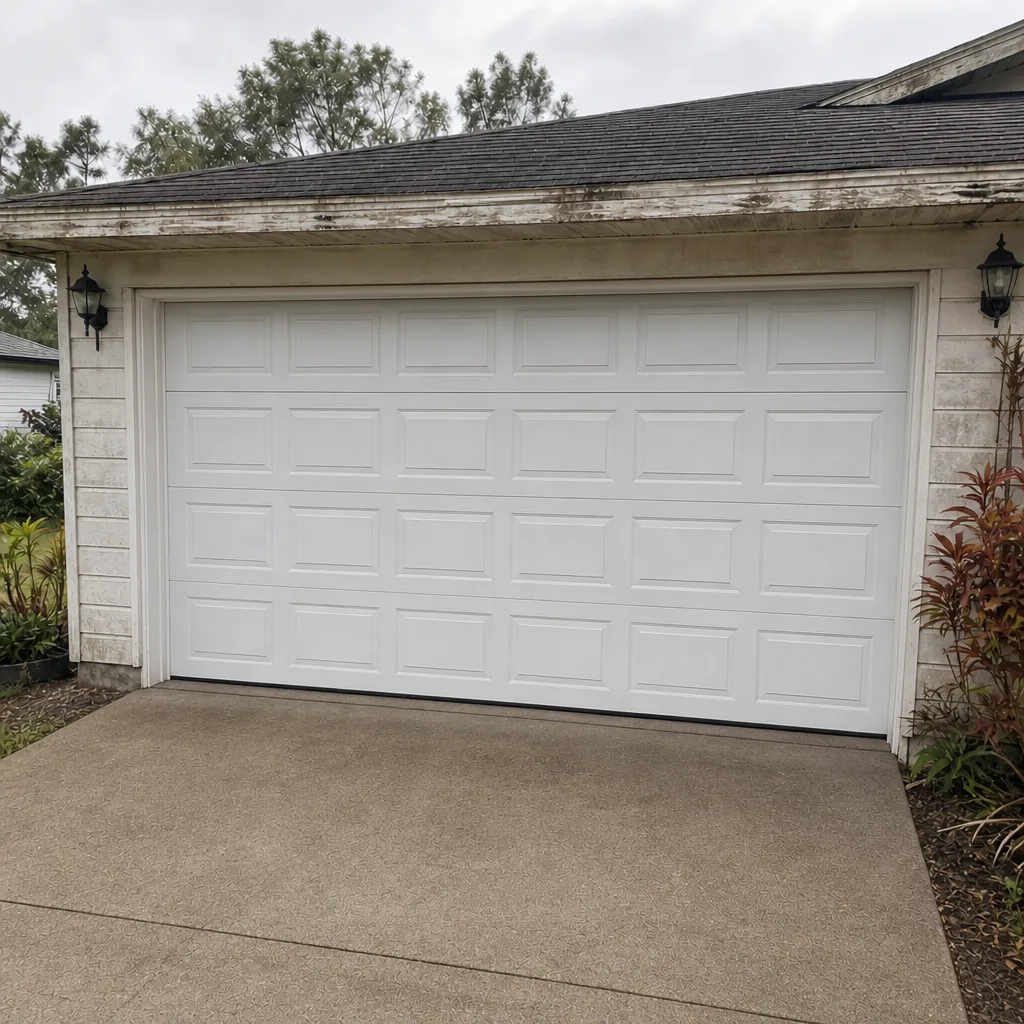 After
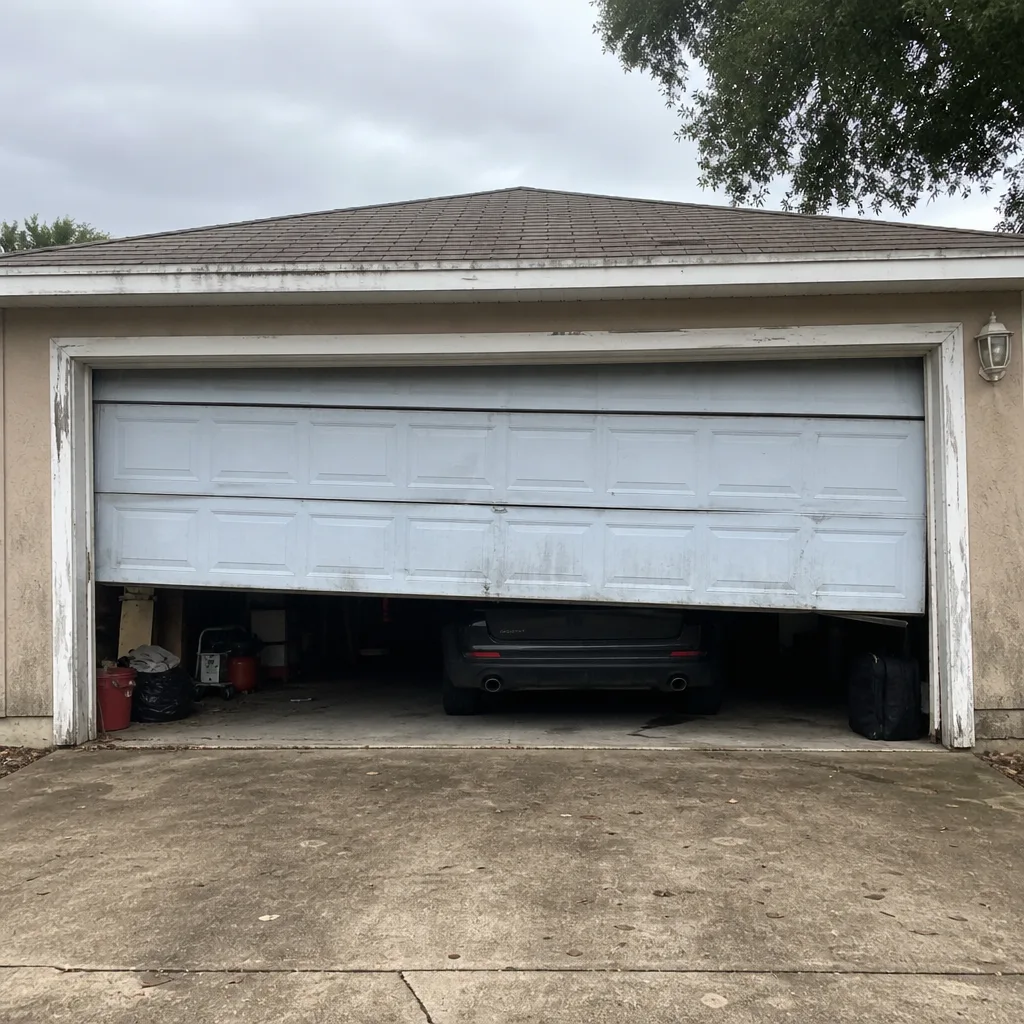 Before
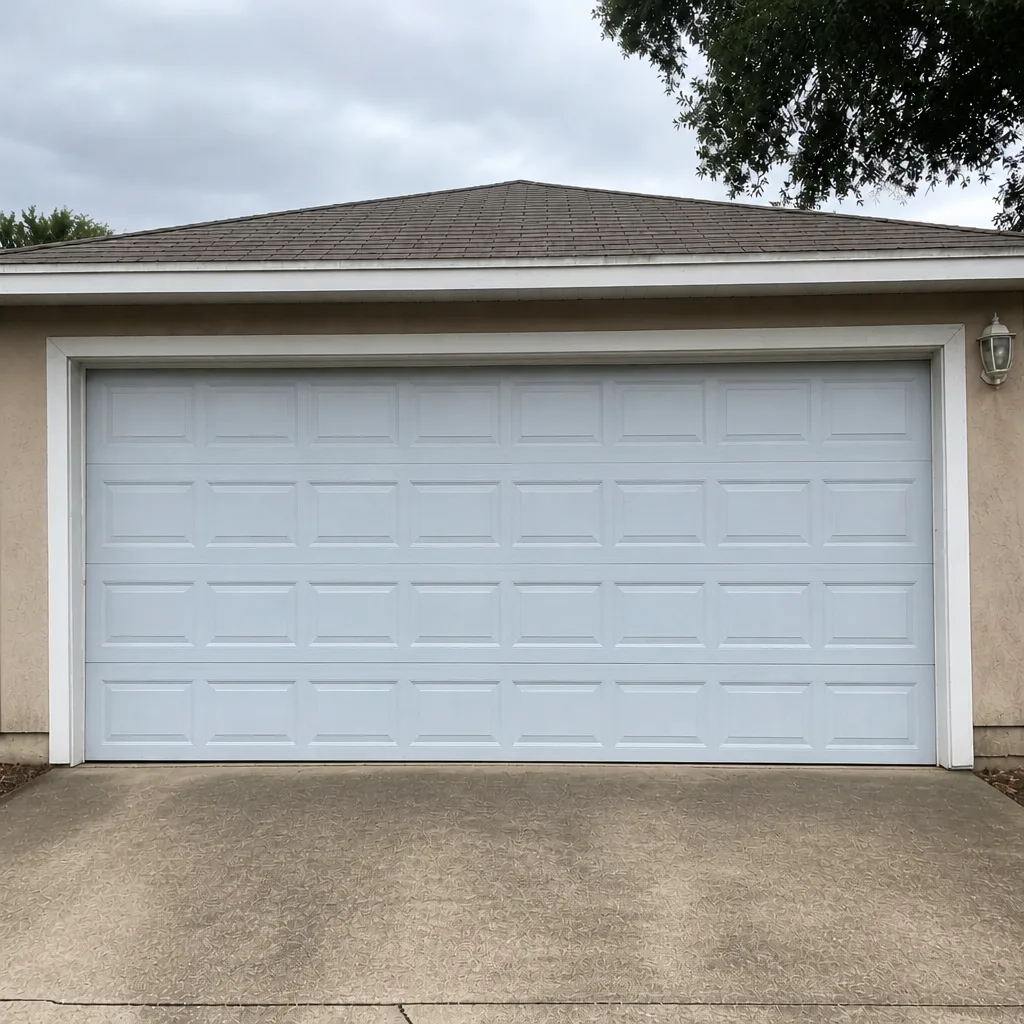 After
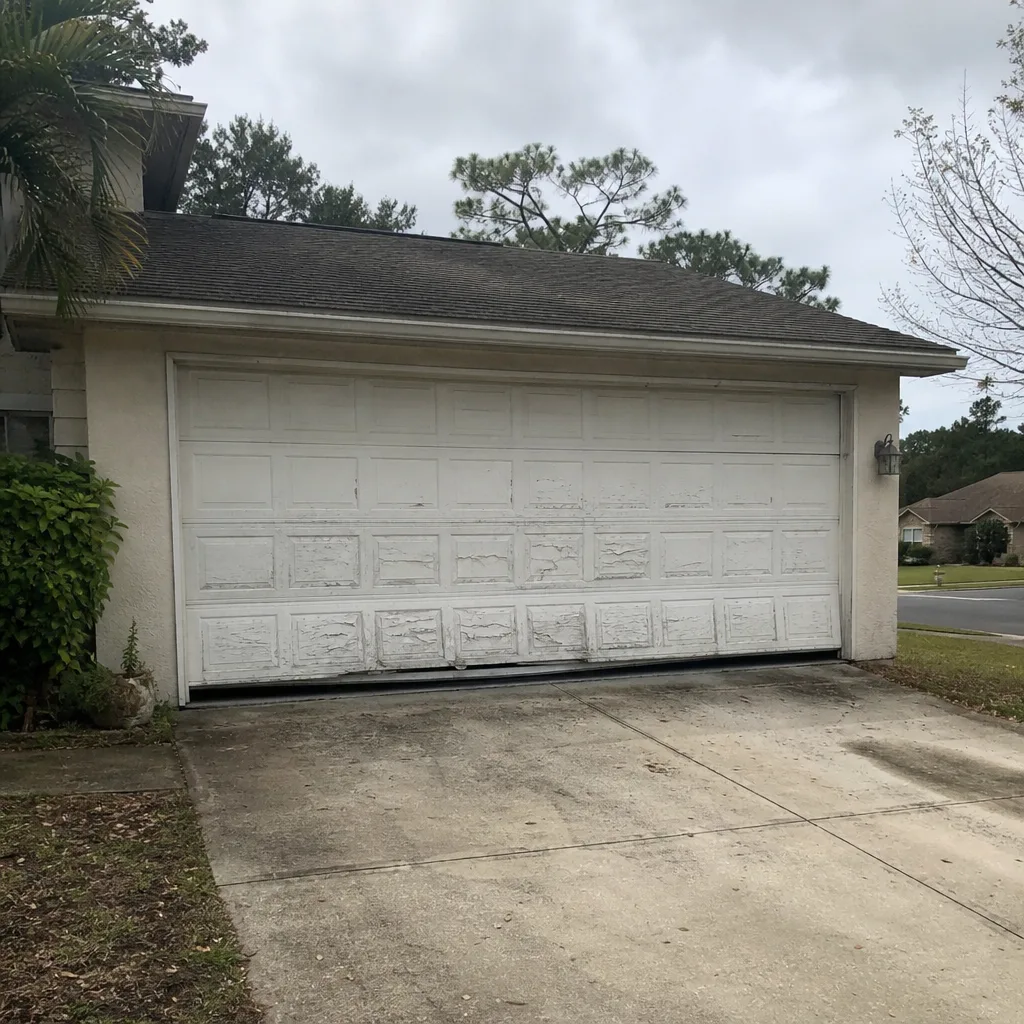 Before
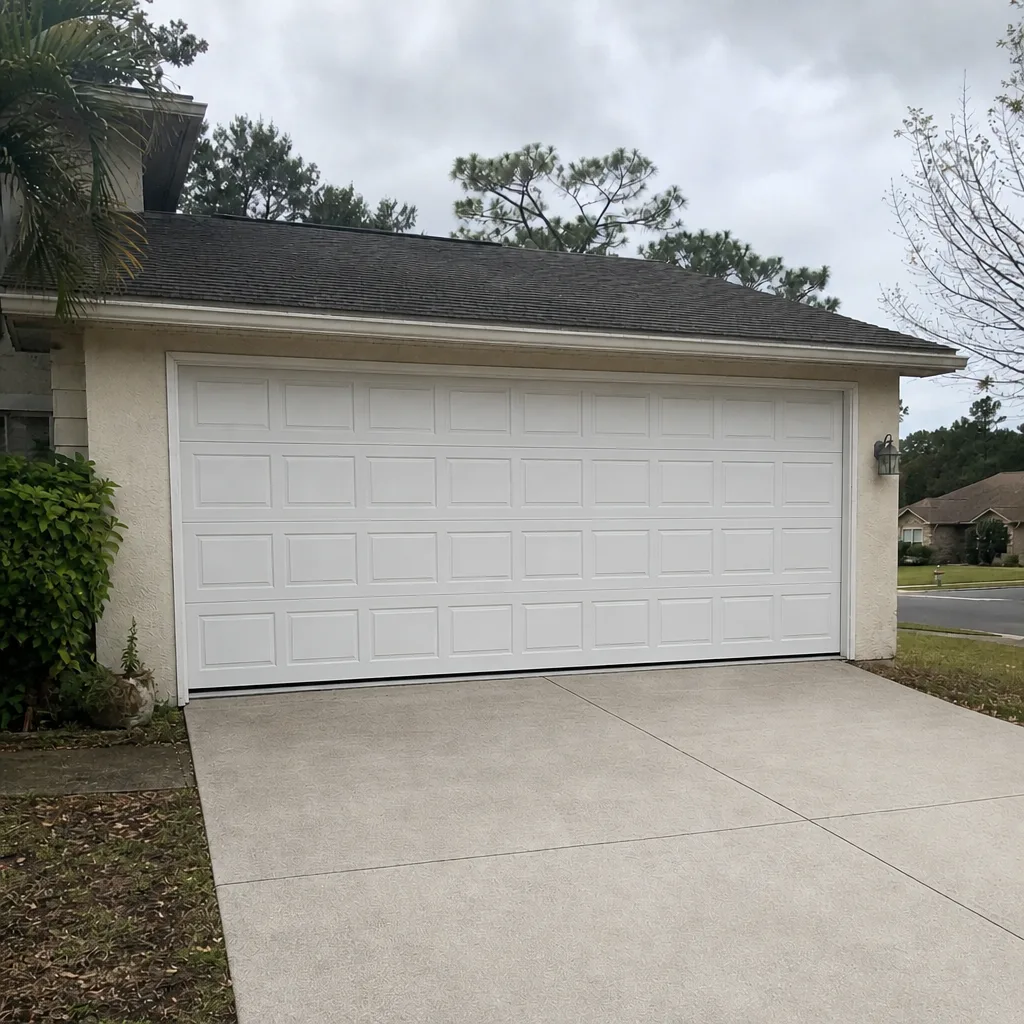 After
When to Call a Professional
Some garage door work is genuinely risky no matter how handy you are. Torsion springs store enormous energy, and a spring that lets go during a DIY replacement can cause serious injury. Openers and wiring that involve the low-voltage side are one thing; high-voltage connections are another. Structural work around the opening, track reconfiguration, and anything involving the door’s rated assembly should be handled by a trained technician. Outside of those, the reason to call is mostly speed: a stuck door, a dead opener, or a snapped spring in Deltona usually gets resolved same-day rather than becoming a multi-week project. Deltona Garage Door Repair Pros offers free estimates in Deltona. Call (877) 492-1973.
Frequently Asked Questions
In most cases, yes. Replacing the garage door system in Deltona and the rest of Volusia County generally requires a building permit, because the door is a rated component of the building envelope and the replacement has to be verified against the wind-load requirement for your property. The exact requirement depends on your door and the scope of work, so confirm with the City of Deltona building department before ordering the door. Call (877) 492-1973 for a free estimate on the work itself.
Usually not. Spring, opener, cable, hinge, roller, and track repairs are generally treated as repairs because they restore the existing approved system rather than changing it. That’s true for a broken torsion spring, a Genie or Craftsman opener that’s given up, or a Wayne Dalton door that’s out of balance. A repair keeps the building record intact. Call (877) 492-1973 if your door won’t move – estimates are free.
Ask for the permit number in writing, then look it up in Volusia County’s online permitting records by your address. Confirm the scope matches a garage door replacement at your property and that the contractor’s name is on the permit. Confirm a final inspection gets scheduled and completed. If a contractor can’t produce a permit number in their own name, that’s a signal worth weighing before you hire. Call (877) 492-1973 for a free estimate on permitted replacement work.
The open permit or violation now attaches to the property and becomes yours to resolve, whether you knew about it or not. Start by pulling the permit history with the City of Deltona or Volusia County. Then have a qualified technician document what’s actually installed, and ask the building department what correction path applies. Most situations resolve with a retroactive permit and inspection or a documented correction. Call (877) 492-1973 for a free estimate on any corrective work.
The inspector verifies that the installed door matches the permit, that the rating label and product approval apply to the actual model, that anchors and fasteners are correct for the wall, that the opening and framing are as approved, and that the door operates safely and reverses as designed. The two most common failures are a different door than the permit calls for and anchors that don’t match the approved installation method. Call (877) 492-1973 for a free estimate on a permitted replacement.
No, the written estimate sets the price. On any job we quote, the price is quoted and agreed before work starts, so there are no surprises when the invoice arrives. If the scope genuinely changes once the door is inspected, we’ll tell you and re-quote before proceeding, never after. Call (877) 492-1973 for a free estimate on your Deltona garage door project.
The Bottom Line
A garage door replacement in Deltona is often a permitted project, and the permit exists for a reason: it’s the local record that your door meets Florida’s wind-borne debris requirements and was installed correctly on your specific house. A repair of a spring, opener, or small hardware part usually isn’t. The fast test is to ask whether the door system is changing; if it is, check with the City of Deltona building department before the work starts, get the permit number in writing, verify it, and keep the inspection result with your closing documents. Do that and the paperwork stays a footnote, not a problem at sale. If a repair turns into a replacement, our garage door repair, garage door opener repair, and installation teams cover both sides of that line. Our technicians have up to 14 years of experience working on the brands homeowners actually own, including Clopay, Amarr, and Wayne Dalton doors.
Contact
Whether you’re sorting out a permit question, facing a door that won’t move, or planning a replacement, call us and we’ll give you a straight answer. Deltona Garage Door Repair Pros offers free estimates. Call (877) 492-1973. We answer 24/7. Fast dispatch from 7am to 7pm, Sunday through Friday.
Written by the team at Deltona Garage Door Repair Pros.