
Last updated November 22, 2026
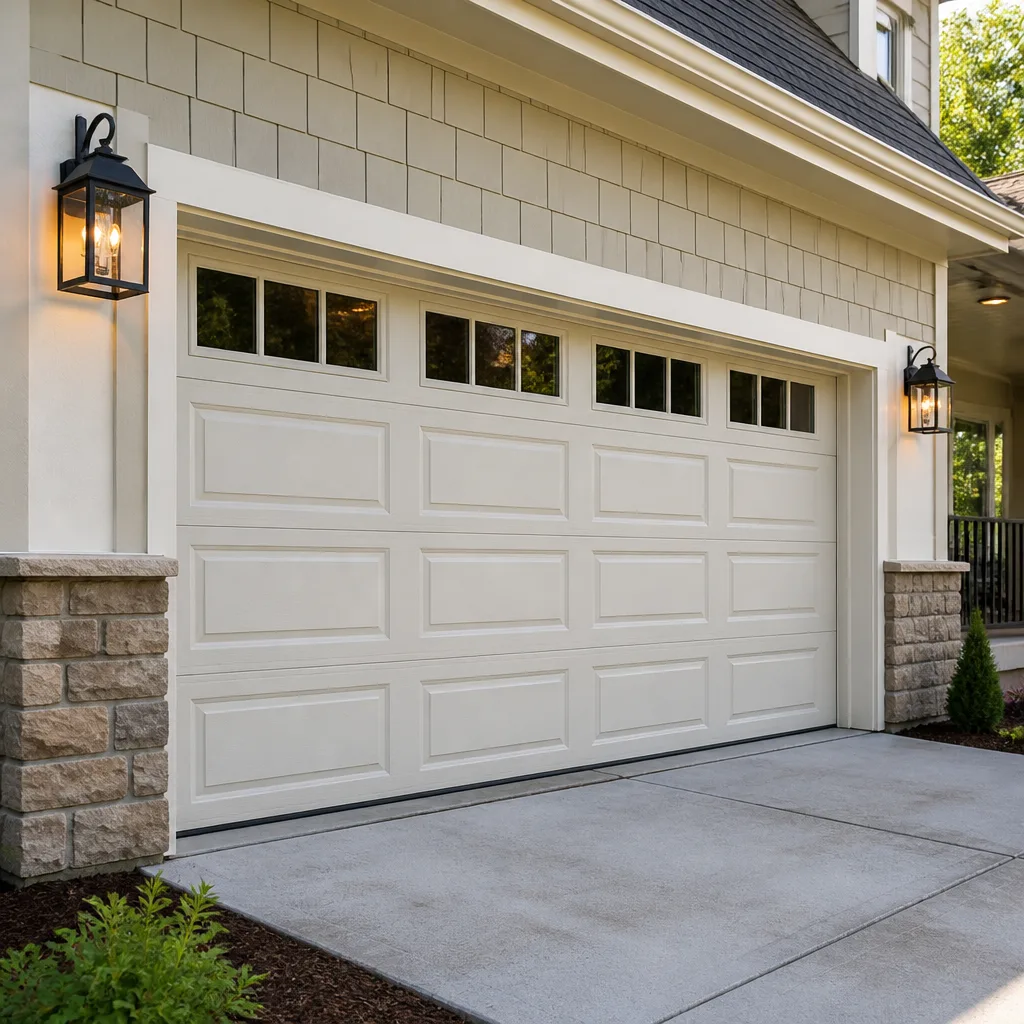 Raised-panel steel
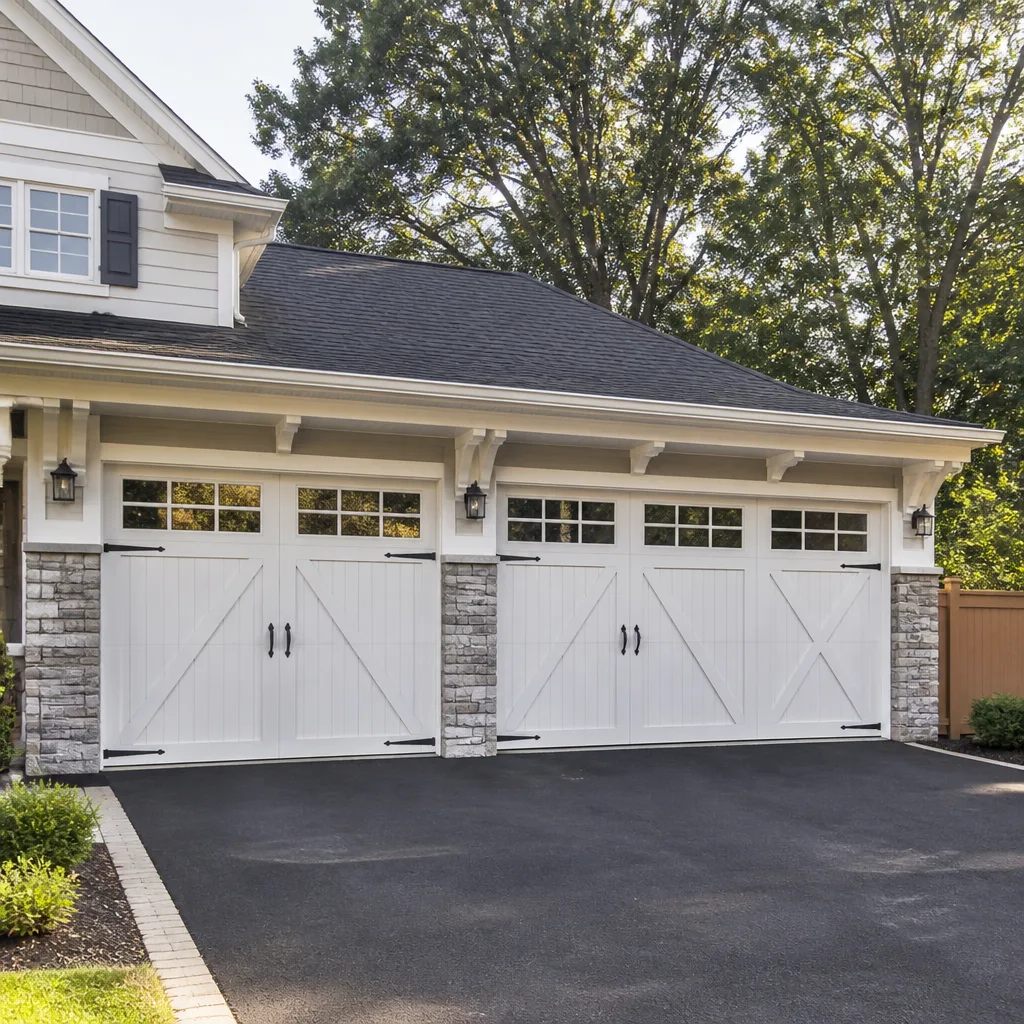 Carriage house
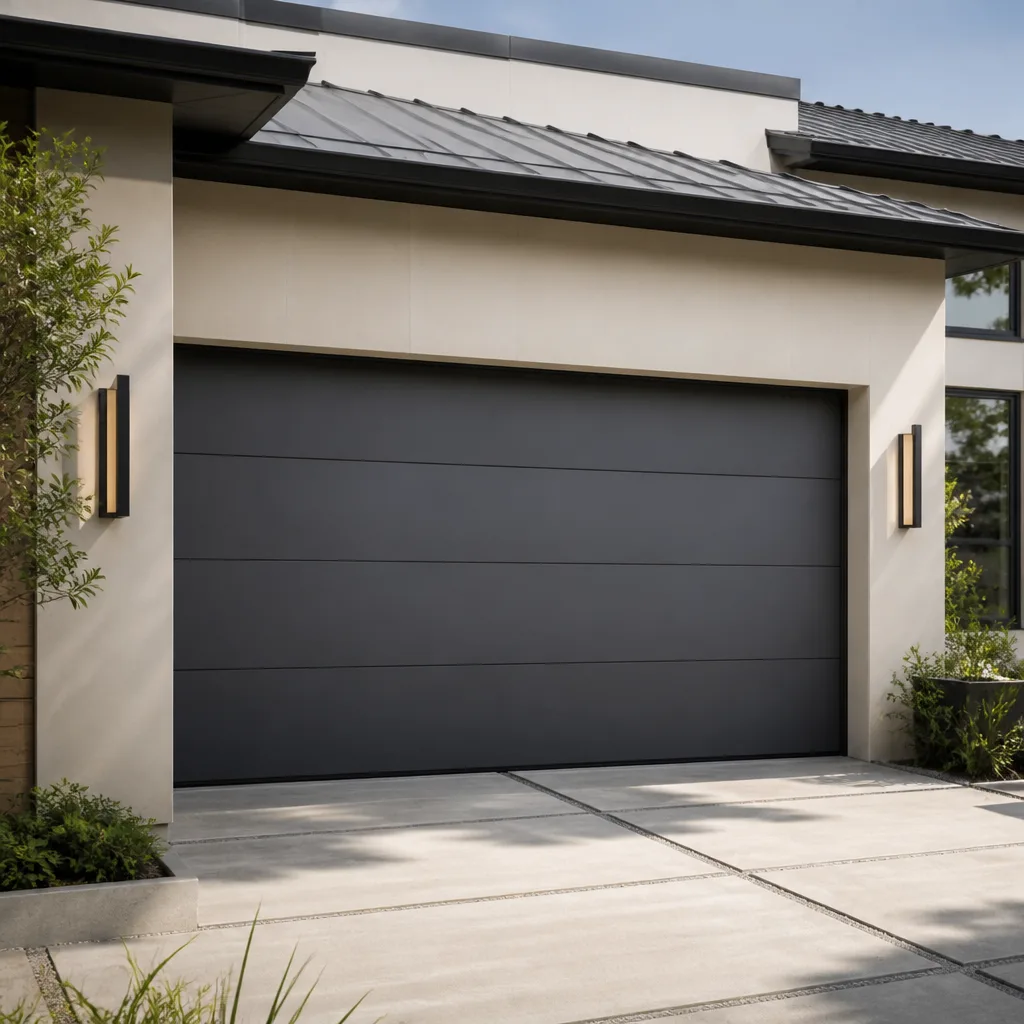 Modern flush
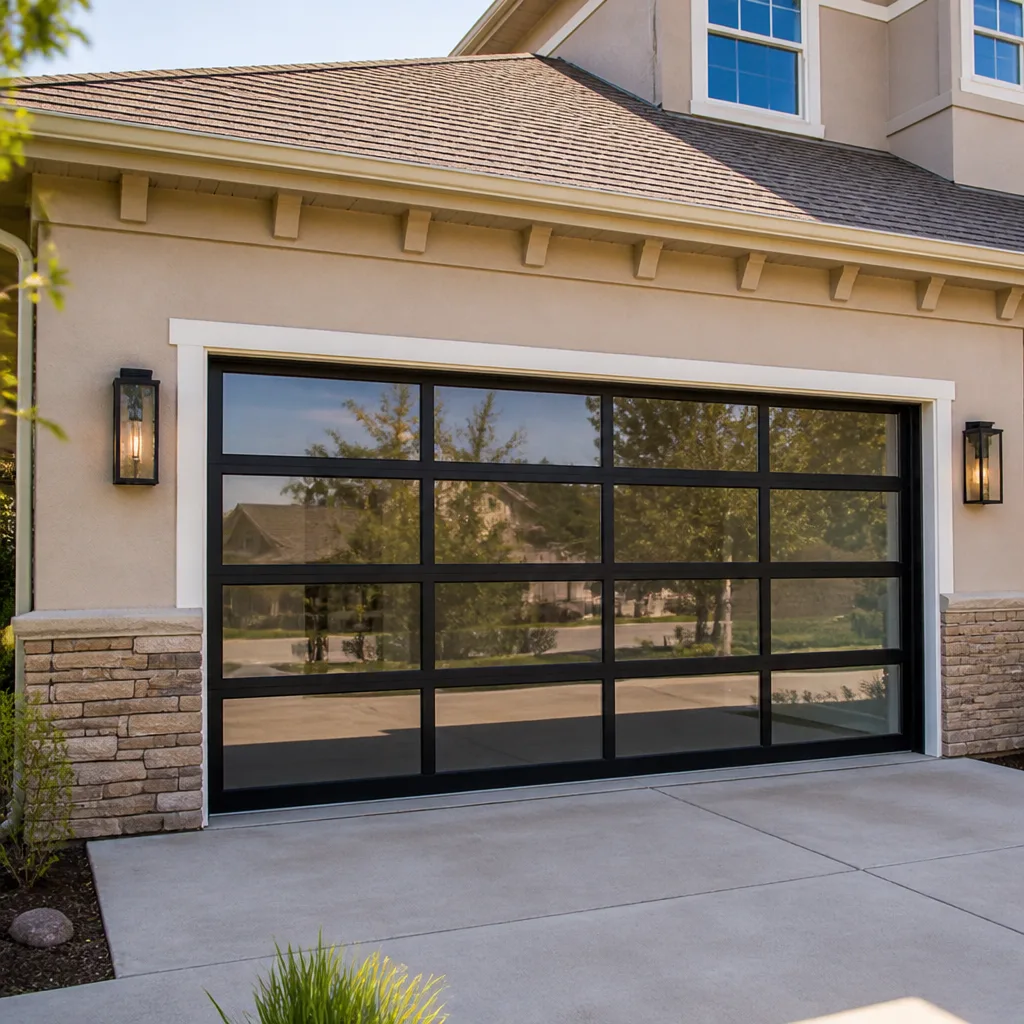 Full-view glass
 LiftMaster openers
 Chamberlain openers
Full 25-point door and opener safety check with every visit - springs, cables, rollers, tracks, and your LiftMaster or Chamberlain opener included
You get a price before we start. It does not change when the pro arrives.
Get your free estimateGarage Door Warning Signs: A Deltona Homeowner’s Reference Guide
A garage door that hesitates for half a second before it moves isn’t being slow to warm up. That pause is early spring tension loss, and in our experience the hesitation is usually gone within about 30 days when the spring snaps completely. The dramatic failures get all the attention: the loud bang, the door that won’t budge, the opener that just hums. But the signals that actually predict a breakdown are quieter, and they show up weeks before anything stops working. Catch them and you’re often looking at a small adjustment. Miss them and you’re looking at a much bigger repair at a much worse moment. This guide walks through the subtle warning signs Deltona homeowners can check themselves, what each one points to, and when it’s time to stop watching and start calling.
Quick Answer
The most reliable early garage door warning signs are hesitation before movement, grinding or popping sounds during travel, a gap between the door and the floor, loose or bent track sections, and a door that works by hand but struggles with the opener. In Deltona’s humid climate, seal and track wear also show up faster than most homeowners expect. If you catch these signals early, most are inexpensive fixes; if you wait for a full failure, they turn into bigger jobs.
Styles & brands we work with
- Raised-panel steel
- Carriage house
- Modern flush
- Full-view glass
- LiftMaster openers
- Chamberlain openers
Table of Contents
- The Subtle Early Signs Most Homeowners Miss
- What Each Unusual Sound Is Telling You
- Visual Checks That Catch Track and Hardware Wear
- Door Works by Hand but Struggles With the Opener? That’s an Opener Problem
- When a Weather Seal Failure Is Doing Real Damage
- The One-Cable-Lower Cue That Means a Spring Is Failing
- Why Deltona Homes Show These Signs Earlier
- What Early Repairs vs. Emergency Repairs Typically Cost in Deltona
The Subtle Early Signs Most Homeowners Miss
The warning signs that matter most aren’t the ones that stop the door. They’re the ones that change how the door behaves. A door that used to move the instant you pressed the button and now takes a beat to respond is telling you something has changed inside the system. So is a door that starts slowing down partway through its travel, or one that reverses a few inches before settling. These are the signals that show up in the weeks before a failure, and they’re the ones most people scroll past because the door still technically opens.
Here’s what to watch for. None of these require tools, and you can check them from your driveway in about two minutes:
- A half-second hesitation before the door moves. This often points to spring tension loss or an opener straining against resistance. On a balanced door, the opener should barely have to work.
- Slowing or stalling partway up or down. A door that moves smoothly then drags usually has a track or roller problem, or a spring that’s losing its lift.
- Reversing before it finishes closing. This can be a safety sensor issue, a misaligned track, or the opener sensing resistance it shouldn’t feel.
- A door that keeps opening before it’s fully closed. If you have to hold the button to get it down, that’s not your imagination – it’s a signal worth taking seriously.
- Visible wobble during travel. A door that sways or shudders as it moves has a balance or hardware problem developing.
- A slight gap at one corner. Uneven closing often starts with a track out of true, not with the seal itself.
What these signs share is that they’re changes in behavior, not outright failures. The door still works, which is exactly why they get ignored. But a door that hesitates, wobbles, or reverses is a door under extra strain, and that strain wears on springs, rollers, and the opener’s motor. Catching it here is the difference between a small adjustment and a larger repair. If you’re seeing two or more of these, it’s worth having someone look before the door stops entirely.
What Each Unusual Sound Is Telling You
Garage doors are supposed to be a little noisy – they’re moving a heavy panel through a track. But the type of noise matters, and most homeowners lump all garage door sound into one category. It doesn’t work that way. Each sound points to a different part of the system, and knowing which is which helps you describe the problem accurately when you call. In our experience, homeowners who can say “it’s popping, not grinding” get to the right fix faster.
Here’s how to read the four sounds we hear most often:
- Grinding. A metal-on-metal grind usually points to worn or dry rollers, a roller that’s slipping in the track, or bearings that are on their way out. Grinding tends to build gradually and is often the first audible sign of wear.
- Scraping. Scraping is a friction sound, and it usually means something is rubbing that shouldn’t be. Often it’s a panel or a hinge dragging against the track, or a door that’s out of alignment and riding against one side.
- Popping. A pop – especially a loud one – is the sound most associated with spring problems. A torsion spring that’s binding or losing tension can pop as the door moves. A popping sound is the one we’d never advise ignoring.
- Rattling. Rattling usually means loose hardware: a hinge, a bracket, or a bolt working its way out. It’s often the least serious sound, but left alone a loose bracket can grow into a bigger alignment problem.
One more sound worth noting: a creak or groan as the door starts to move. That’s often a sign of metal under stress or a lack of proper lubrication on moving parts. It’s not urgent on its own, but it’s the kind of signal that pairs with the hesitation we described earlier. If a sound shows up only in certain weather, make a note of that too – it tells you something about how the components are responding to humidity or temperature.
When you call to book garage door repair, describe the sound in plain terms. “It grinds when it comes down” is more useful than “it’s making a noise.” We work on Chamberlain, LiftMaster, Genie, and Craftsman systems regularly, and the same sound can point to slightly different parts depending on the drive system – so the brand plus the sound gets us closest on the first visit.
Visual Checks That Catch Track and Hardware Wear
Tracks rarely fail suddenly. They wear, they bend, they shift out of alignment, and they do it slowly enough that a door can keep working right up until the moment a roller jumps the track. The good news is that track wear is visible if you know where to look, and a two-minute walk-around every few weeks catches most of it before it becomes a derailment. This is especially true in Deltona, where humidity works on metal hardware year-round.
Here’s the check we’d recommend, done with the door closed and the opener disconnected if you’re comfortable doing that. If you’re not, just do the visual parts from the ground:
- Look down the length of each track from a few feet back. A straight track looks straight. If you see a curve, a bow, or a section that dips, the door isn’t traveling true and will wear faster until it’s corrected.
- Check where the track is mounted to the wall and ceiling. Look for brackets that are bent, bolts that have pulled loose, or mounting points that look shadowed or cracked. A track that’s shifting at the mount point is a derailment waiting to happen.
- Inspect the rollers where they sit in the track. Worn rollers look flat or chipped, and they can wobble side to side. A roller that’s worn is a roller that can jump.
- Look at the hinges on the panel joints. Rust, cracking at the hinge plate, or a hinge that looks tilted means wear is underway.
- Check the door’s horizontal alignment with the floor. With the door closed, step back and see whether the gap to the floor is even across the width. A gap that’s wider on one side points to a track out of alignment, not a seal problem.
- Glance at the cables and drums at the top of the door if you can see them from a safe distance. You’re looking for fraying, slack, or anything obviously off. Don’t touch them – just note what you see.
When a track check turns up a bend, a loose bracket, or a worn roller, don’t try to straighten the track yourself. Bending a track back by hand rarely gets it true, and a track that’s still slightly off will wear the door and the rollers faster than before. This is a job for someone with the right tools and the experience to know if a track needs adjusting or replacing. Our technicians have up to 14 years of experience with this kind of wear, and a track adjustment is usually one of the more straightforward repairs we handle.
Door Works by Hand but Struggles With the Opener? That’s an Opener Problem
This one trips up a lot of homeowners, and it’s worth a section of its own. If you disconnect the opener and the door lifts and lowers smoothly by hand, but the door struggles or strains when the opener is connected, the door itself isn’t the problem. The opener is. A balanced garage door should be light enough that an adult can lift it with one hand. If yours is, but the motor still strains, hesitates, or reverses, the issue is in the opener’s drive system, its force settings, or its motor – not in the door’s springs or tracks.
Here’s why this distinction matters. It changes the repair. If a door is heavy and the opener is straining to lift it, the fix is often a spring or balance adjustment. If the door is light and the opener still struggles, the fix is on the opener side. Getting that wrong means paying for the wrong repair and the problem coming back.
These are the signs the opener is the culprit:
- The door moves freely by hand but the opener hesitates or reverses.
- The opener’s motor sounds strained or hot after a cycle.
- The opener’s light flickers or the unit beeps in a pattern you haven’t seen before.
- The remote or wall button works intermittently, or you have to press it more than once.
- The door opens fine but won’t close without you holding the button.
That last one – working in one direction but not the other – is one we see often, and it’s usually a safety sensor or logic board issue rather than a mechanical fault. If your door is a LiftMaster or Chamberlain with smart features, a struggling opener can also show up as an app alert or a status light that won’t settle. We handle garage door opener repair for those systems and for Genie and Craftsman units, and the first thing we do is confirm whether the door or the opener is at fault before recommending parts.
A word of caution on openers: the motor itself is usually not the danger, but the door it’s attached to still is. Never reach into the track or near the springs while the opener is running. If the opener is struggling, disconnect the door from the opener and leave it down until someone can look at it.
When a Weather Seal Failure Is Doing Real Damage
Every garage door in Deltona has a bottom seal, and every one of them looks a little worn after a few years. The trouble is that most homeowners can’t tell the difference between a seal that looks tired and a seal that’s actually letting water in. That distinction matters, because a seal that’s just cosmetic is a low-priority fix, and a seal that’s letting water in is causing real damage to the door, the track, and the floor underneath.
Here’s how to tell which one you’re dealing with. Stand inside with the door closed and the garage dark. Look for daylight at the bottom edge. A thin even line of light across the whole width is normal on an older seal. Daylight in one spot, or a gap that runs only along one side, means the door isn’t meeting the seal evenly – that’s alignment, not the seal itself.
Then look for these signs of real damage:
- Water staining or a dark line on the garage floor along the door line. That’s the seal failing to keep water out, and it can happen during a heavy summer storm.
- Rust or discoloration on the bottom panel and the door’s bottom hinge. Moisture sitting at the base of the door finds every seam.
- A seal that’s hard, cracked, or visibly split. Some flexibility is normal; a seal that’s rigid has stopped doing its job.
- Pest evidence at the bottom corners. Small gaps under the door are enough for insects and small animals to get in, and the damage shows up at the edges first.
- A gap that closes in one spot and opens in another depending on the weather. That’s usually a warped seal or a door that’s out of alignment, and it’s a sign the door needs adjustment, not just a new seal.
Deltona’s humid summers and heavy rain make seal condition a year-round consideration rather than a seasonal one. A seal that would last years in a drier climate can harden and split faster here. If you find real damage – staining, rust at the base panel, water getting in – get the door looked at rather than just swapping the seal. The seal replacement only works if the door is meeting the floor evenly. If the bottom panel is a Clopay or Amarr, the seal needs to match the panel profile for a proper fit, and that’s the kind of detail we check before recommending a part.
The One-Cable-Lower Cue That Means a Spring Is Failing
This is the cue most homeowners have never heard of, and it’s the one we’d most want you to know. On a door with two springs, look at the two cables that run down the sides. If one cable sits visibly lower than the other when the door is closed, or if one side’s cable looks slack while the other is taut, that’s a strong early indication that a spring is losing its tension or is about to fail – even if the door still opens and closes. The door may feel normal. It may sound normal. But a cable that’s lower on one side than the other means the two sides are no longer balanced, and that imbalance comes from the springs.
This cue is easy to check from the ground. Stand in front of the closed door and look at where each cable meets the bottom corner bracket. If both look identical, you’re in good shape. If one side is clearly lower or looser than the other, treat it as a warning.
We want to be direct here: this is a sign to call a professional, not a sign to start inspecting the springs more closely. Torsion springs are under enormous tension, and a spring that’s close to failing is dangerous to touch, adjust, or even stand directly under. The cables themselves can snap with force. We’d never tell a homeowner to try to loosen, tighten, or remove a spring or cable, and we’d ask you not to. What you can do safely is look, note what you see, and keep the door closed until someone can assess it.
If one spring is failing, a matched pair is usually replaced together, because a new spring paired with an old one will be out of balance from the start. That’s a decision for the technician after they’ve looked at the door, and we’ll explain why a pair makes sense rather than just quoting a single spring and leaving you with a problem in a few months. This is the most common and most dangerous garage door repair, and it’s one of our named specialties. We handle spring repair for the brands our customers actually have, and we’ll tell you plainly whether you’re looking at a single spring or a pair once we’ve seen it.
Why Deltona Homes Show These Signs Earlier
Garage doors wear in every city, but some conditions speed it up. Deltona’s climate is one of them. The humidity here is high most of the year, and the afternoon thunderstorms that roll through in the warmer months put real stress on the parts of a garage door that are most exposed: the bottom seal, the hinges, the rollers, and the bottom panel. Humidity doesn’t just make things feel damp – it works on metal hardware continuously, and it softens wood and seal materials over time.
What this means for a Deltona homeowner is that the wear timeline is a little shorter than you might expect elsewhere. Rollers that would last years in a dry climate can start to dry out and wear faster here. Seals harden and split more quickly. Hinges at the lower panel joints are the first to show rust, and once rust starts at a hinge, it spreads to the panel around it. The local housing stock plays a role too. Many Deltona homes have attached garages that face the afternoon sun, which means the door panel goes through a daily heat-and-cool cycle on top of the humidity. That cycle is gentle, but repeated over years it works on the door’s finish and the seal’s flexibility.
We see this pattern across Deltona neighborhoods – the same seal fatigue and lower-hinge rust showing up a bit sooner than the manuals suggest. It doesn’t mean the doors here are poorly made. It means the local conditions are working on them, and it’s a reason to actually do the two-minute checks we’ve described rather than assuming a door that works is a door that’s fine.
There’s another local factor worth mentioning. When a storm is forecast, a lot of Deltona homeowners suddenly pay attention to the garage door because it’s the largest opening in the house and the one most exposed to wind-driven rain. That’s when a small seal gap or a slightly loose track goes from a background problem to a real concern. If you’re prepping for a storm and you notice these signs, that’s exactly the right time to have them looked at – before the weather forces the issue. We handle garage door installation for homeowners who decide a door has reached the end of its useful life, and we’ll tell you honestly if a repair is the better call instead.
What Early Repairs vs. Emergency Repairs Typically Cost in Deltona
Catching a warning sign early usually costs less than waiting for a failure, and the reason is simple: early repairs are small jobs, and emergency repairs often include the small job plus everything around it. A track adjustment is a different job from a door that’s come off its track and needs to be reset. A seal replacement is a different job from a bottom panel that’s rusted through. We’re giving typical ranges here so you have a general sense of where things land, but every quote is written for your door and your situation. The written estimate is the price, and nothing starts until you’ve agreed to it.
| Repair | Typical Estimated Range (Deltona) |
|---|---|
| Track adjustment or realignment | About $80 to $150 |
| Roller replacement (set) | About $100 to $200 |
| Bottom seal replacement | About $90 to $180 |
| Spring repair, single spring | About $180 to $340 |
| Spring replacement, matched pair | About twice a single spring |
| Opener repair | About $120 to $280 |
A spring price in that table is for one spring. A matched pair is usually replaced together, so a pair costs about twice that single figure. We’d rather you see that clearly now than be surprised later. When a door is off its track or a spring has already snapped, the job often takes longer and involves more parts, which is where the emergency call ends up costing more than the adjustment would have.
We can also work with your insurer when storm damage is part of the picture. That’s a conversation we’re glad to have, but it starts with someone looking at the door and writing a clear estimate. If you’re comparing the cost of a small repair now against the cost of a bigger one later, the small repair is nearly always the better deal. Call (877) 492-1973 for a free estimate, and we’ll tell you what’s actually going on with your door rather than what’s convenient to sell.
Common Mistakes to Avoid
- Assuming a door that still opens is a door that’s fine. The signs in this guide are about behavior changes, not failures. A door that hesitates or wobbles is already telling you something, and waiting for it to stop working makes the repair bigger and more urgent.
- Trying to straighten a bent track by hand. A track that’s been bent back is rarely true, and an out-of-true track wears the door, the rollers, and the hinges faster than before. Let a technician adjust it with the right tools.
- Touching the springs or cables to “check” them. Torsion springs are under extreme tension and cables can snap without warning. A visual check from the ground is safe; anything beyond that is a job for a trained professional. We’d never ask a homeowner to get closer than that.
- Replacing the seal without checking alignment. In Deltona’s humidity, a new seal on a door that isn’t meeting the floor evenly will fail just like the old one. Fix the alignment first.
- Blaming the door when the opener is the problem. If the door moves fine by hand but struggles with the opener, the opener is the issue. Putting off an opener repair because the door “seems fine” is how a small fix turns into a motor replacement.
- Ignoring one loose hinge or one rattling bracket. Small hardware issues grow into alignment problems. A hinge that’s a few minutes to tighten today can become a panel or track job later.
- Running the door with the opener when a cable looks slack. If one cable sits lower than the other, stop using the opener and leave the door closed until someone looks at it. That’s a spring signal, and it’s not one to run through.
See the difference
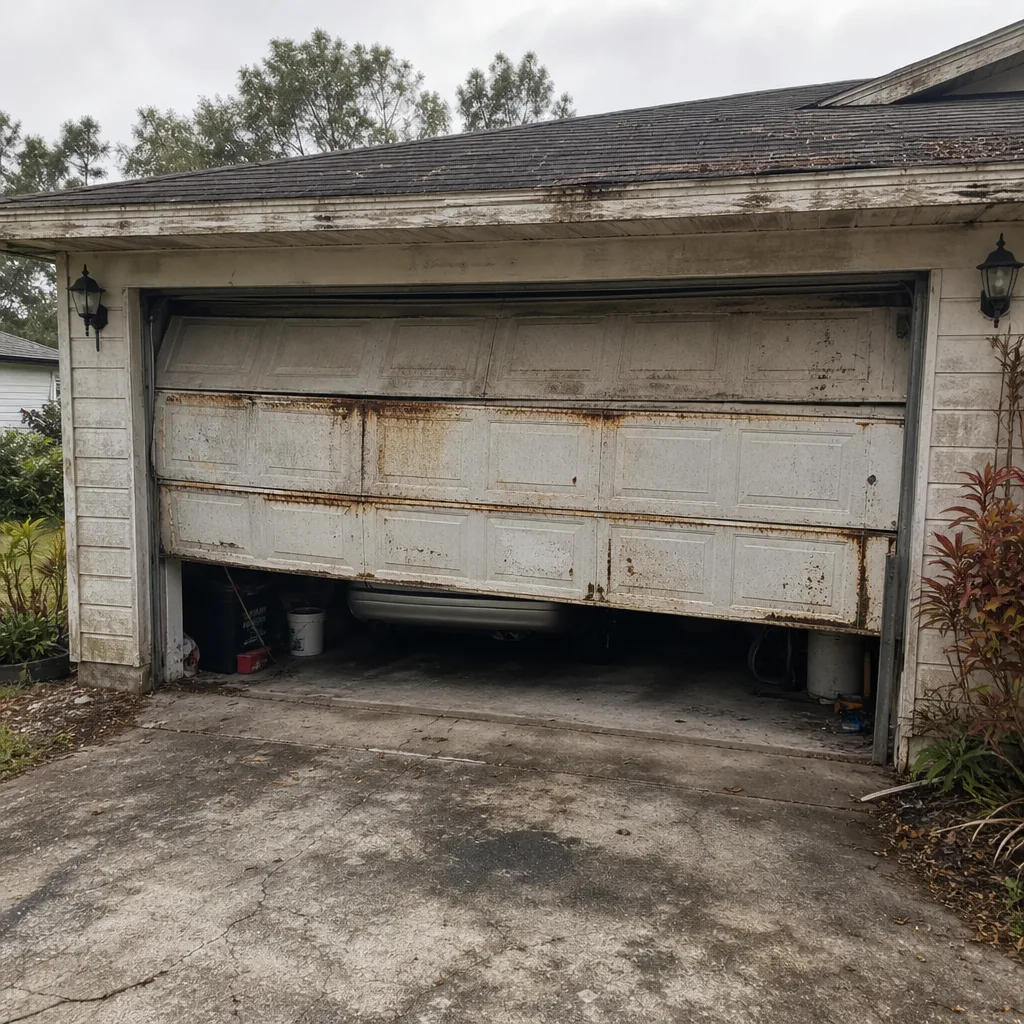 Before
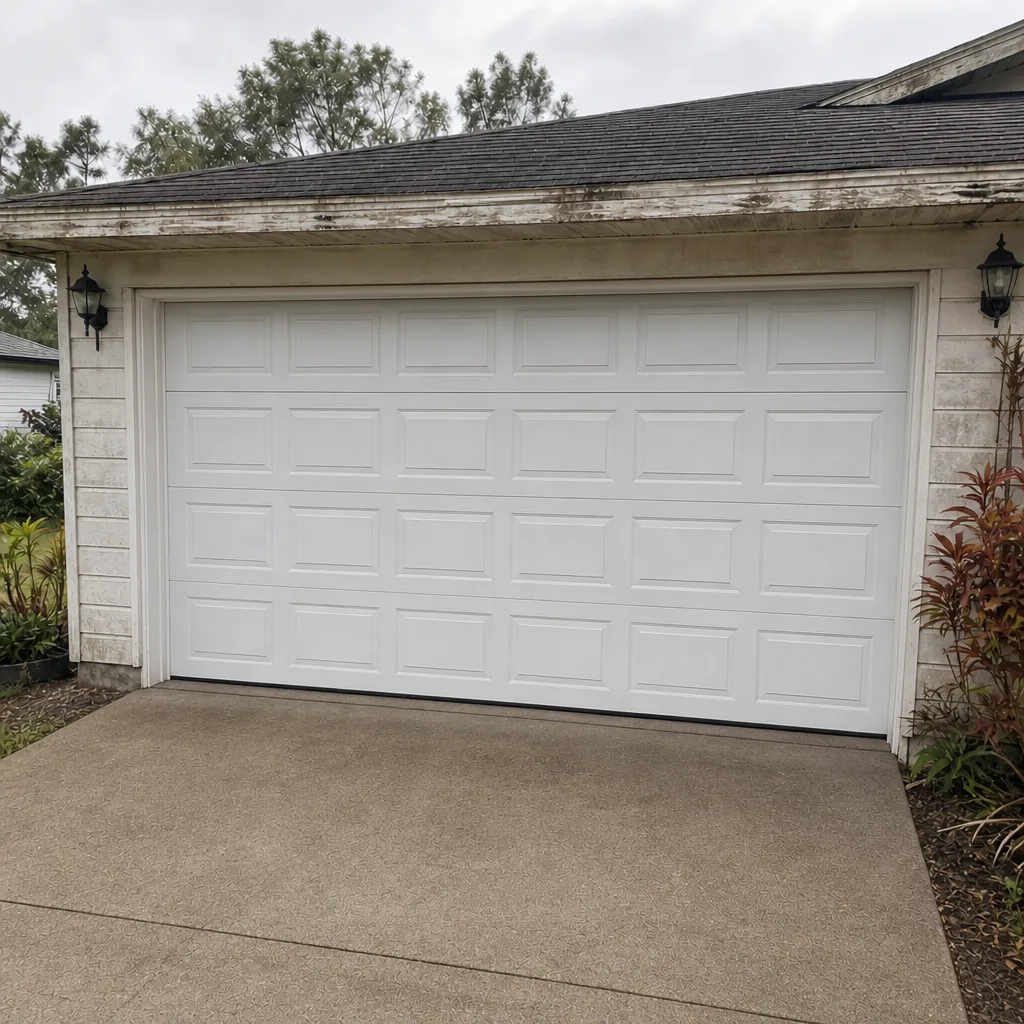 After
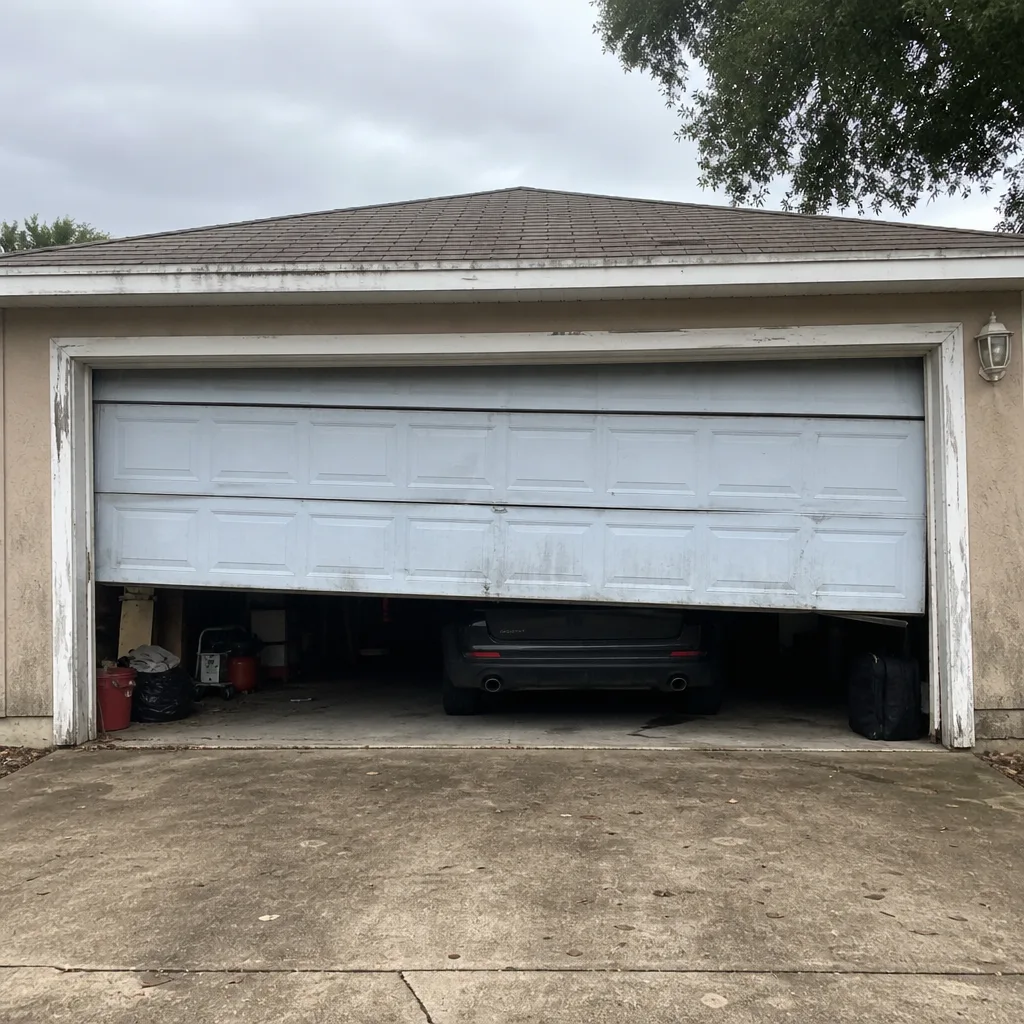 Before
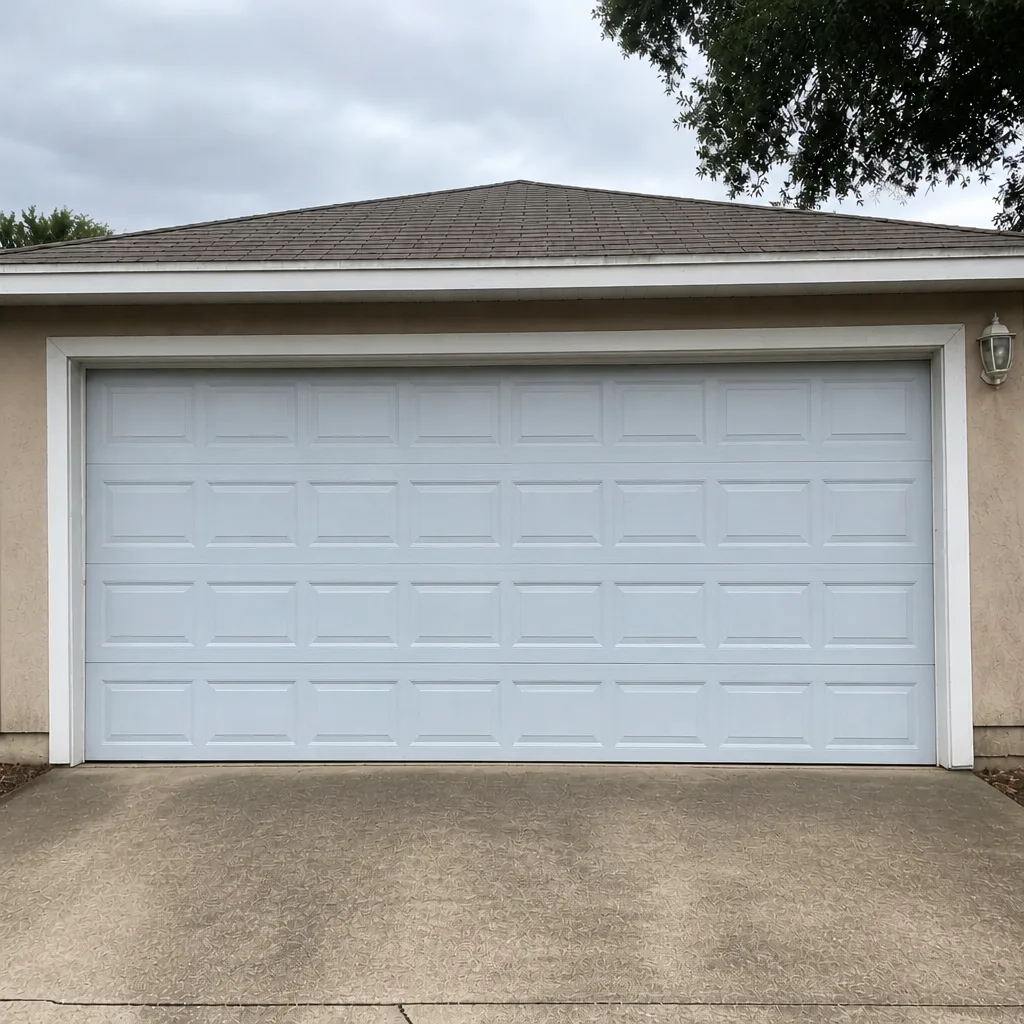 After
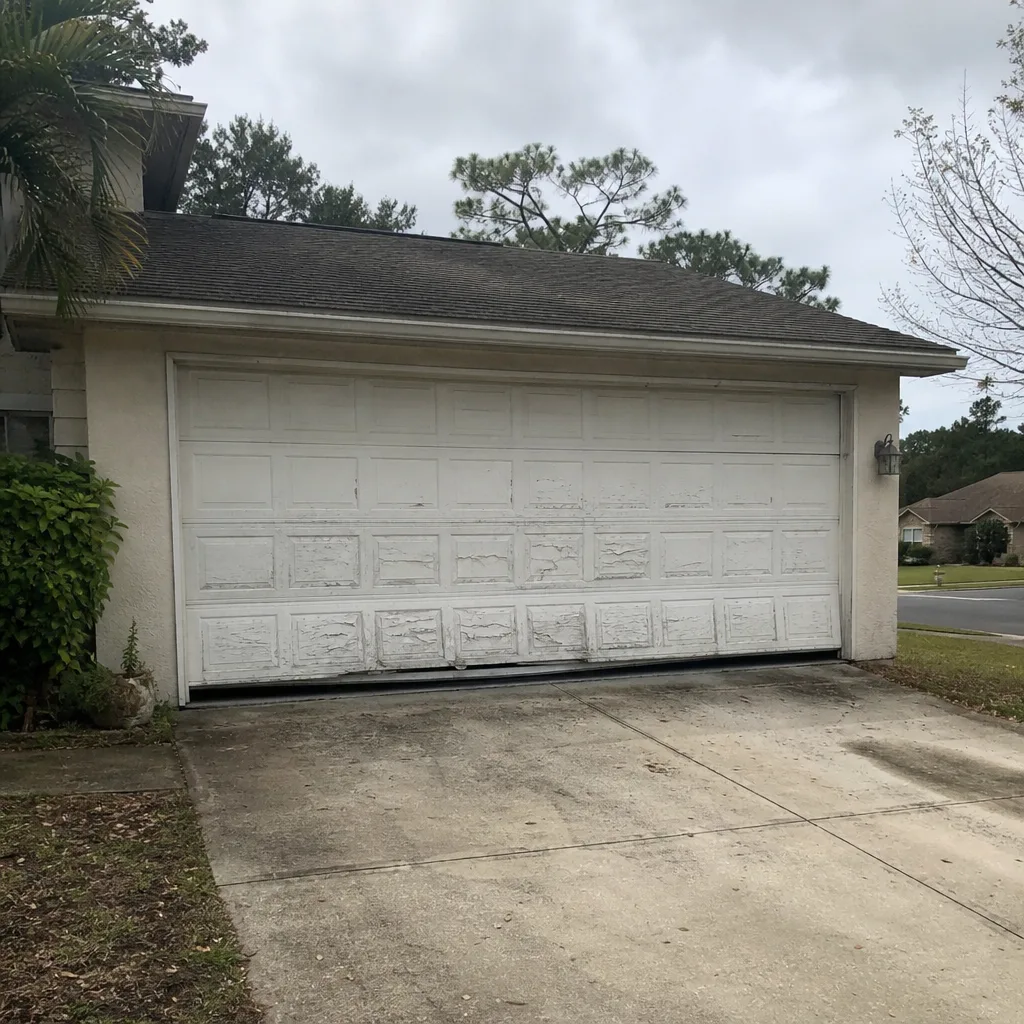 Before
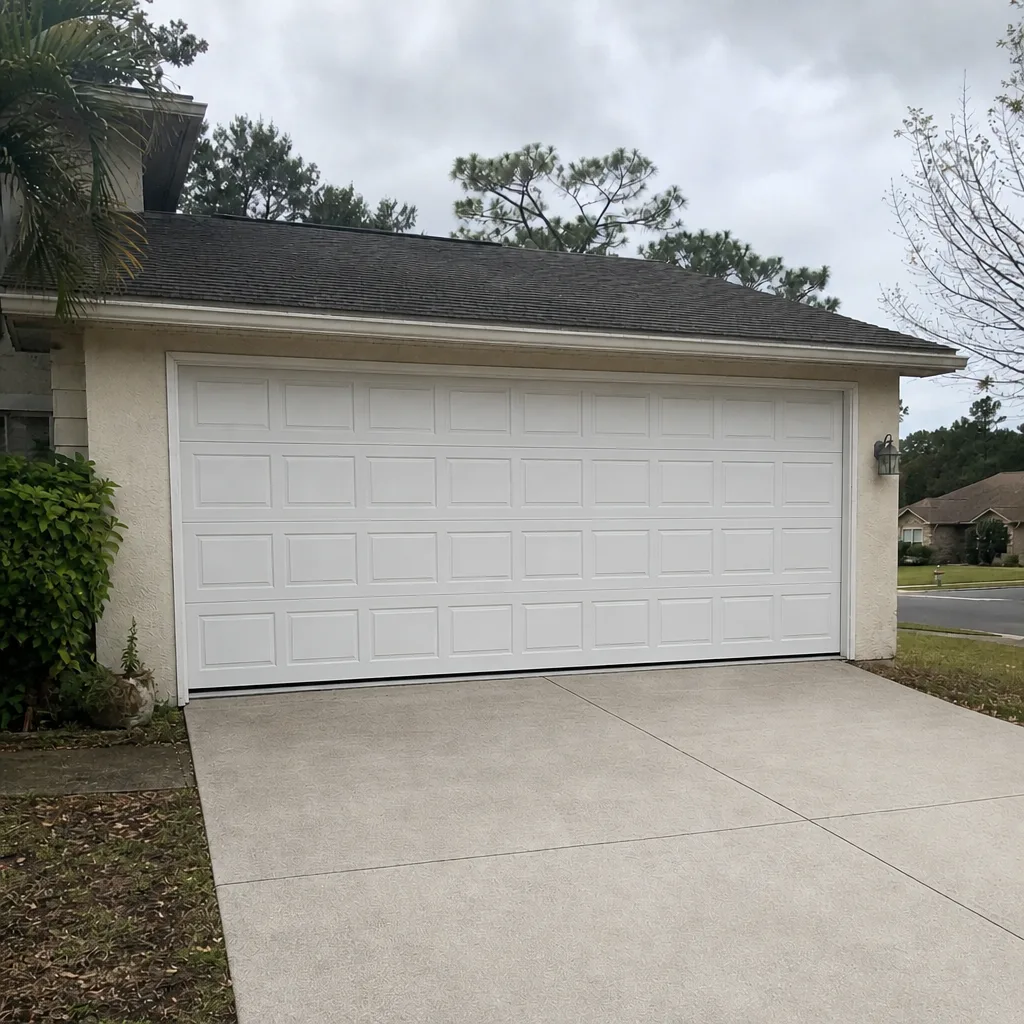 After
When to Call a Professional
Call a professional when you see two or more of the warning signs in this guide at once, when you hear a popping sound during door travel, or when one cable sits visibly lower than the other. Those are the signals that point to springs or to a door that’s no longer balanced, and both are jobs for someone who works on them regularly. Also call if the door has come off its track, if the opener reverses repeatedly, or if you can’t get the door closed at all. We offer same-day service and emergency garage door service for time-sensitive failures, and the local pro we connect you with is licensed and insured as Florida requires. Deltona Garage Door Repair Pros offers free estimates in Deltona – call (877) 492-1973. We answer 24/7. Fast dispatch from 7am to 7pm, Sunday through Friday. If you call outside dispatch hours, the call is booked into the next opening.
Frequently Asked Questions
A half-second hesitation before the door moves is the first sign most people notice, though many write it off as the door being slow. In our experience, that pause usually points to spring tension loss and is often gone within about 30 days when the spring snaps completely. If your door hesitates and you can’t find another explanation, have it looked at rather than waiting. Call (877) 492-1973 for an exact quote – estimates are free.
Most garage door repairs in Deltona fall somewhere between about $80 for a simple adjustment and about $340 for a single spring repair, depending on what’s wrong. Opener repairs typically run about $120 to $280, roller sets about $100 to $200, and bottom seals about $90 to $180. A matched pair of springs costs about twice a single spring. The written estimate sets the final price, and we quote it before any work starts. Call (877) 492-1973 for an exact quote – estimates are free.
Yes, we offer same-day service and emergency garage door service for a door that won’t close or won’t open. A door that’s stuck open before a storm or a morning commute is exactly the situation emergency service is for. We answer 24/7, and dispatch runs from 7am to 7pm, Sunday through Friday. A call outside dispatch hours is booked into the next opening. Call (877) 492-1973.
The price is quoted and agreed before any work starts, and the written estimate sets the final price. What can change is the diagnosis: if someone has already tried to fix a track or a spring, or if a repair uncovers worn parts that weren’t visible at first, we’ll explain what we found and what it adds before we do anything. We don’t start a job and then surprise you with the bill. Call (877) 492-1973 for an exact quote – estimates are free.
The local professional we connect you with is licensed and insured as Florida requires. Our technicians have up to 14 years of experience, and they’re equipped to work on LiftMaster, Chamberlain, Genie, Craftsman, Clopay, Amarr, Wayne Dalton, and Raynor products. If your door or opener is one of those brands, we know the specific system rather than treating it as a generic door. Call (877) 492-1973 to book an estimate.
A worn seal looks tired; a seal causing damage is letting water in. Stand inside with the door closed and the garage dark and look for daylight at the bottom edge. A thin even line is normal; a gap on one side is an alignment problem, not just a seal problem. Water staining, rust at the bottom panel and hinge, and pest evidence at the corners are the signs the seal is doing real damage. In Deltona’s humidity, those signs show up faster than most homeowners expect. Call (877) 492-1973 for an exact quote – estimates are free.
The Bottom Line
The garage door failures that cost the most are the ones that were visible weeks earlier. A hesitation before the door moves, a grind or a pop during travel, a seal that’s letting water in, a track that’s starting to bow, or one cable sitting lower than the other – each of these is a signal, and each one is far cheaper to address early than after a failure. The two-minute visual check we’ve described, done every few weeks, catches most of them before they turn into an urgent call. When something does need attention, we work on the specific system you have rather than guessing at a generic fix. If you’re seeing signs in Deltona, call (877) 492-1973 for a free estimate and a written price before any work starts. We answer 24/7. Fast dispatch from 7am to 7pm, Sunday through Friday.
Written by the team at Deltona Garage Door Repair Pros.