
Last updated November 22, 2026
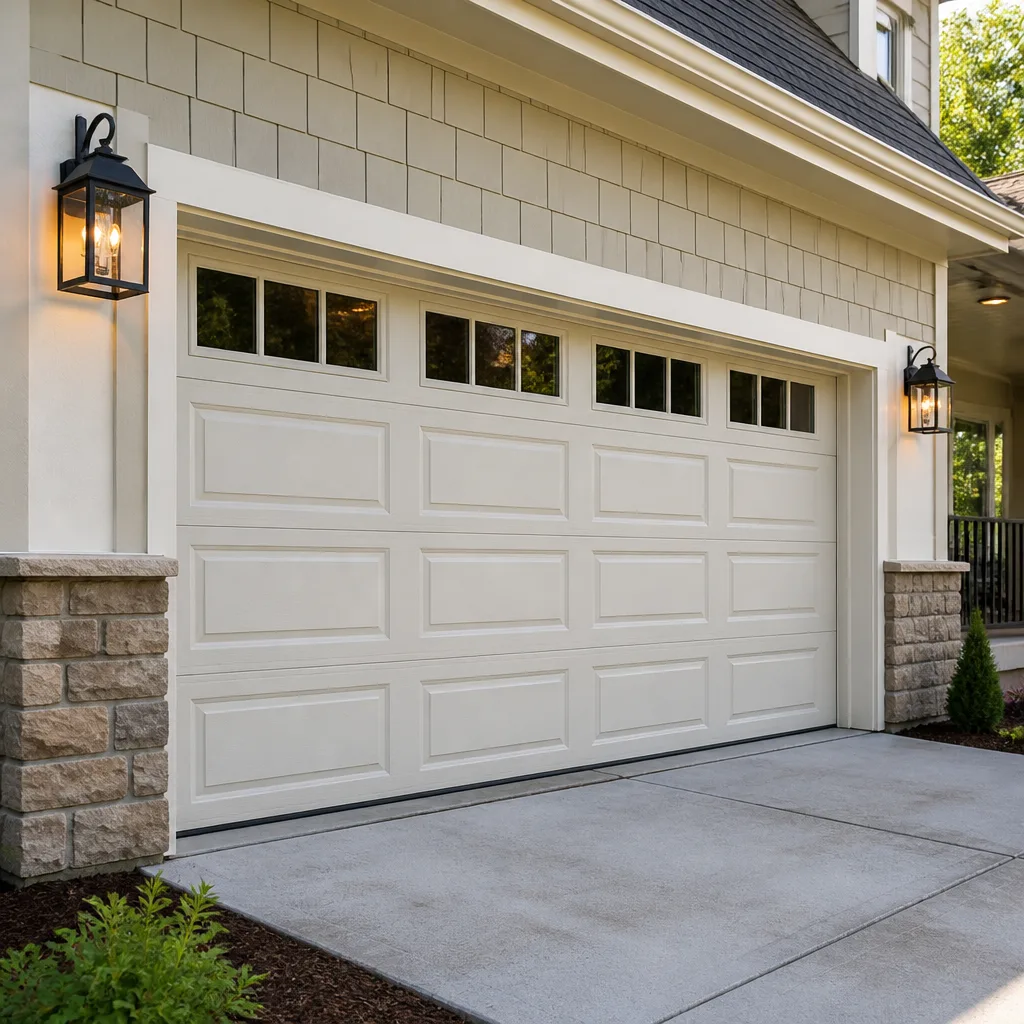 Raised-panel steel
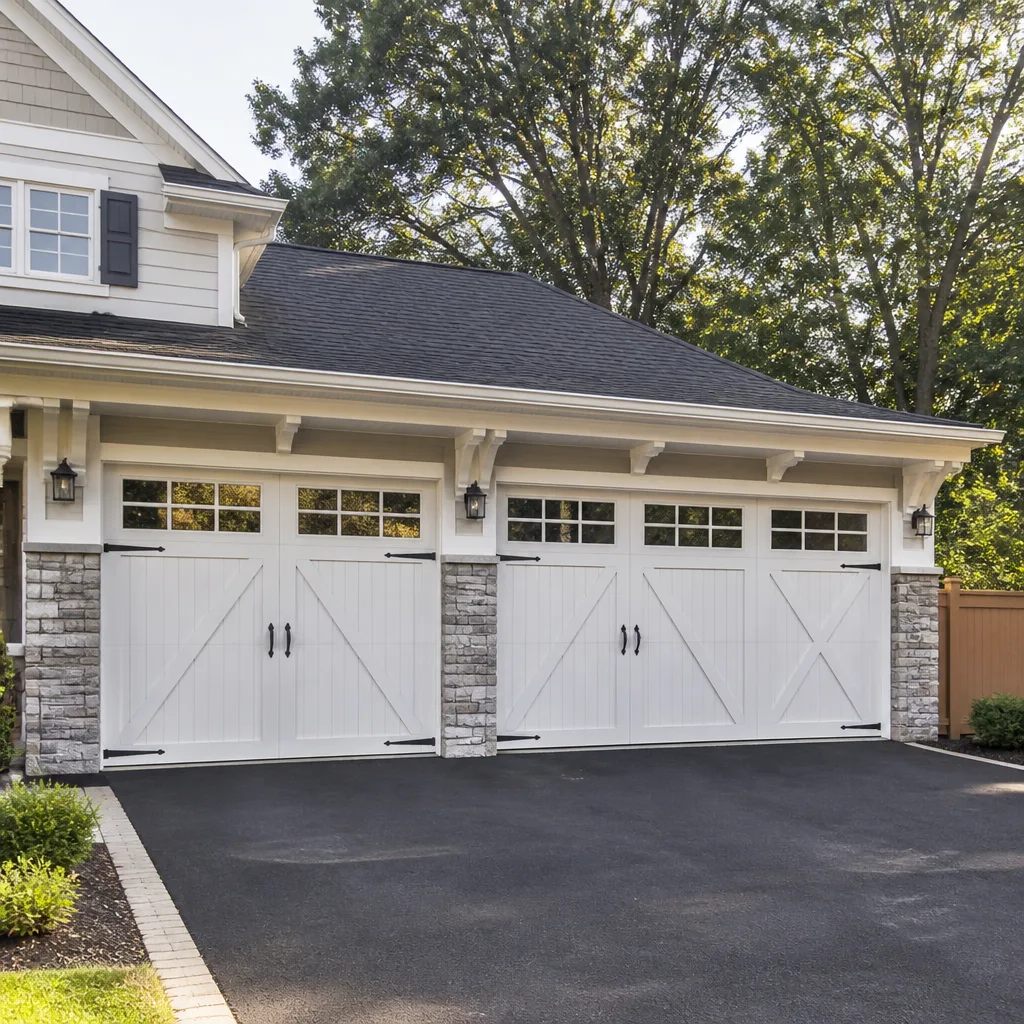 Carriage house
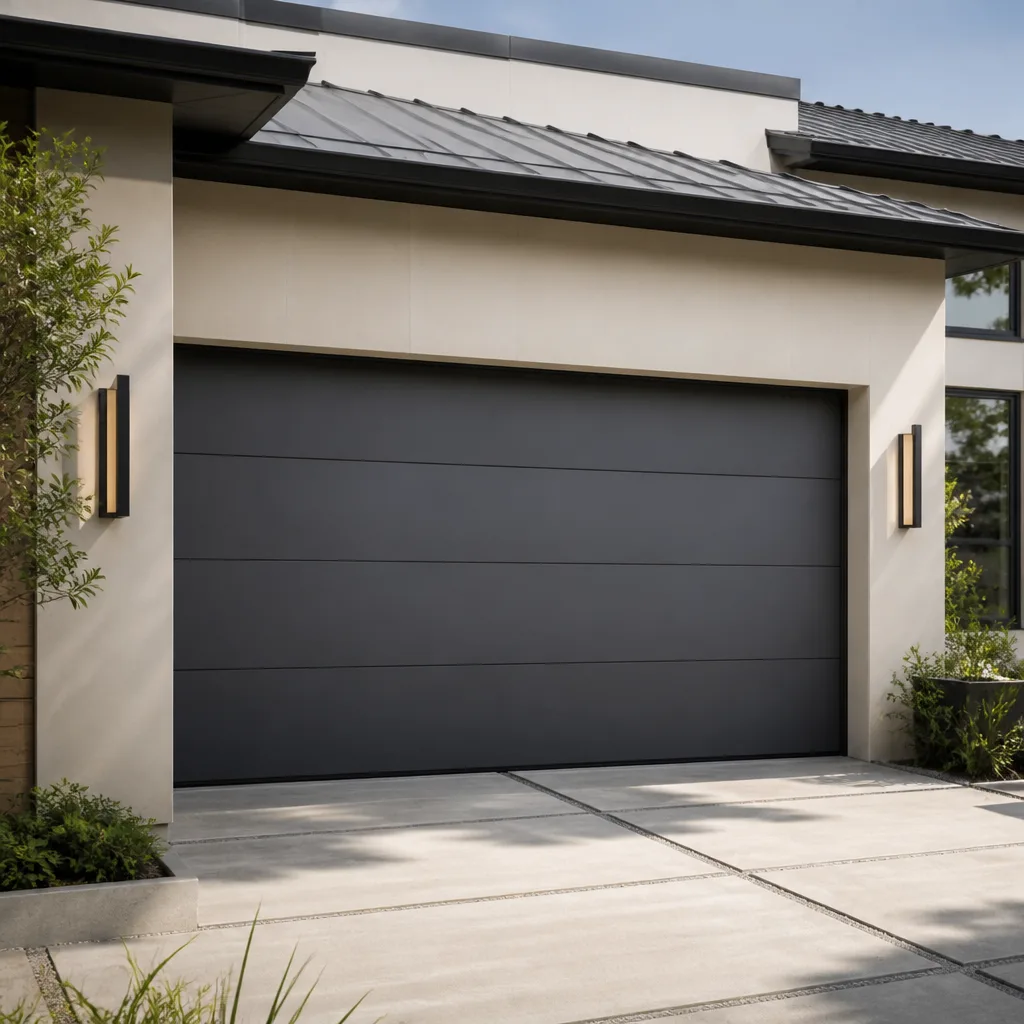 Modern flush
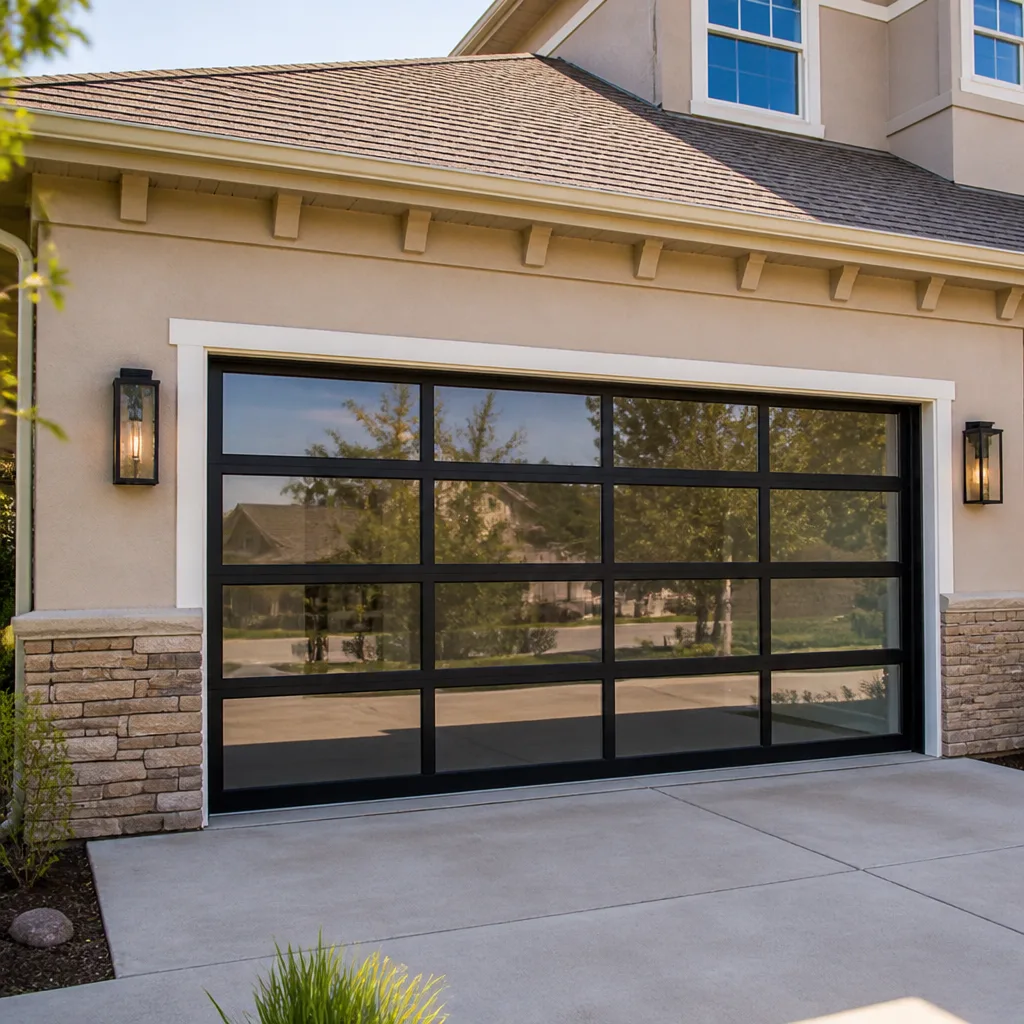 Full-view glass
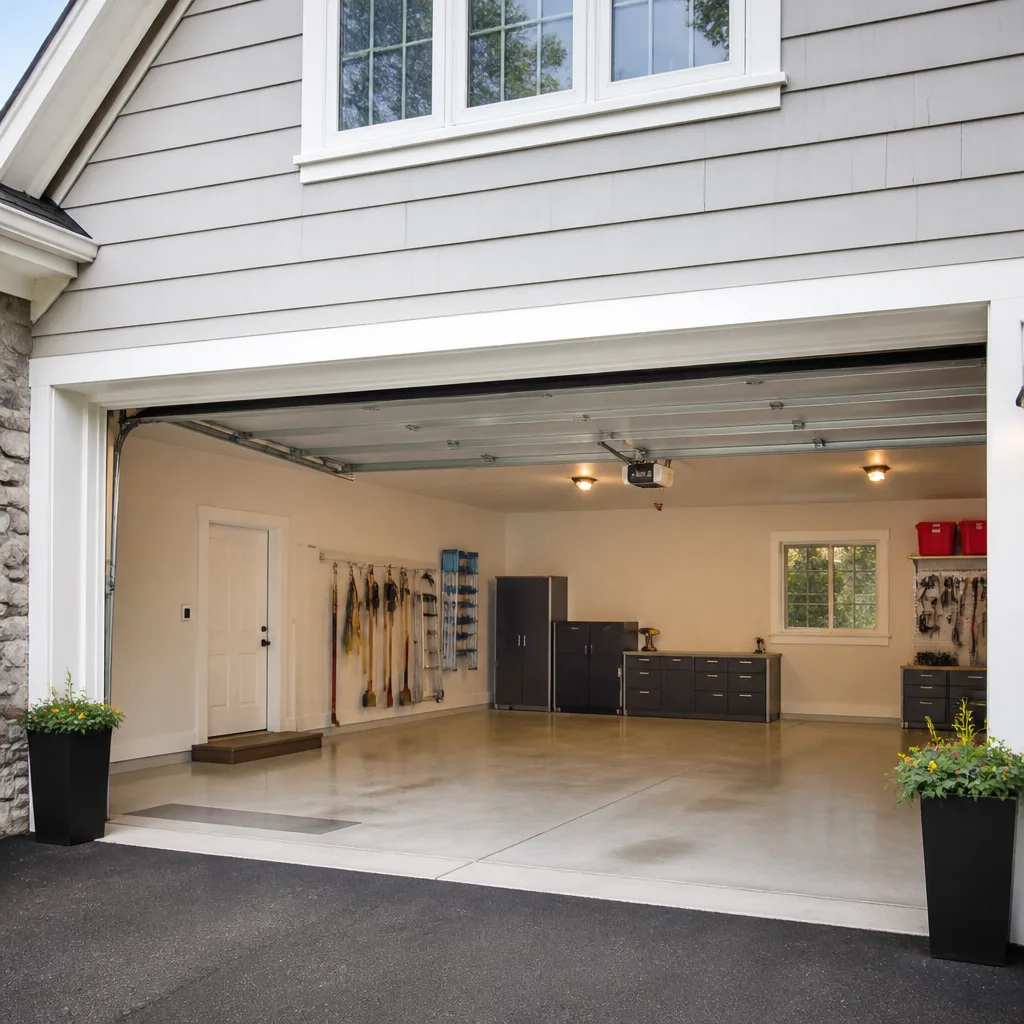 LiftMaster openers
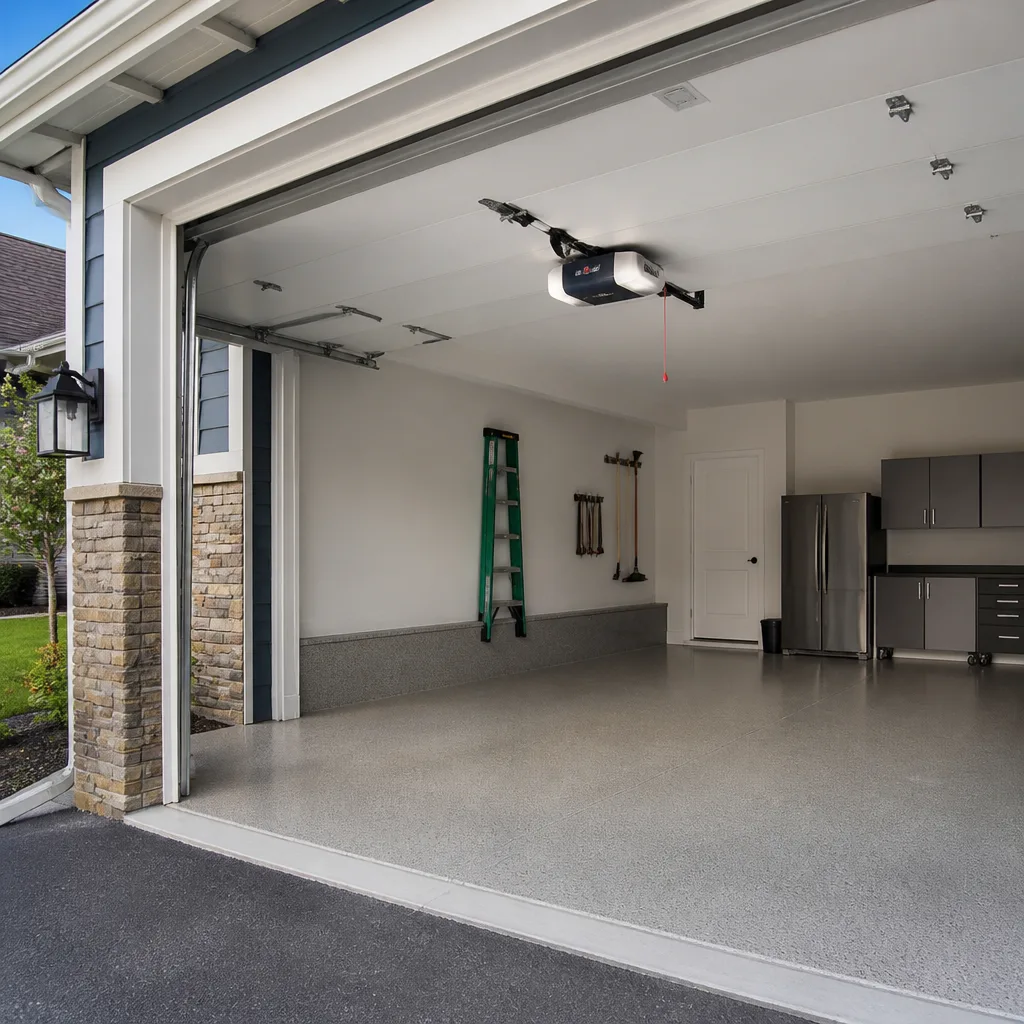 Chamberlain openers
Full 25-point door and opener safety check with every visit - springs, cables, rollers, tracks, and your LiftMaster or Chamberlain opener included
You get a price before we start. It does not change when the pro arrives.
Get your free estimateGarage Door Emergency Preparedness Guide for Deltona Homes
Most Deltona homeowners think about their garage door only when it stops working. That’s the wrong order. The two failures most likely to strand you here are a spring or opener that quits during a storm and a door that won’t move when the power drops, and both are far easier to handle if you’ve read the procedure once, calmly, on an ordinary afternoon. If you’re reading this during a downpour with a dead door, skip straight to the Quick Answer and the manual release steps. If you’re planning ahead, read the whole thing. What follows is the release procedure, the mistakes that make it fail, how to secure a damaged door before a hurricane threat, what’s safe to touch after an impact, and the details to have ready when you call. It’s written for Deltona, where thunderstorms roll through most summer afternoons and a car-trapped-in-the-garage problem is a real one.
Quick Answer
To get a stuck garage door open when the power is out, pull the emergency release cord down and back once (never yank it sideways), then lift the door by hand and prop or block it before driving out. If the door is bent, off its tracks, or dropped hard on one side, don’t operate it at all – prop it, keep people away, and call for service. A garage door that won’t close before a storm can often be braced and blocked from the inside as a temporary seal, but it’s not a repair. In Deltona, the smart move is to identify which of these you’re dealing with before you touch anything.
Styles & brands we work with
- Raised-panel steel
- Carriage house
- Modern flush
- Full-view glass
- LiftMaster openers
- Chamberlain openers
Table of Contents
- How Do You Open a Garage Door When the Power Is Out?
- Why Does the Manual Release Sometimes Fail?
- How Do You Secure a Garage Door That Won’t Close Before a Hurricane Threat?
- What Should You Do Immediately After Storm Damage?
- How Do You Tell If a Door Is Structurally Compromised or Just Stuck?
- What Information Should You Have Ready Before Calling for Emergency Service?
- How Do You Prepare a Garage Door for Deltona’s Storm Season?
- What Else Happens When the Power Goes Out in Deltona?
How Do You Open a Garage Door When the Power Is Out?
Every automatic garage door has a manual release, and it’s the single most important thing to locate before you need it. The release disconnects the door from the opener’s trolley so the door slides on its own springs and tracks. On a standard sectional door, the cord hangs from the trolley near the center of the door’s top rail. Find it now. Tie a bright tag or a short length of bright tape to it so you can find it in the dark, because during a Deltona storm the power is often already out when you need it.
Here’s the procedure, in order:
- Clear the door’s path. Make sure nothing is under the door and that no one is standing in the doorway. The door is about to move freely.
- Make sure the door is fully closed and the springs are relaxed. If the door is partway up when you pull the release, it can drop hard. If you’re going to use the manual release, do it with the door down.
- Pull the cord straight down and slightly toward the opener. You’ll hear or feel a click as the trolley disengages. Don’t yank it sideways or pull it at an angle.
- Lift the door slowly by hand. A balanced door lifts with modest effort. If it fights you or feels very heavy, stop – the spring may be broken.
- Prop or block the door open. Once it’s up, put a sturdy brace or blocks under it before you drive out. A disconnected door doesn’t stay up on its own the way the opener holds it.
- Re-engage when the power returns. Close the door fully, then run the opener or pull the trolley back into the engaged position so the door locks onto the drive again.
If you can’t find the cord or the door won’t budge, that’s a sign something else is wrong, and it’s worth a call rather than more force. Our technicians work on the drive systems behind LiftMaster, Chamberlain, Genie, and Craftsman openers, so we can tell you what your specific unit needs.
Why Does the Manual Release Sometimes Fail?
The release fails for a handful of predictable reasons, and almost all of them come down to doing it under stress instead of doing it on a calm day. In our experience covering Deltona, a door that won’t release cleanly usually has one of these problems.
- Pulling the cord sideways or at an angle. The trolley mechanism releases on a straight pull. An angled yank can jam it or bend the release arm, and now you’ve got a new repair on top of the old one.
- Pulling the release while the door is partway open. This is the dangerous one. The door is held up by the opener at that point; disconnecting it lets the door fall. Always release with the door down.
- Forgetting that the door won’t stay up. After release, the opener no longer holds the door. Without blocking, it can slide down on someone.
- Assuming the release is the only issue. If the door won’t move by hand even after release, the problem is mechanical – a broken spring, a bound track, or a seized roller – not the release.
- Not knowing where the cord is. It sounds minor until you’re feeling around a dark garage in a storm. Identify it and tag it.
- Re-engaging incorrectly. If you drive the door back onto the trolley by hand or force the opener, you can strip the drive gear or damage the travel limits. Let the opener pull the trolley back into engagement.
None of these are complicated. They’re just easier to get right when you’ve read them once. If the release has already failed and the door is stuck, our garage door repair team can get it moving again.
How Do You Secure a Garage Door That Won’t Close Before a Hurricane Threat?
A garage door that won’t close is a real problem heading into a Deltona storm, because the garage is a big opening in the house and wind-driven rain gets in fast. What you can do depends on why it won’t close. If it’s an opener or sensor problem, the door may close fine manually. If it’s mechanical, you’re bracing and blocking as a temporary seal, not fixing anything.
Start with the manual path:
- Try the manual release and close it by hand. If the door is balanced, you can lower it to the fully closed position and block it from the inside.
- Check the photo-eye sensors. A misaligned or dirty sensor is one of the most common reasons a door won’t close on its own. Look for a small beam near the floor on each side of the track.
- Look at the track and the door’s bottom edge. A bent track, a roller out of the channel, or an obstruction on the floor can all stop the door.
- If it won’t close at all, block it with bracing from the inside. Wedge a sturdy board or brace into the gap and against the door to keep it from moving in wind. Never prop it from outside.
- Move anything valuable off the garage floor. If rain gets in, keep it away from boxes, tools, and stored items.
This is temporary. Bracing stops the door from flapping and keeps most water out for a short time. It doesn’t restore the mechanism, and it won’t survive a serious storm. Once the weather clears, get the door properly repaired rather than leaving it braced. Our garage door opener repair team can diagnose why it failed to close in the first place, which is often an opener or sensor issue rather than the door itself.
What Should You Do Immediately After Storm Damage?
After a storm passes, the first question is whether the door is safe to operate at all. Don’t test it by hitting the opener button. Walk up and look first. If the door is visibly bent, out of its tracks, or sitting at an angle, leave it alone and keep people and vehicles clear.
Here’s the order we recommend:
- Look, don’t operate. Inspect the door for dents, bent panels, a gap on one side, tracks that are out of line, and anything hanging or loose.
- Check the springs. A visible gap in a torsion spring, or a tension spring that’s hanging slack, means the door has lost its counterbalance. Don’t operate a door with a broken spring.
- Stand clear of the door while you decide. A door that’s lost tension can come down.
- Note the damage before you move anything. Photograph it if you can. It helps a technician understand what happened and prepares an accurate estimate.
- Don’t force the door. Pulling a bent door back into the tracks or forcing a misaligned panel usually makes it worse and can bend the track too.
If the door looks structurally sound and it’s just the opener that failed after a power surge or outage, you can try resetting it once and testing the manual release. If it still won’t respond, it’s an opener problem to diagnose. Our technicians service products from LiftMaster, Chamberlain, Genie, and Craftsman, so they know the reset procedures for your specific system.
How Do You Tell If a Door Is Structurally Compromised or Just Stuck?
“Stuck” and “compromised” are different problems, and they need different responses. A stuck door has a mechanical fault – usually an opener, sensor, spring, or roller issue – but the door itself is sound. A compromised door has been bent, misaligned, or damaged in a way that makes operating it unsafe. Here’s how to tell them apart.
Signs a door is just stuck (safe to diagnose)
- The door opens or moves a little and stops, but the panels look straight.
- The door is level – both sides are at the same height.
- The opener runs but the door doesn’t move, or the door moves and the opener doesn’t.
- The door won’t close on its own but closes fine by hand.
Signs a door is structurally compromised (don’t operate)
- A clear gap on one side with the other side down – the door is racked.
- A panel is bent, creased, or bowed, or the door is visibly dented.
- The tracks are bent, loose, or pulled away from the frame.
- The door dropped hard or hangs at an angle.
- A torsion spring has a visible gap or a tension spring is hanging slack.
If you see any of the compromised signs, treat the door as damaged and call for service before you try the opener. Forcing it can bend the track or turn a panel replacement into a full door replacement. When a repair turns into a replacement, we handle both, so you don’t need to find a second contractor. Our garage door installation team works with panel and door brands including Amarr, Wayne Dalton, and Raynor, and matches the right door to your existing opening and frame.
What Information Should You Have Ready Before Calling for Emergency Service?
The single biggest thing you can do to speed up an emergency repair is to have the right details ready when you call. A technician who knows what you have can arrive with the right parts instead of diagnosing from scratch. In Deltona, where a door often fails during a storm when you need it working fast, this saves real time.
Have these ready:
- Door brand. Clopay, Amarr, Wayne Dalton, Raynor, and others each have their own panel and hardware profiles.
- Opener brand and model. A LiftMaster, Chamberlain, Genie, or Craftsman unit each has different diagnostics and parts. The model is usually on a label on the back or side of the opener.
- What happened. Won’t open, won’t close, moves partway and reverses, makes a loud noise, dropped hard, or won’t respond to the remote.
- What the door looks like. Straight or bent, level or angled, in the tracks or off.
- Door size and type. Single or double, sectional or one-piece, and any windows.
- How long it’s been down. A door that failed days ago and one that failed minutes ago may need different handling.
When you call with these ready, you’re not just describing a problem – you’re helping us arrive prepared. Call (877) 492-1973. We answer 24/7. Fast dispatch from 7am to 7pm, Sunday through Friday.
How Do You Prepare a Garage Door for Deltona’s Storm Season?
Deltona gets its share of summer thunderstorms, and hurricane season runs through the warm months, so preparing the door before the storms arrive is a smart habit. The good news is that most of what protects you is already there – you just need to know where it is and confirm it works.
- Tag the manual release cord. Mark it with bright tape so you can find it in the dark or without a flashlight.
- Test the release once. Try it on a calm day with the door down, so you know how it feels and that it works. Then re-engage it properly.
- Confirm the door’s balance. With the opener disengaged, a balanced door lifts with modest effort. If it’s heavy or drifts, that’s a spring issue to fix before it fails.
- Look at the photo-eye sensors. Make sure they’re clean, aligned, and not blocked. This prevents most “won’t close” surprises.
- Inspect panels and tracks after each storm. Look for dents, gaps, and anything out of line before you operate the door.
- Don’t store things against the door. Keep the door’s path and the area near the tracks clear.
That’s not much work. It’s the difference between a door that holds up through storm season and one that strands you when the weather turns. If the balance test shows a heavy door, that’s a spring job, and our technicians have up to 14 years of experience handling the springs on Clopay and Wayne Dalton doors.
What Else Happens When the Power Goes Out in Deltona?
When the power goes out, the garage door is just one of several things that stop working, but it’s often the one that traps you. The door is held closed by the opener and opens only with the opener. If you can’t find the manual release, you can’t get out. That’s the trap.
A few more things to understand about outages:
- The opener won’t run without electricity. No amount of remote pressing will change that. The manual release is your only path.
- The door may seem locked. If the opener has engaged the lock, the door won’t move until you pull the release.
- Have a flashlight handy. Keep one where you keep the car keys and know where the release cord is.
- Don’t leave the door disconnected. Once the power returns, re-engage the door to the opener so it stays locked and safe.
- Consider a battery backup in the future. Some openers – LiftMaster and Chamberlain among them – offer battery backup so the door works for a while after the power drops. It’s not a replacement for the manual release, but it’s a nice layer.
Our Deltona Garage Door Repair Pros team handles both the door and the opener, so if both act up at once, it’s one call.
Common Mistakes to Avoid
- Yanking the manual release sideways. A straight pull is what releases the trolley; an angled one jams it. Pull down and toward the opener, not across.
- Pulling the release with the door partway up. The door can drop. Always release with the door fully closed.
- Forcing a bent door back into its tracks. You’ll typically bend the tracks and turn a panel replacement into a full door replacement.
- Operating a door with a broken spring. A door with a broken spring isn’t a door that opens – it’s a heavy falling object. Don’t run the opener.
- Leaving the door disconnected. After you use the manual release, re-engage it properly so the door locks again.
- Ignoring the sensors as the reason a door won’t close. A misaligned or dirty photo-eye is one of the most common causes of “it opens but won’t close.”
- Testing the door by hitting the opener button after a storm. Look for damage first, then operate. Operating a compromised door can make it worse.
See the difference
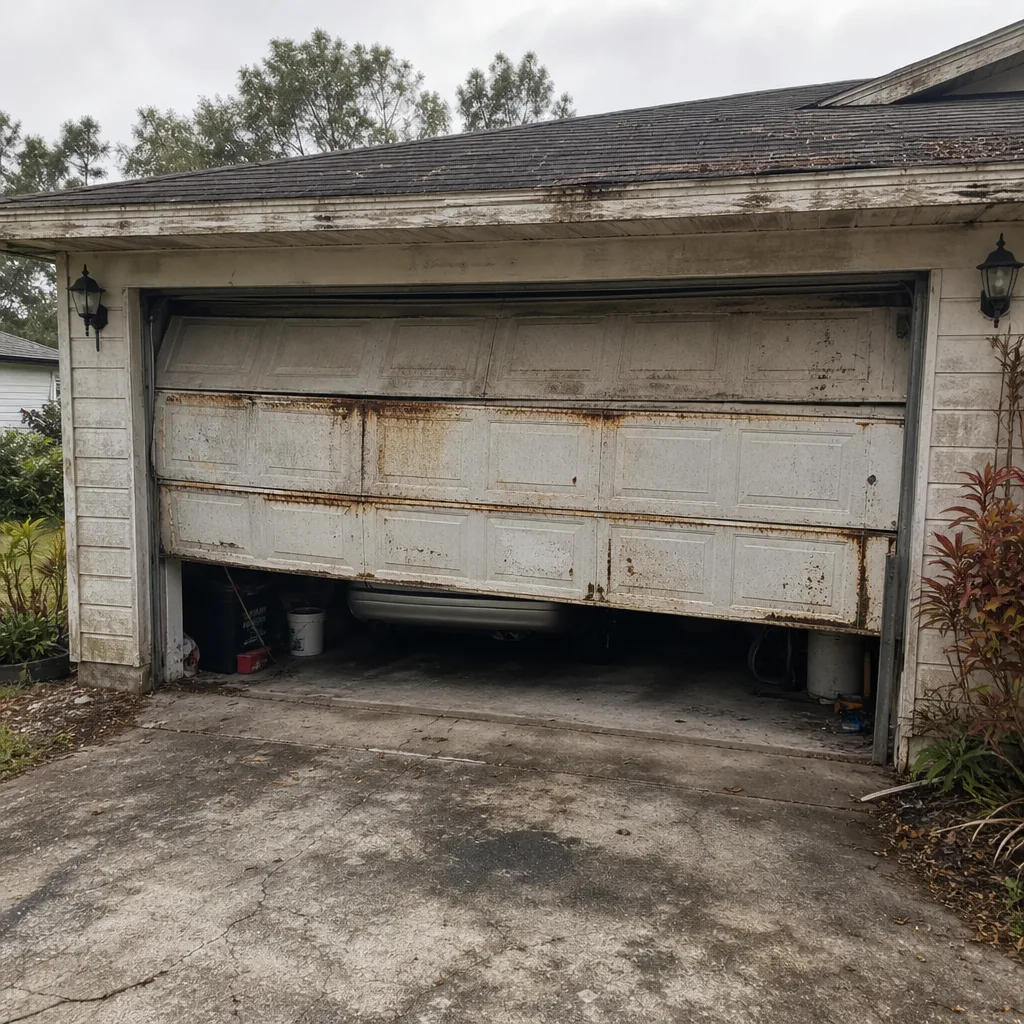 Before
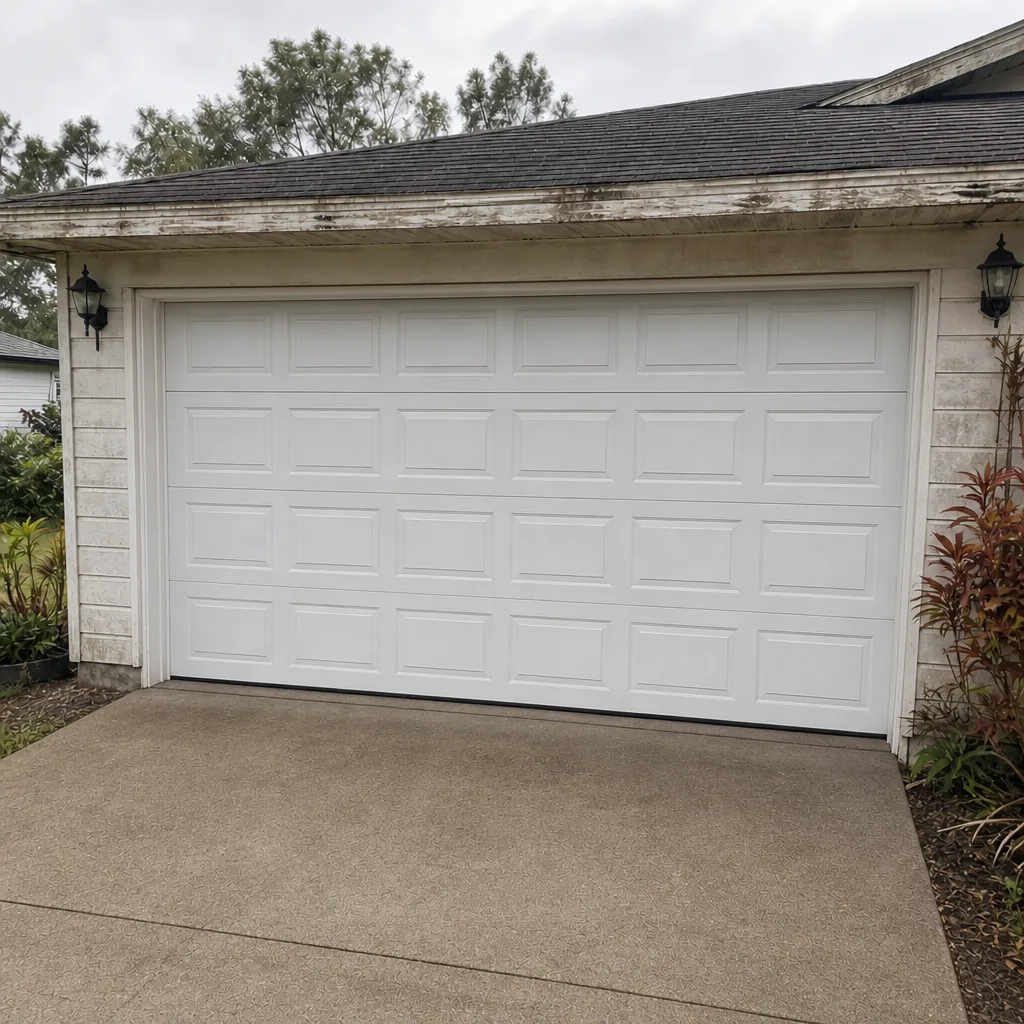 After
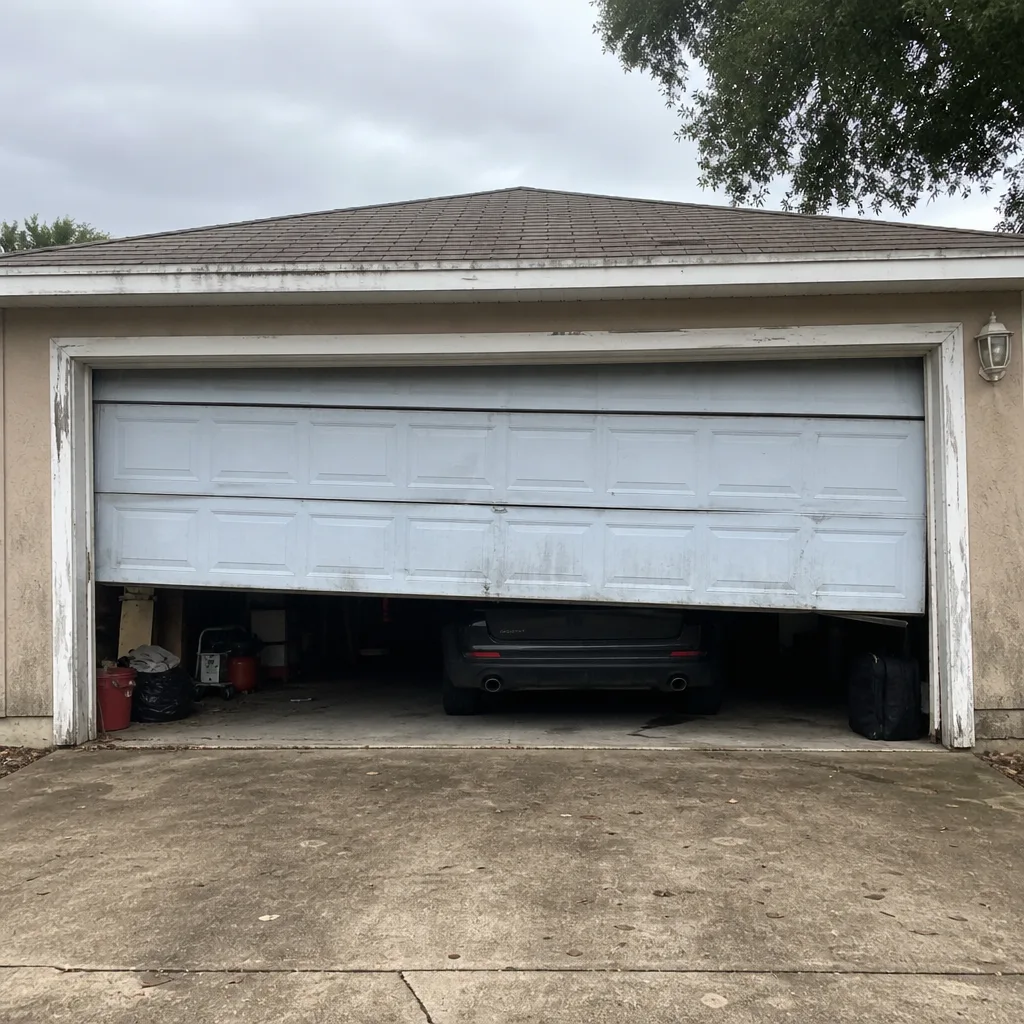 Before
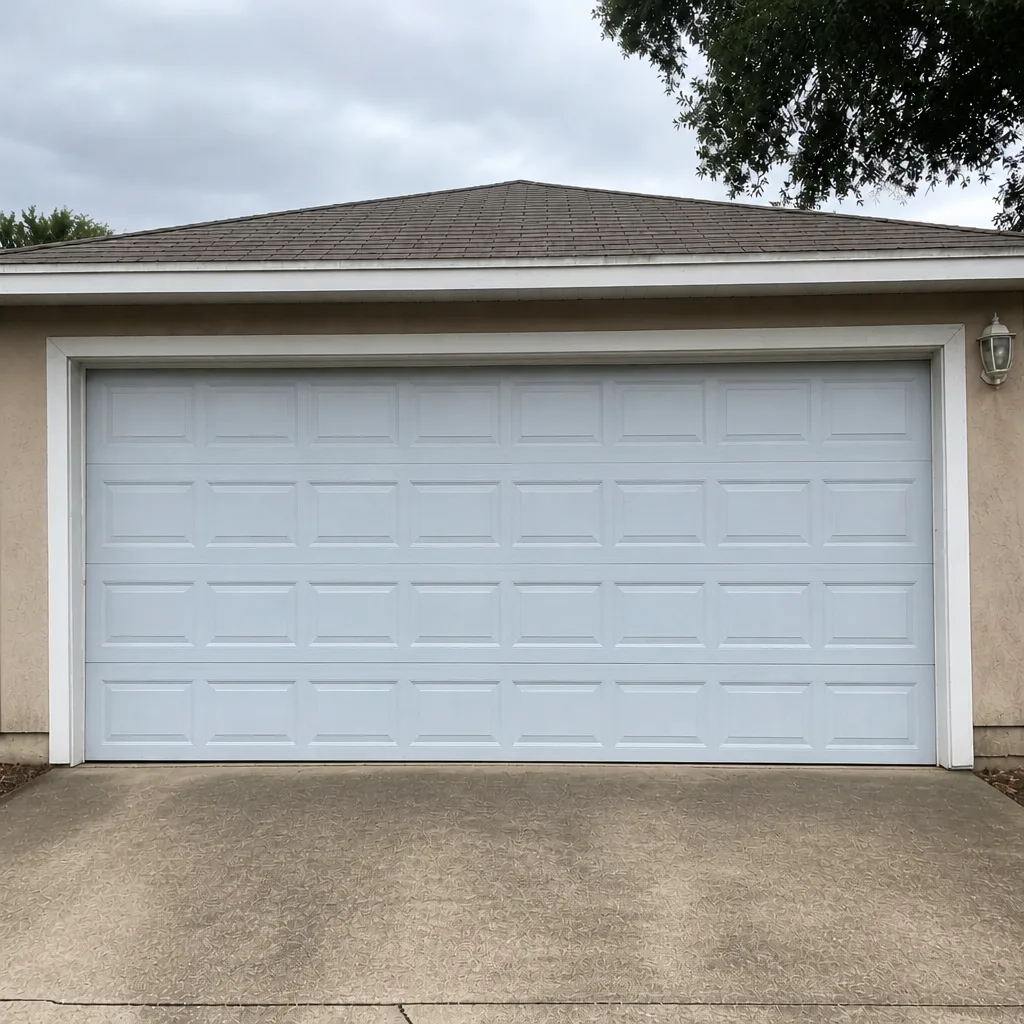 After
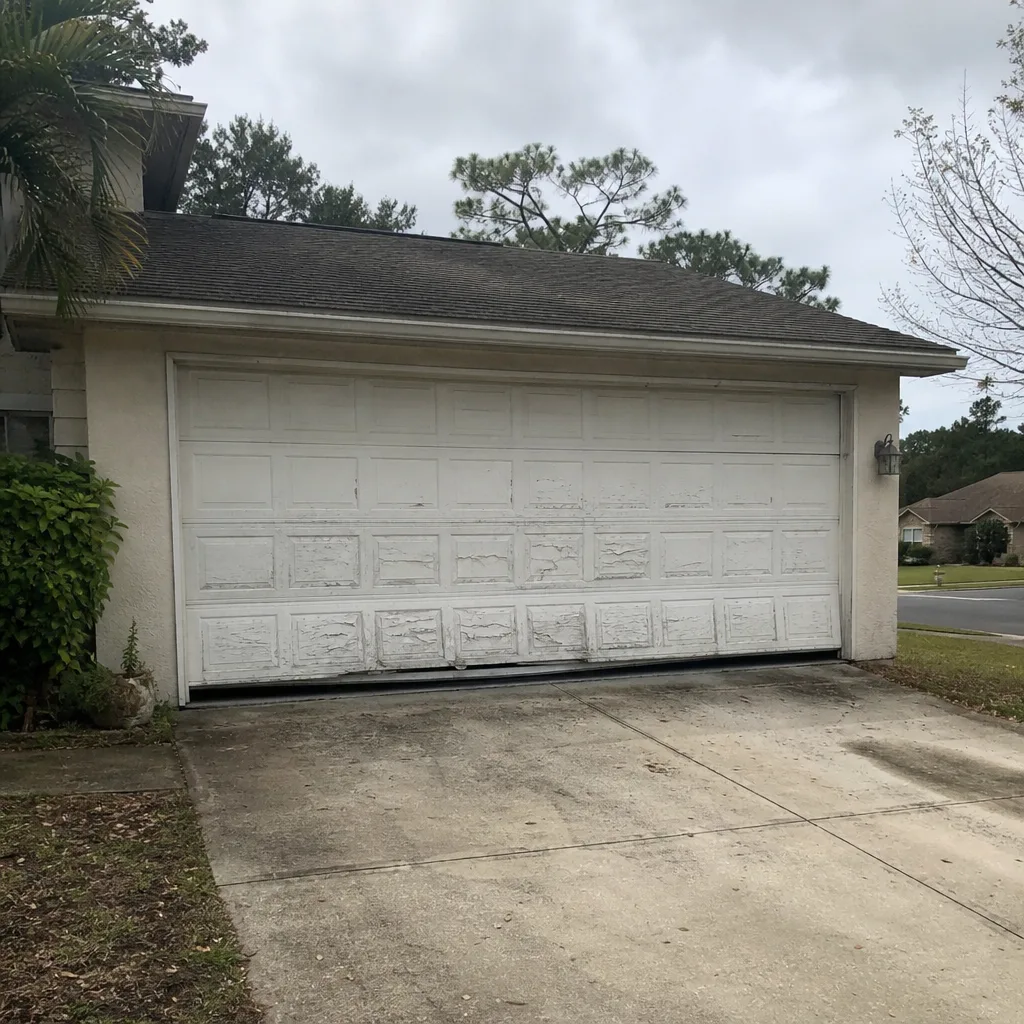 Before
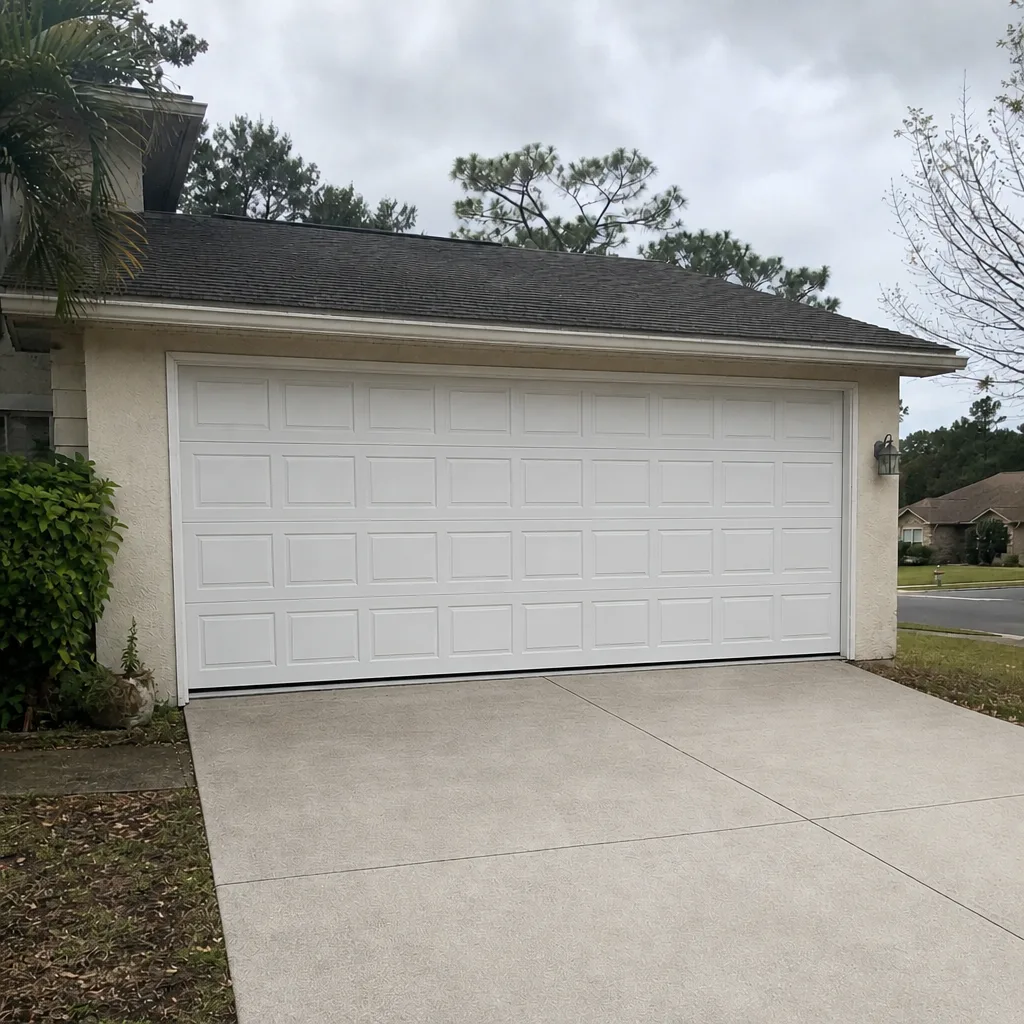 After
When to Call a Professional
Plenty of garage door issues are things a homeowner can check and handle – a sensor that needs cleaning, a remote that needs a battery, a manual release that needs tagging. But some jobs are genuinely dangerous or beyond a check-over, and those are the ones to hand to a professional. Call us when a spring is broken, when the door has dropped or is sitting at an angle, when it’s out of its tracks, or when it simply won’t respond after a storm. Garage door springs are under high tension and can cause serious injury, so they’re not a do-it-yourself job. Same for anything electrical in the opener or a door that’s structurally compromised.
Deltona Garage Door Repair Pros offers free estimates in Deltona – call (877) 492-1973. The price is set per job by the written estimate, quoted and agreed before any work starts.
Frequently Asked Questions
Pull the emergency release cord straight down and slightly toward the opener, then lift the door by hand and block or prop it open before driving out. Only use the release with the door fully closed, so it doesn’t drop. If it won’t move by hand after release, the spring or tracks are the problem – call for service. Call (877) 492-1973 for an exact quote on the repair – estimates are free.
Try the manual release and close it by hand, then check the photo-eye sensors and the tracks for obstructions. If it still won’t close, brace or block it from the inside as a temporary seal and move valuables off the floor. Bracing is temporary – get the door repaired once the weather clears. Call (877) 492-1973 to book a repair.
Only if the door looks structurally sound – panels straight, door level, tracks in line, springs intact. If a panel is bent, the door hangs at an angle, or the tracks are bent, don’t operate it. Keep people and vehicles clear and call for service. Call (877) 492-1973 for a free estimate.
Yes, same-day service is available for time-sensitive failures. We answer 24/7. Fast dispatch runs from 7am to 7pm, Sunday through Friday. A call outside dispatch hours is booked into the next opening, Sunday through Friday, 7am to 7pm. Call (877) 492-1973.
No – the price is set per job by the written estimate, and that written estimate is what you pay. We quote and agree the price before any work starts, so there’s no surprise invoice after the repair. Call (877) 492-1973 for an exact quote – estimates are free.
The local professionals we connect you with are licensed and insured as their state requires. Our technicians have up to 14 years of experience handling springs, openers, and full-door replacements across LiftMaster, Chamberlain, Genie, Clopay, Amarr, Wayne Dalton, Craftsman, and Raynor products. Call (877) 492-1973 to book a free estimate.
The Bottom Line
The best protection against a garage door emergency in Deltona is knowing the manual release procedure and where the cord is before you need it. Tag the cord, test the release once on a calm day, check the door’s balance, and confirm the photo-eye sensors work. If the door is bent, off its tracks, or has a broken spring, don’t operate it – that’s a call to a professional, not a project. And when you do call, have the door brand, opener brand and model, and a clear description of what happened ready so the technician arrives with the right parts. Preparedness costs nothing. Panic during a storm costs time and often a bigger repair.
Book a free inspection or emergency repair with Deltona Garage Door Repair Pros. Call (877) 492-1973. We answer 24/7. Fast dispatch from 7am to 7pm, Sunday through Friday.
Written by the team at Deltona Garage Door Repair Pros.